 Save
Save I was standing in a gallery once, staring at a Mondrian painting—all bold lines and primary colors—when it hit me that food could be just as striking. That evening, I came home and started playing with roasted vegetables and purées, trying to capture that same sense of architectural beauty on a plate. What emerged was this single, unapologetic stripe of color that somehow felt more elegant than anything fussy I'd made before.
I made this for a dinner party where someone commented that modern plating was pretentious, and I watched their expression shift the moment they saw that bold stripe emerge from the roasting pan and blender—suddenly it wasn't about complexity, it was about intention.
Ingredients
- Beets (2 medium, peeled and diced): These are your foundation, earthy and jewel-toned; roasting concentrates their sweetness and makes them blend into a velvety purée.
- Carrots (3 large, peeled and sliced): They bring brightness and a subtle sweetness that balances the earthiness; cooking them until very tender ensures a silky blend.
- Fresh ginger (1 tsp grated): A small amount wakes up the carrot purée with warmth and a whisper of spice without overwhelming.
- Avocado (1 ripe): The secret to a creamy texture that feels luxurious; ripe is everything here, so squeeze the fruit gently and listen for that soft give.
- Greek yogurt (2 tbsp): It stabilizes the avocado cream and adds a subtle tang; use coconut yogurt if you're keeping things vegan.
- Olive oil (1 tbsp for beets): High-quality matters when you're only using a little; it carries flavor and helps roasting happen evenly.
- Unsalted butter (1 tbsp for carrots): Enriches the carrot purée and adds a whisper of depth; olive oil works if you prefer.
- Lemon juice (1 tsp) and lime juice (1 tsp): Acid brightens everything and prevents the avocado from browning.
- Sea salt: Use flaky for garnish and fine for blending; the texture matters more than you'd think.
- Microgreens, edible flowers, crushed pistachios: These aren't decoration—they're texture and flavor finishing touches that make the dish feel complete.
Tired of Takeout? 🥡
Get 10 meals you can make faster than delivery arrives. Seriously.
One email. No spam. Unsubscribe anytime.
Instructions
- Prepare and roast the beets:
- Preheat your oven to 400°F and toss your diced beets with olive oil and sea salt until they're all glossy. Spread them on a baking tray and roast for 30 to 35 minutes until a fork slides through with no resistance; the edges will caramelize slightly and the whole kitchen will smell deeply mineral and sweet.
- Cook the carrots while beets roast:
- While the oven works its magic, steam or boil your carrot slices until they're so soft they almost dissolve at the touch of a spoon—about 15 to 20 minutes. Drain them well and let them cool just enough to handle.
- Blend the beet purée:
- Put your roasted beets and lemon juice into a blender and blend on high until completely smooth, adding just a splash of water if the mixture seems stubborn. The color should be deep crimson and the texture like satin.
- Blend the carrot and ginger purée:
- Add your cooked carrots, ginger, butter, and salt to the blender (wash it first or use the food processor) and blend until there are absolutely no lumps. Taste it and adjust salt if needed; the ginger should be felt as warmth, not a shout.
- Make the avocado cream:
- In a small bowl, mash your ripe avocado with the yogurt, lime juice, and a pinch of salt until it's completely smooth and creamy. Transfer it to a piping bag or squeeze bottle right away so you can control exactly where it lands on the plate.
- Create the stripe:
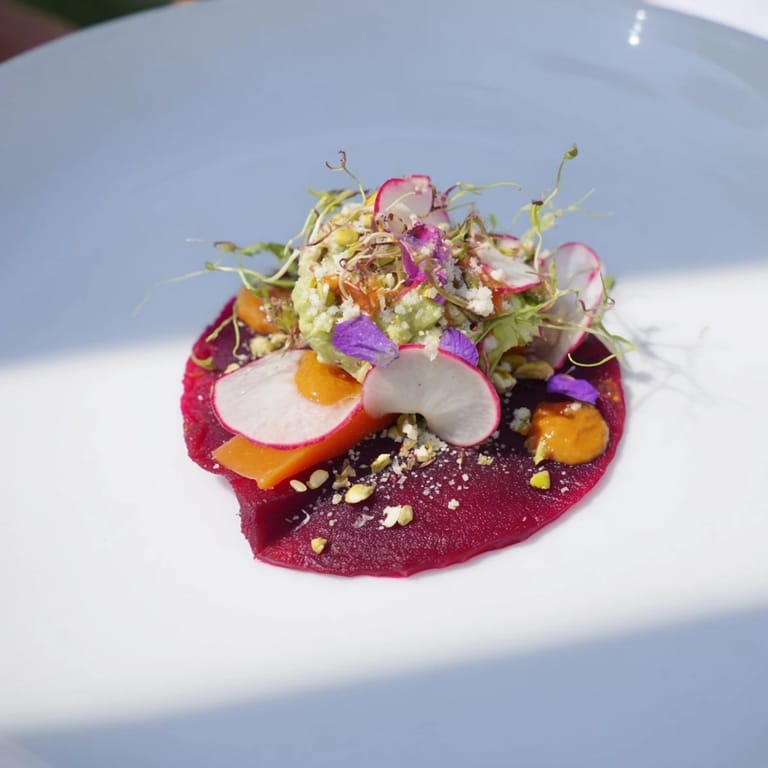
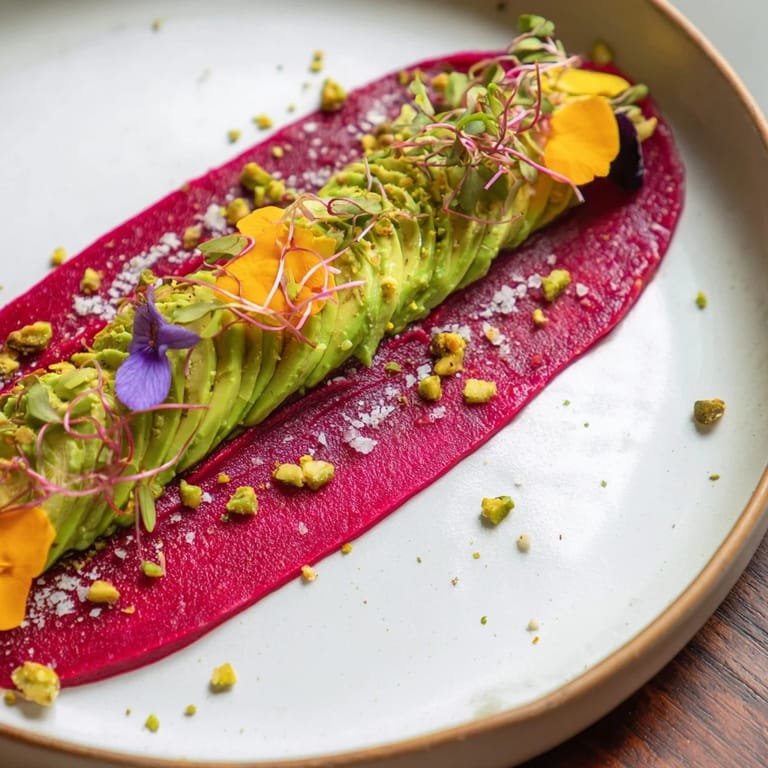
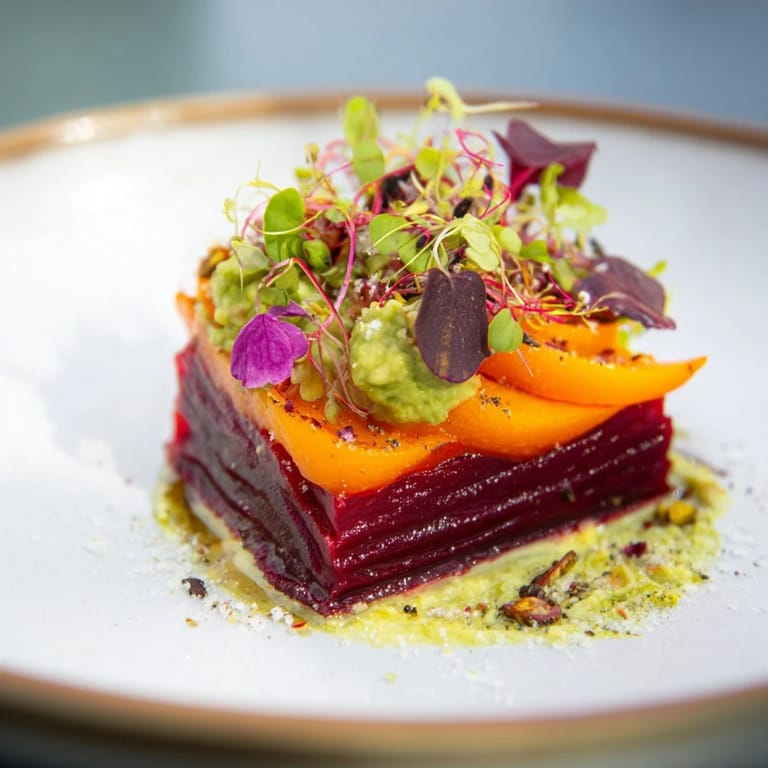
- On your serving board, use a wide offset spatula or the back of a large spoon to spread a thick, 3-inch-wide stripe of beet purée down the center. Work slowly and let the purée spread naturally; imperfection here reads as intention.
- Layer and pipe the second and third purées:
- Along the beet stripe, pipe or spread the carrot purée in artistic strokes or small dots, then do the same with the avocado cream. Think of it as painting rather than constructing.
- Garnish with intention:
- Scatter microgreens, edible flowers, and crushed pistachios across the stripe, then finish with a light sprinkle of flaky sea salt. Each element should feel placed, not sprinkled.
- Serve immediately:
- Bring the board to the table and let guests scoop directly from the stripe with whatever they're holding; the imperfection of eating it makes the precision of making it even more beautiful.
 Save
Save A friend who usually orders takeout watched me plate this and said, "You made vegetables look like art," and I realized that was exactly the point—not to hide what things are, but to see them clearly and let them be themselves, just more intentional.
Why the Stripe Works
There's something about committing to a single line instead of scattering things across a plate that makes everything feel more confident. The stripe forces you to think about composition and negative space, which means you're not just cooking, you're making a statement. It's minimalist plating without being cold or distant.
Variations and Substitutions
The beauty of this concept is that you can swap in almost any colorful vegetable purée and no one will question it. I've made versions with roasted sweet potato, steamed peas blended with spinach, and butternut squash that were just as striking. The formula stays the same—roast or cook your vegetables until soft, blend with a fat and acid, and let color do the talking.
Plating Like You Mean It
Modern plating isn't about being fussy; it's about being deliberate with what you're putting on the plate and why it matters. This dish teaches you that sometimes less is more, and that a single, confident stripe says more than a plate full of fussy dots. The garnishes should feel placed, not thrown, and the board should feel empty except for that one bold line of color.
- If you're nervous about the stripe, practice once with just the beet purée before adding everything else.
- A clean edge matters more than a perfect one; use an offset spatula and let the beet purée's own weight help you create the line.
- Serve this at the start of a meal when people are still expecting beauty, not halfway through when they're hungry and focused.
 Save
Save This dish sits at the intersection of simple and impressive, which is the best place for any recipe to live. Make it when you want to remind yourself that sometimes the most elegant thing you can do is let good ingredients speak for themselves.
Questions & Answers
- → How do I achieve the vibrant color in the beet purée?
Roasting the beets enhances their natural sweetness and deepens their color, which shines through after blending into a smooth purée.
- → Can I substitute the Greek yogurt in the avocado cream?
Yes, use coconut yogurt or other plant-based yogurts to keep the cream smooth and suitable for vegan diets.
- → What is the best way to layer the purées for visual impact?
Spread a thick stripe of beet purée as the base, then pipe or layer carrot & ginger purée and avocado cream on top in artistic strokes or dots for contrast.
- → How should I garnish this dish for extra texture?
Microgreens, edible flowers, crushed pistachios, and a sprinkle of flaky sea salt add crunch and visual appeal.
- → What tools are essential for preparing and plating this dish?
A blender or food processor, baking tray, saucepan, offset spatula or large spoon, and a piping bag or squeeze bottle facilitate preparation and precise plating.
- → Is this dish suitable for gluten-free and vegetarian diets?
Yes, it is both gluten-free and vegetarian. Dairy ingredients can be replaced with plant-based options for vegan preferences.