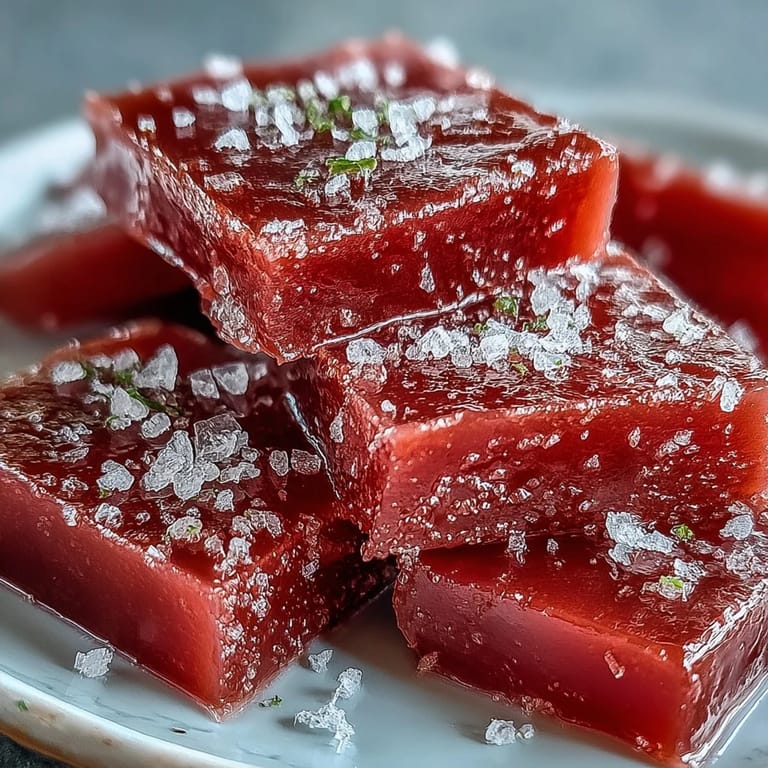
 Save
Save My grandmother kept a small guava tree in her Goan garden, and every season when the fruit turned that blushed pink, she'd disappear into the kitchen with a purposeful smile. Years later, I finally asked for her secret to that jewel-toned confection she'd wrap in wax paper and tuck into my suitcase whenever I left. It wasn't complicated, she said, just ripe fruit, patience, and knowing when to stop stirring. This guava cheese has become my own ritual now, filling the kitchen with that unmistakable tropical perfume that somehow tastes like memory.
I made this for my partner on a lazy Sunday afternoon, and watching it thicken from glossy puree into something dense enough to hold its shape felt oddly magical. The whole apartment smelled like a tropical dream, and when we finally cut into it after it cooled, there was this satisfied silence as we tasted it—the kind that means you've made something worth the wait. He asked if I could make it every week, which I laughed off, but honestly, I might.
Ingredients
- Ripe guava (800 g, about 4 cups): Choose fruit that yields slightly to pressure and smells fragrant—this is where all your flavor comes from, so pink or white varieties both work beautifully.
- Water (1/2 cup): Just enough to help the guava break down without turning it into a watery mess.
- Granulated sugar (450 g or 2 1/4 cups): This isn't just sweetening; it's what transforms fruit into something with body and structure, so don't skip it.
- Fresh lime juice (2 tbsp): The backbone that keeps this from tasting one-dimensional, cutting through richness with brightness.
- Unsalted butter (2 tbsp, plus extra for greasing): Added at the very end to give the final mixture a silky, luxurious finish.
- Superfine sugar (1/4 cup, optional): A delicate coating that catches the light and makes each piece look like a proper confection.
Tired of Takeout? 🥡
Get 10 meals you can make faster than delivery arrives. Seriously.
One email. No spam. Unsubscribe anytime.
Instructions
- Prepare your pan:
- Grease an 8x8-inch baking pan generously with butter and line it with parchment paper, letting the edges overhang so you can easily lift out the finished guava cheese later. This step saves you from heartbreak when you're ready to cut.
- Soften the guava:
- Add your chopped guava and water to a heavy-bottomed saucepan and simmer over medium heat for about 15 minutes, stirring occasionally, until the fruit completely falls apart and looks almost like jam. The kitchen will smell unbelievably good at this point.
- Puree until silky:
- Pour the soft guava into a blender or food processor and puree until completely smooth, then push it through a fine mesh sieve to catch any remaining seeds or fibrous bits. This step takes patience, but it's what gives you that refined, melt-in-your-mouth texture.
- Measure and return:
- You should have about 2 cups of pure guava puree; measure this out and return it to your cleaned saucepan. This consistency matters more than using all the puree.
- Cook the mixture:
- Add the sugar and lime juice to the puree and cook over medium heat, stirring constantly with a wooden spoon or heatproof spatula for 30 to 40 minutes. You'll watch it gradually transform from a thin puree into something thick and glossy that visibly pulls away from the sides of the pan—this is your signal you're almost there.
- Add butter and finish:
- When the mixture is very thick and holds its shape, stir in the butter until everything is glossy and completely incorporated. The whole thing should feel dense enough that your spoon leaves a trail when you drag it across the bottom.
- Set in the pan:
- Immediately transfer the hot mixture to your prepared pan and smooth the top with a spatula, working quickly before it sets. Let it cool at room temperature for a full hour—this is not a step you can rush.
- Cut and serve:
- Once completely set, lift the whole block out using the parchment overhang and cut into 1-inch squares or diamonds with a knife you've greased lightly. If you like, roll each piece in superfine sugar for that jeweled appearance.
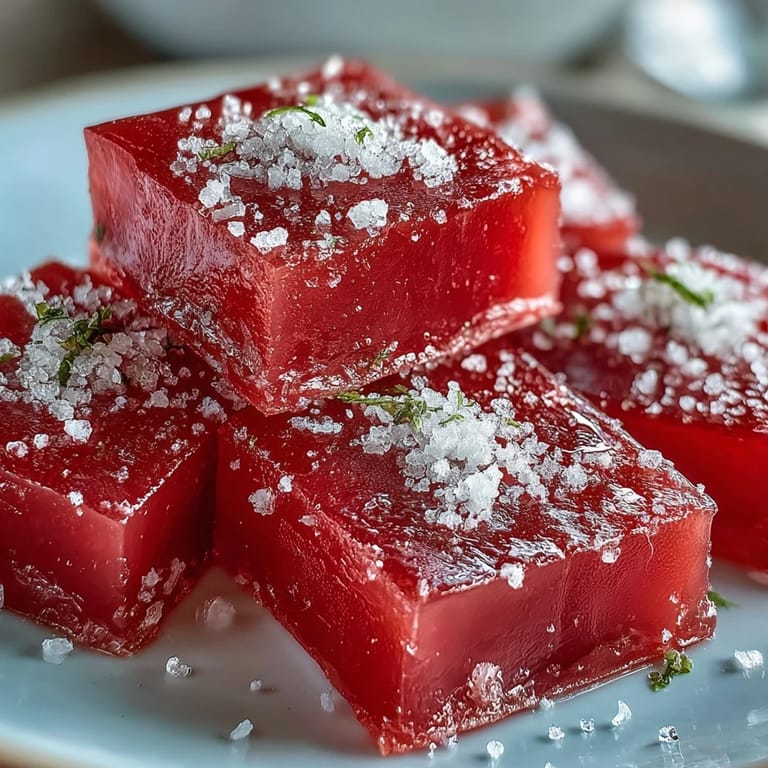 Save
Save There's something almost meditative about standing at the stove, wooden spoon in hand, watching pink puree deepen into almost burgundy as it cooks down. It's the kind of dessert that rewards your attention—not because it demands anything difficult, but because the transformation itself is captivating. When you finally taste it, that balance of sweet and tart, that silky richness, feels like proof that you did something right.
Choosing and Preparing Your Guava
The guava is truly the star here, so pick ones that smell sweet and slightly fragrant, not too soft or they'll be mushy, but not hard either. I've learned that white guavas tend to be slightly earthier while pink ones are a touch more floral, so choose based on what mood you're in. Peeling and deseeding takes a few extra minutes, but it's worth it for a clean, refined final product.
Texture and Consistency Tips
This is where guava cheese gets personal—some people love it dense and almost fudgy, others prefer it softer and more pâte-like. If you prefer firmer results, simply cook the mixture a few minutes longer; if you like it slightly softer, pull it off the heat a touch earlier. The real test is how it behaves when cooling; it should set firmly but remain yielding when you bite into it, never rock-hard.
Serving Suggestions and Storage
Guava cheese pairs beautifully with a cup of strong tea, or you can slice it thin and serve it alongside soft cheeses on a dessert platter for something a little unexpected. It keeps perfectly in an airtight container at room temperature for up to two weeks, though honestly it rarely lasts that long around here. One more thing—if you find yourself with leftovers, try crumbling a piece into plain yogurt or using it as a filling for pastries.
- Make sure your knife is lightly greased when cutting to prevent sticking and tearing.
- If you want the superfine sugar coating, do it while the pieces are still slightly warm so it adheres better.
- These make wonderful gifts when wrapped individually in wax paper and tucked into a nice box.
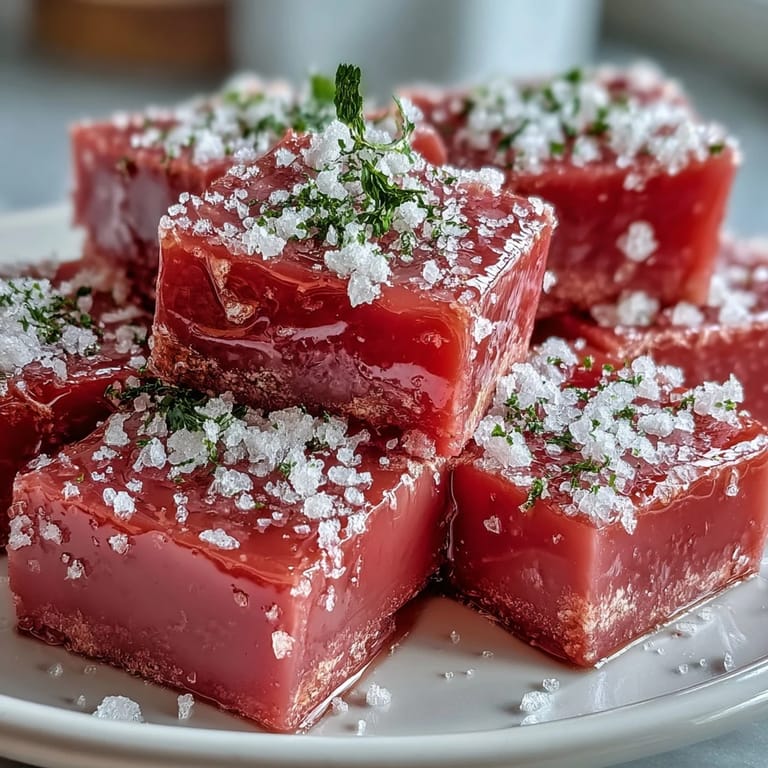 Save
Save This guava cheese is proof that the best confections don't require fancy equipment or obscure ingredients—just respect for good fruit and the patience to let it transform. Make it once, and you'll understand why my grandmother guarded this recipe like a treasure.
Questions & Answers
- → What is guava cheese?
Guava cheese is a traditional Goan confection made by cooking ripe guava puree with sugar and lime juice until it thickens into a fudge-like consistency. Despite its name, it contains no dairy cheese—the term refers to the firm, sliceable texture similar to cheese.
- → Can I use white guava instead of pink?
Yes, white guava works perfectly well. The flavor will be similar, though the final color will be amber rather than the pinkish-red hue from pink guavas. Both varieties produce delicious results.
- → How do I know when the mixture is ready?
The mixture is ready when it thickens noticeably, pulls away from the sides of the pan, and forms a mass that holds its shape. A reliable test is to run your spoon through the mixture—the path should remain clear without filling back in immediately.
- → Can I make guava cheese dairy-free?
Absolutely. Substitute the unsalted butter with vegan butter or coconut oil. The texture and setting properties remain similar, though the flavor profile may shift slightly depending on your butter alternative.
- → Why is lime juice added to the mixture?
Fresh lime juice serves two purposes: it balances the sweetness with a subtle tang and helps the mixture set properly by interacting with the pectin naturally present in guava. The acidity also enhances the fruit's natural flavor.
- → How should I store guava cheese?
Store in an airtight container at room temperature for up to two weeks. If you prefer to refrigerate it, bring pieces to room temperature before serving for the best texture and flavor. Layer pieces between parchment paper to prevent sticking.