 Save
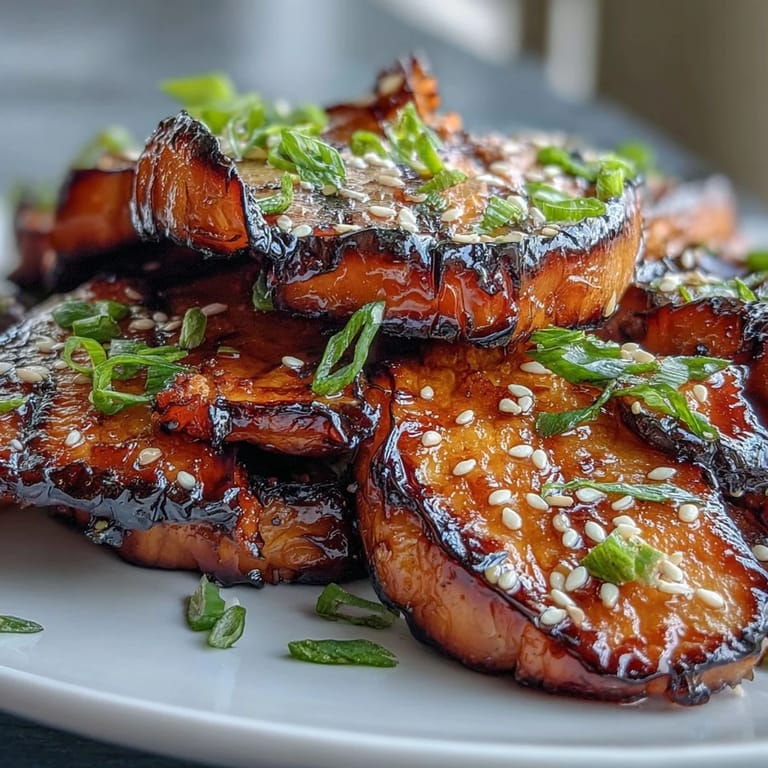
Save The first time I tried making miso glazed eggplant I hadn’t planned on it turning into such a showstopper – it simply began as an experiment to use up a hefty eggplant and the unfamiliar tub of white miso lurking in my fridge. I still remember the way the aroma of caramelized miso and sesame oil drifted through the apartment filling every corner with a promise of warmth. There’s something quietly thrilling about spreading the glossy, golden glaze over the yielding flesh of roasted eggplant, especially when you hear that gentle sizzle as it meets the heat. It’s not a dish that demands perfection, which suits me perfectly on lively weekday evenings. Whether as a star side or a main, it somehow always finds its way to the center of the table.
One particular evening I prepared this for my sister, who had always sworn off eggplant calling it too spongy and bland. We caught up about life while I scored the eggplants, and I nearly forgot a pan in the oven, distracted by laughter. When we finally sat down to eat, even she reached for seconds—and now, she requests this dish whenever she visits.
Ingredients
- Eggplant: Choose firm, glossy eggplants with minimal blemishes – scoring them deeply allows the glaze to seep in beautifully.
- White miso paste (shiro miso): It gives a delicate, gently sweet umami flavor – don’t use red miso, which can be too strong here.
- Mirin: This sweet rice wine balances out the saltiness – if you don’t have any, a splash of rice vinegar and sugar will do in a pinch.
- Sake: It lifts the glaze with a subtle complexity; I’ve found even a basic one does the trick.
- Sugar: Just a sprinkle brings irresistible caramelization to the broiled finish.
- Soy sauce: A dash deepens flavor and color, but use tamari for gluten-free needs.
- Sesame oil: Brushing the eggplant before roasting gives a toasty aroma and helps crisp the edges.
- Toasted sesame seeds: These add a nutty crunch to each bite if you sprinkle them generously right before serving.
- Green onions: Slice thin for a fresh contrast and a pop of color – the sharper, the better.
Tired of Takeout? 🥡
Get 10 meals you can make faster than delivery arrives. Seriously.
One email. No spam. Unsubscribe anytime.
Instructions
- Heat up the oven:
- Preheat to 400°F (200°C) and line your tray so the eggplants don’t stick – I always enjoy the anticipation as the oven hums to life.
- Prepare the eggplants:
- Score a diamond crosshatch into each half, careful not to pierce the skin, letting the knife glide through until just before it gives.
- Give them a sesame gloss:
- Brush the soft cut sides lightly with sesame oil – the kitchen fills with its toasty aroma – and lay them cut side up on your prepared sheet.
- Roast until tender:
- Let them bake for 25 minutes, enough time for the flesh to turn soft and pale golden, so a fork can slide through with no resistance.
- Whip up the miso glaze:
- Meanwhile, whisk miso paste, mirin, sake, sugar, and soy sauce in a small pan on low – stirring until silky and just slightly thickened takes about two minutes.
- Slather on the glaze:
- Spread the warm miso mixture generously over the roasted eggplant, making sure it pools into the score marks.
- Broil and caramelize:
- Move the tray under a hot broiler for 3-5 minutes – stand by and watch for bubbling, bronzed spots, but pull it fast if the edges start to blacken.
- Garnish and serve:
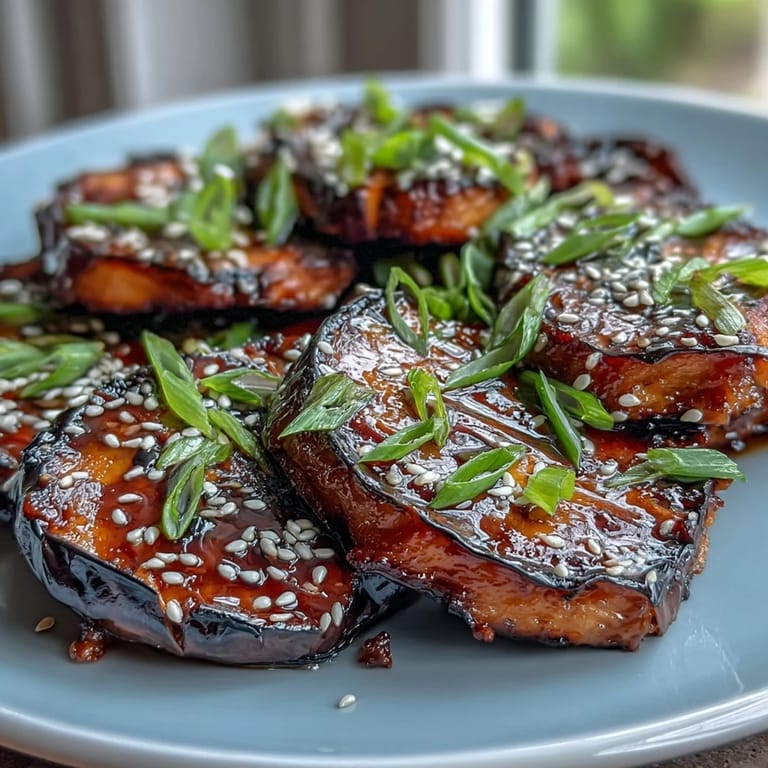
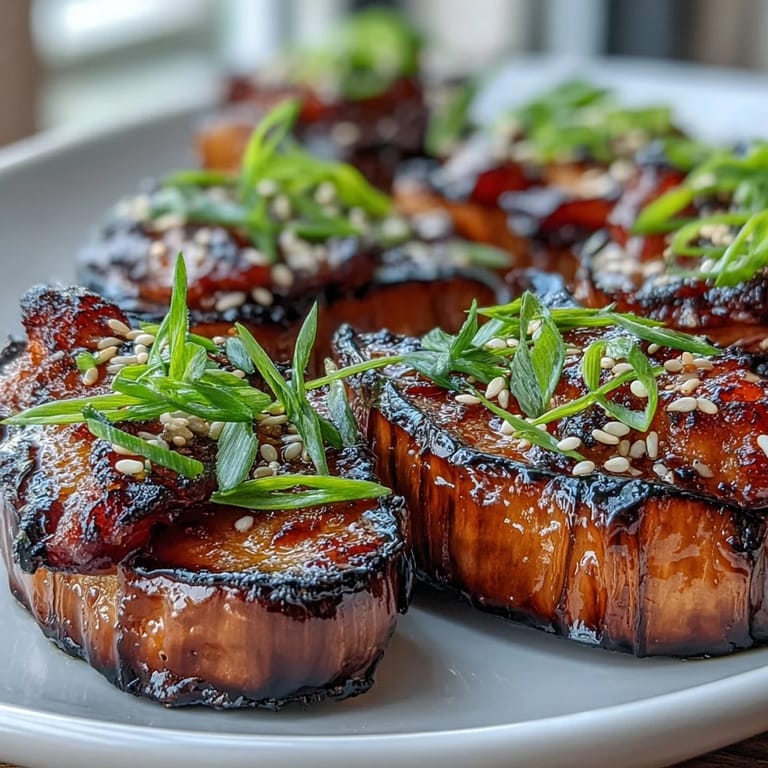
- Lift the eggplants to a platter and rain over sesame seeds and spring onions – each slice glistens invitingly, ready to be shared warm.
 Save
Save It surprised me how much joy came from the simple sound of the broiler sputtering as the miso caramelized. That’s the night I realized a humble eggplant could steal the show at a table full of friends, all trading stories between bites and swipes of rice.
What to Eat With Miso Glazed Eggplant
I love serving these eggplant halves over a bowl of steamed short-grain rice, letting the extra glaze trickle through the grains. They also play well alongside chewy soba noodles tossed with a dash of lemon and sesame oil, or with other roasted veggies for a vibrant spread.
Swaps and Shortcuts
On rushed weeknights, I’ve subbed in rice vinegar and an extra pinch of sugar when mirin was missing, and no one at the table was the wiser. If you’re out of sake, just a splash of water can smooth out the glaze in a hurry.
Kitchen Lessons From My Attempts
I’ve forgotten the parchment paper once, and cleaning caramelized glaze off a baking sheet is not an adventure I recommend. Firm eggplants hold their shape best, and using a sharp knife for scoring saves both your time and patience.
- Add the glaze while the eggplants are piping hot so it absorbs better.
- Keep a close watch during broiling – just a few seconds make the difference.
- Fresh green onions at the end provide the perfect zesty lift.
 Save
Save This recipe never fails to coax smiles from even the eggplant skeptics at my table. Each bite is proof that the right combination of humble ingredients can bring a gentle kind of magic to any meal.
Questions & Answers
- → Can I use a different type of miso?
Yes. White miso (shiro) is milder and sweeter; use it for a delicate glaze. Red miso yields a stronger, saltier flavor—reduce added salt or soy sauce if using it.
- → How do I prevent the eggplant from becoming soggy?
Score the flesh in a crosshatch, brush lightly with sesame oil, and roast cut side up on a lined sheet so moisture evaporates. Avoid over-brushing before the first roast.
- → Can I grill the eggplants instead of roasting?
Yes. Grill cut-side down until charred and soft, then flip, brush with the miso glaze and return briefly to the heat to caramelize. Watch closely to avoid burning the sugars.
- → How can I make this gluten-free or vegan-friendly?
Use tamari or a gluten-free soy alternative for a gluten-free version. For vegan concerns, confirm miso and sake are vegan-friendly; the rest of the ingredients are plant-based.
- → What are good serving suggestions and pairings?
Serve warm over steamed rice, with pickled vegetables or alongside other Japanese-style dishes. It also pairs well with soba, miso soup and simple greens dressed in rice vinegar.
- → How should leftovers be stored and reheated?
Cool completely, store airtight in the fridge for up to 3 days. Reheat under a broiler or in a hot oven to revive the caramelized glaze; avoid microwaving if you want to preserve texture.