 Save
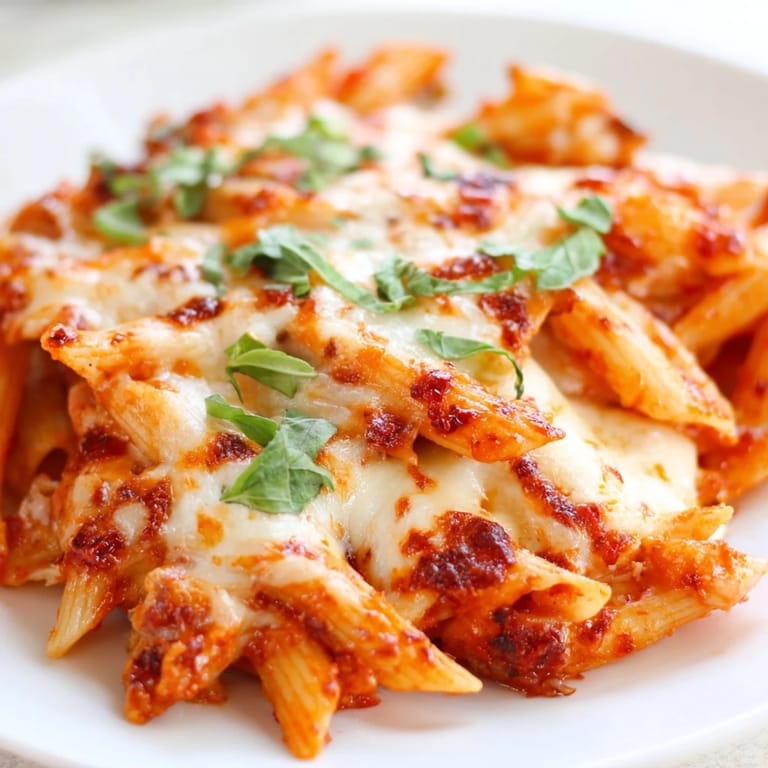
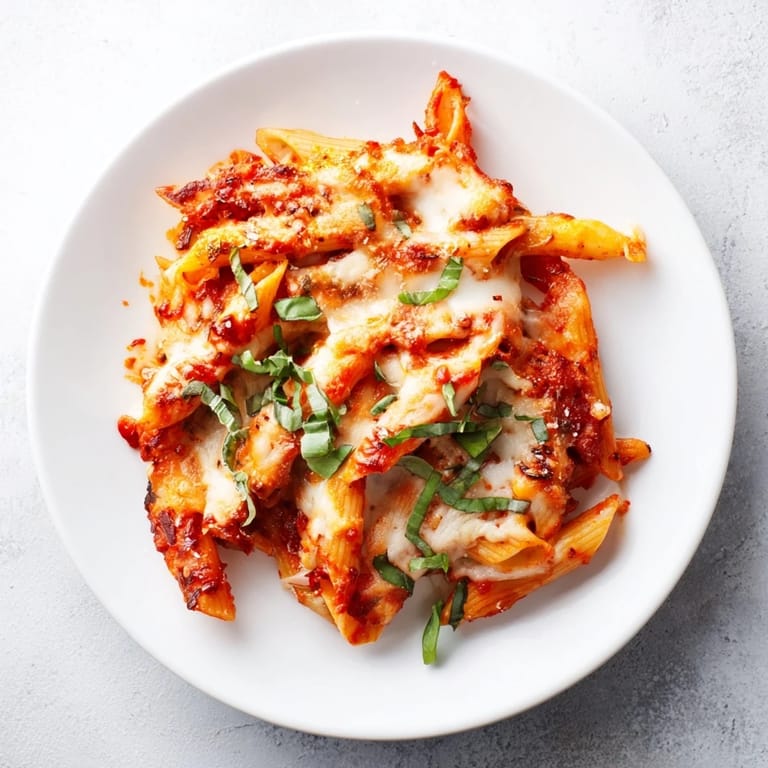
Save There's something magical about the moment when a bubbling baked penne arrabbiata comes out of the oven—the kitchen fills with this intoxicating blend of heat, tomato, and melted cheese that makes everyone pause whatever they're doing. I discovered this dish years ago when I was trying to recreate that electric, slightly dangerous heat of arrabbiata but wanted something more forgiving and communal than the traditional version. The idea of layering the spicy sauce with pasta and cheese felt like a bridge between Italian tradition and the comfort of baked pasta we all crave. It's become my go-to when I want something that tastes impressive but doesn't demand hours of attention.
I remember making this for a dinner party where half the guests were nervous about spicy food, and the other half wanted to sweat a little at the table. The beauty of this dish is that you can actually control the heat with the red pepper flakes—I made it so that people could taste the tomato and richness first, with the kick arriving as an afterthought rather than a front-line assault. By the end of the meal, even the heat-averse folks were reaching for seconds and asking about the secret ingredient (spoiler: there isn't one, just patience with the flavors).
Ingredients
- Penne pasta (350 g / 12 oz): Use a sturdy pasta shape that holds sauce in its ridges; cook it just shy of al dente because it'll soften further in the oven.
- Olive oil (2 tbsp): Good oil matters here because it carries the garlic flavor into the sauce—don't use the cheapest bottle.
- Garlic (4 cloves, finely chopped): Mince it small so it dissolves into the sauce rather than sitting as obvious chunks.
- Crushed red pepper flakes (1–2 tsp): Start with less and taste as you go; dried chili heat is unpredictable depending on the brand and how long it's been sitting in your spice cabinet.
- Canned crushed tomatoes (800 g / 28 oz): San Marzano varieties have less water and sweeter flavor, but any quality crushed tomato works—avoid diced unless you don't mind texture variation.
- Sugar (1 tsp): A small amount balances acidity and coaxes sweetness from the tomatoes without making the sauce taste candied.
- Dried oregano (1 tsp): This is your Italian backbone; fresh oregano would burn in the oven, so stick with dried.
- Salt and black pepper (½ tsp salt, ¼ tsp pepper): Season early and taste throughout because once everything bakes, it's harder to adjust.
- Fresh basil (1 small bunch, chopped): Split this into cooking basil and garnish basil—the fresh herb finishes the sauce with brightness.
- Parmesan cheese (80 g / ¾ cup, grated): Grate it yourself from a block if possible; pre-grated versions have anti-caking agents that affect melting.
- Mozzarella cheese (150 g / 1½ cups, shredded): This is your stretchy, melty layer; don't skip it just because you have Parmesan.
Tired of Takeout? 🥡
Get 10 meals you can make faster than delivery arrives. Seriously.
One email. No spam. Unsubscribe anytime.
Instructions
- Prepare your stage:
- Preheat the oven to 200°C (400°F) and grease your baking dish while it warms up. This five-minute head start means you won't be rushing when the pasta is ready.
- Cook pasta to just-barely:
- Bring a large pot of salted water to a rolling boil, add penne, and pull it out two minutes before the package says it's done. It should bend slightly under pressure but still have a firm center—al dente, but with room to soften in the oven.
- Build the sauce base:
- While pasta cooks, warm olive oil in a large skillet over medium heat, then add minced garlic and red pepper flakes. Let them sizzle gently for 1–2 minutes until you smell that toasty, slightly sharp garlic aroma—but stop before the garlic turns golden or it'll taste bitter.
- Simmer the tomatoes:
- Stir in crushed tomatoes, sugar, oregano, salt, and pepper. Let it bubble quietly for 10–12 minutes, stirring occasionally, until the sauce thickens and darkens slightly. You'll know it's ready when a spoon drawn through the sauce leaves a brief trail on the bottom of the pan.
- Finish raw and finish cooked:
- Remove from heat and fold in the chopped fresh basil—this preserves its bright flavor. Toss the drained pasta into the sauce until every piece gleams with red.
- Layer with intention:
- Spread half the sauced pasta into your baking dish, then scatter half the Parmesan and mozzarella over it. Top with the remaining pasta mixture and finish with the remaining cheeses so the top gets golden and bubbly.
- Bake until golden:
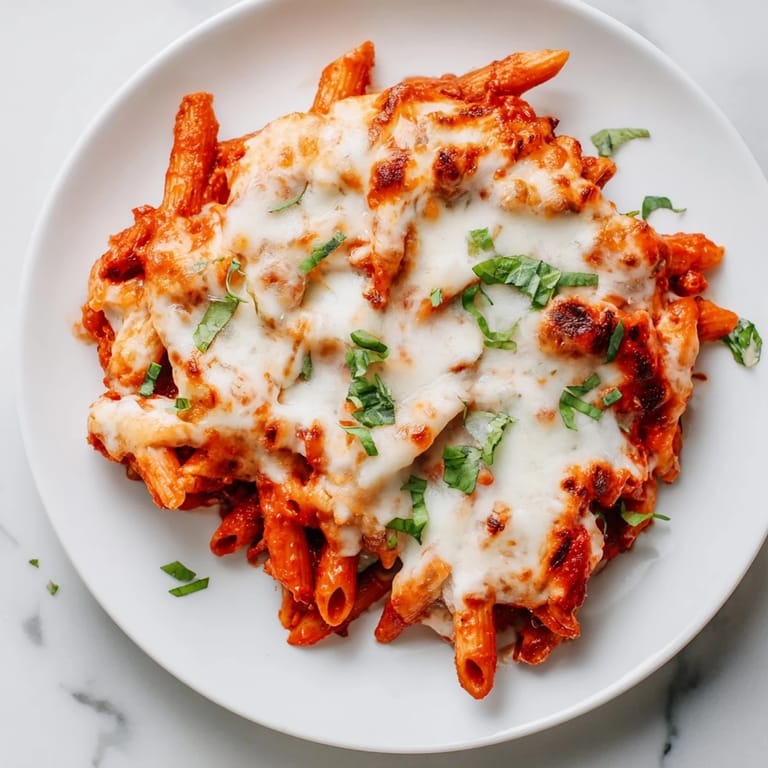
- Slide the dish into the hot oven and bake 18–20 minutes, until the cheese is melted, slightly browned at the edges, and the sauce bubbles visibly at the sides. The bubbling means the heat has reached all the way through.
- Rest and garnish:
- Let it sit for 5 minutes—this gives the cheese time to set slightly and makes serving easier. Scatter reserved fresh basil on top and serve while it's still steaming.
 Save
Save The moment I understood this recipe was when I stopped treating the baked version as a shortcut and started respecting it as its own thing. Arrabbiata, traditionally, is about simplicity and the raw energy of chili heat meeting tomato on a quick stovetop—but this baked version invites cheese and time into the conversation, turning it into something more generous and shared. That shift in mindset changed how I approached the cooking.
Why This Bake Works
Baking pasta in sauce instead of serving them separately sounds counterintuitive until you taste it. The sauce doesn't dilute; instead, it concentrates further as moisture evaporates, becoming almost syrupy. The cheese melts directly into the sauce and pasta, creating pockets of creamy richness that individual plating can't achieve. It's the difference between a plate of pasta and a composed dish that tastes intentional.
Controlling the Heat
Arrabbiata means angry in Italian, referring to the chili pepper's fury, but this version lets you decide how angry you want to be. Red pepper flakes vary wildly in potency—a two-year-old jar is gentler than a fresh one. I taste the sauce after simmering to decide if I need more heat or if what I've got is already singing. Some people think spicy means you can't taste anything else; I think it means the other flavors should still have room to breathe alongside the heat.
Cheese Choices That Matter
Parmesan brings sharpness and a slightly salty bite, while mozzarella provides the stretch and melt. Together they're a team: one adds character, one adds texture. I've tried substituting provolone (which brings a subtle smokiness) and fontina (which is richer and slightly nutty), and both work beautifully if you want to experiment. The key is using real cheese, grated fresh, not the pre-shredded stuff that prioritizes flow over melting.
- Fontina melts more smoothly than mozzarella and tastes like a more sophisticated version of this dish.
- Provolone adds a gentle smoke that pairs beautifully with arrabbiata's heat.
- A mix of Romano and mozzarella intensifies the salty, complex flavor without overwhelming.
 Save
Save This is the dish I reach for when I want to cook something that feels special but won't wear me out, when I want to feed people in a way that shows I care without disappearing into the kitchen. That's the whole point of a good recipe.