 Save
Save My grandmother kept a designated freezer bag for vegetable trimmings, something I thought was eccentric until I started cooking for myself. Now I understand the quiet satisfaction of turning what would be compost into something nourishing. There is a profound alchemy in simmering those humble carrot peels and onion skins until they release their hidden essence into golden broth.
Last winter, during a particularly tight week between paychecks, I relied entirely on scrap broth for my cooking. Every soup, every pot of beans, every grain absorbed layers of flavor that store bought versions simply cannot match. My dinner guests kept asking what restaurant I had ordered from, unaware they were enjoying onion skins and celery ends.
Ingredients
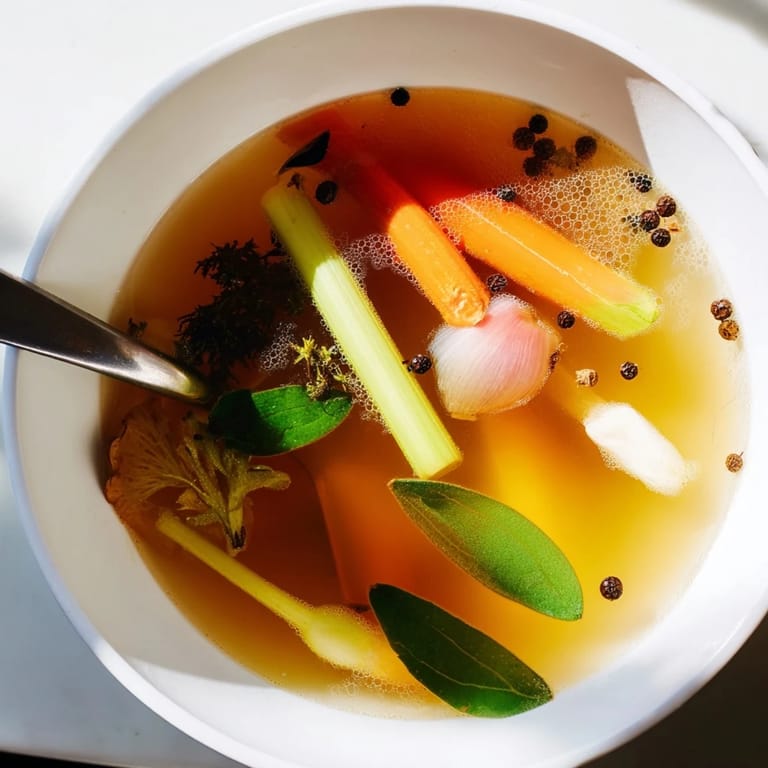
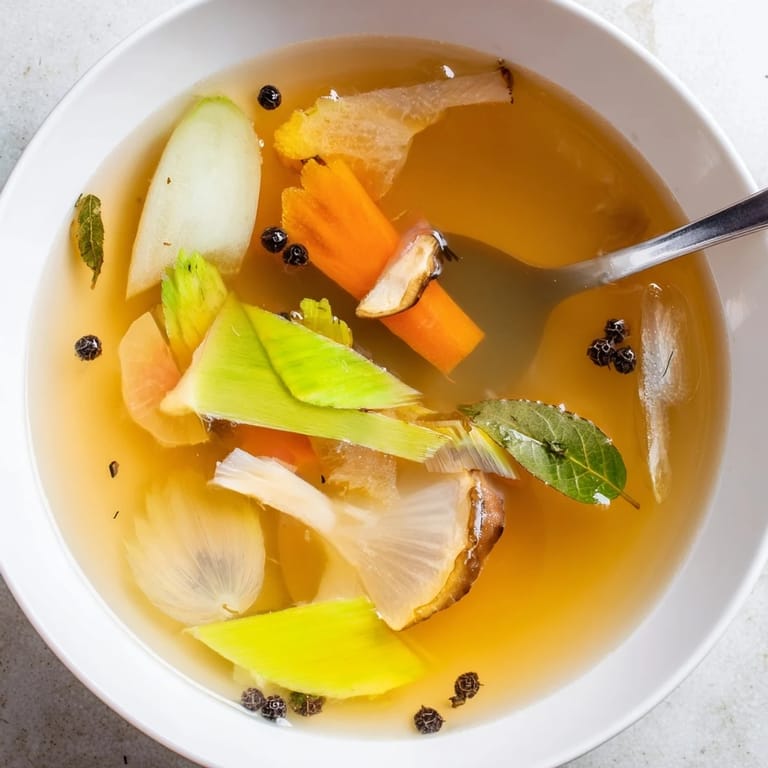
- Vegetable Scraps: Carrot peels, onion skins, celery ends, leek tops, mushroom stems, garlic skins, and parsley stems create the deepest flavor foundation
- Bay Leaves: Two whole leaves add earthy complexity that transforms simple vegetable water into proper stock
- Black Peppercorns: Eight to ten whole peppercorns provide subtle warmth without overpowering delicate vegetal notes
- Garlic: Two smashed cloves, even with their skins, contribute mellow savory depth
- Fresh Herbs: A handful of parsley or thyme sprigs brightens the broth with aromatic freshness
- Salt: One to two teaspoons allows you to season the broth itself rather than relying entirely on salt in final dishes
- Cold Water: Two liters or eight cups of cold water extracts flavor more effectively than hot water
Tired of Takeout? 🥡
Get 10 meals you can make faster than delivery arrives. Seriously.
One email. No spam. Unsubscribe anytime.
Instructions
- Gather Your Scraps:
- Collect about five to six cups of clean vegetable trimmings from your cooking throughout the week, keeping a freezer bag dedicated to this purpose.
- Combine Everything:
- Place your vegetable scraps, bay leaves, peppercorns, garlic, herbs, and salt into a large stockpot, then pour in the cold water.
- Bring to a Gentle Boil:
- Set the pot over medium-high heat and watch for the first bubbles, then immediately reduce to maintain a gentle simmer.
- Simmer Slowly:
- Let the broth cook uncovered for one hour, occasionally skimming any foam that rises to the surface with a large spoon.
- Season and Taste:
- Taste the broth carefully and adjust the salt if needed, remembering you can always add more later but cannot remove it.
- Strain Carefully:
- Pour the broth through a fine-mesh sieve or cheesecloth into a large bowl, discarding all the cooked solids.
- Store or Use:
- Cool the broth completely before transferring to airtight containers, refrigerating for up to five days or freezing for three months.
 Save
Save  Save
Save This recipe changed how I view my kitchen entirely. Nothing goes to waste anymore, and every meal begins with this foundation of mindful cooking that my grandmother understood instinctively.
Building Your Scrap Collection
Keep a large freezer bag designated specifically for vegetable trimmings. Add carrot peels, onion skins, celery ends, mushroom stems, and herb sprigs as you cook throughout the week. When the bag is full, you are ready to make broth.
Flavor Variations
Add a piece of kombu seaweed or dried shiitake mushrooms for deeper umami richness. Roast your vegetable scraps in the oven at 400°F for twenty minutes before simmering to develop caramelized depth. Include a Parmesan rind if you are not strictly vegan.
Storage Solutions
Cool broth quickly in an ice bath before refrigerating to prevent bacterial growth. Freeze in two-cup portions for easy recipe use later. Label containers with the date, as frozen broth maintains best quality for three months.
- Pour broth into ice cube trays for tiny portions perfect for sautéing or deglazing pans
- Reduce leftover broth by half to create a concentrated glaze for instant flavor boosts
- Always leave expansion room in containers when freezing liquid
 Save
Save  Save
Save Every batch tells the story of meals past while promising nourishment for meals to come. Something truly magical emerges from treating kitchen scraps with the respect they deserve.
Questions & Answers
- → What vegetables work best for homemade broth?
Carrot peels, onion skins, celery ends, leek tops, mushroom stems, garlic skins, and parsley stems create the most flavorful base. These aromatic vegetables build depth without overpowering the final result.
- → How long does this broth stay fresh?
Store strained broth in airtight containers in the refrigerator for up to five days. For longer storage, freeze portions for up to three months. Thaw overnight in the refrigerator before using.
- → Why should I avoid cruciferous vegetables?
Broccoli, cauliflower, Brussels sprouts, and cabbage can make broth taste bitter or sulfurous. These strong flavors overpower delicate aromatics. Save cruciferous scraps for composting instead.
- → Can I customize the flavor profile?
Add kombu seaweed or dried shiitake mushrooms for deeper umami notes. Fresh thyme or rosemary changes the herbal character. Adjust peppercorns and salt to match your taste preferences or intended use.
- → Should I save scraps in advance?
Keep a gallon bag in the freezer and add clean vegetable trimmings as you cook. Once full, you'll have enough for a rich batch. This method makes zero-waste cooking effortless throughout the week.