 Save
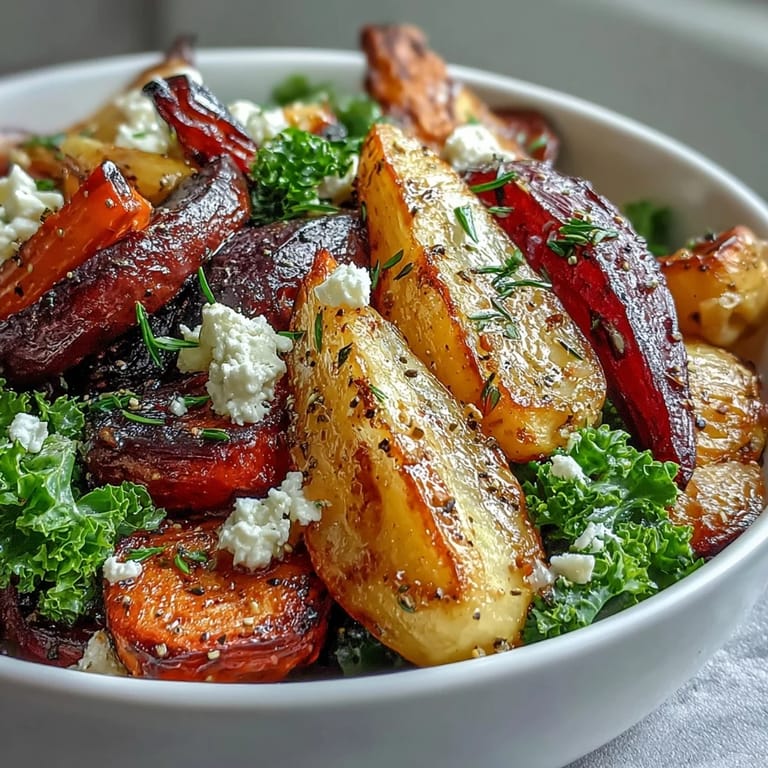
Save Last November, I was standing in my kitchen on a gray afternoon, staring at a farmers market haul of root vegetables that suddenly felt overwhelming. My friend texted asking what we were making for dinner, and instead of panicking, I started roasting everything with thyme and realized I'd stumbled onto something that tasted like comfort wrapped in caramelized edges. That bowl became our winter ritual, and now whenever the temperature drops, this is what I crave.
I made this for my parents one Sunday in January, and my mom kept saying the roasted beets tasted like something she'd forgotten she loved. That moment of watching someone taste something and suddenly smile at a memory made me understand why this bowl matters so much more than just the sum of its parts.
Ingredients
- Carrots (2 medium): Cut into even 1-inch pieces so they caramelize together, creating those golden, slightly sweet edges.
- Parsnips (2): Their earthy sweetness deepens when roasted and pairs beautifully with the carrots if you keep the pieces similar in size.
- Sweet potato (1 small): This adds a natural creaminess and subtle sweetness that balances the earthiness of the beet and parsnip.
- Beet (1 small): The star player here, turning everything slightly jewel-toned and bringing an earthy depth that makes every bite feel intentional.
- Olive oil (2 tablespoons for vegetables): Good quality oil matters here because these vegetables need enough coating to caramelize, not steam.
- Kosher salt and black pepper (1 teaspoon and ½ teaspoon): Season the vegetables generously before roasting so the flavors concentrate as they caramelize.
- Dried thyme (1 teaspoon): It infuses into the oil and clings to the vegetables, whispering herbal notes throughout.
- Curly kale (4 cups): Massaging it with oil softens the leaves and makes them less assertive, a trick that changed how I approach raw greens.
- Olive oil (1 tablespoon for kale): This small amount transforms the texture of the kale from tough to tender without overwhelming it.
- Dijon mustard (1 tablespoon): It emulsifies the dressing and brings a subtle tang that cuts through the richness of the roasted vegetables.
- Apple cider vinegar (1 tablespoon): The acidity wakes up everything on the plate and prevents the bowl from feeling heavy or one-note.
- Honey or maple syrup (1 teaspoon): Just enough to round out the dressing and hint at caramel without making it sweet.
- Shallot (1 small, minced): Sautéed into the warm oil, it becomes almost translucent and melts into the dressing, adding a gentle umami layer.
- Pumpkin seeds (¼ cup): Toasted until golden, they add a satisfying crunch and a nutty richness that anchors the bowl.
- Feta cheese (¼ cup): Crumbled generously, it provides a salty, creamy contrast to the warmth of everything else.
Tired of Takeout? 🥡
Get 10 meals you can make faster than delivery arrives. Seriously.
One email. No spam. Unsubscribe anytime.
Instructions
- Get the oven ready and gather your vegetables:
- Preheat your oven to 425°F and line a baking sheet with parchment paper. While it heats, peel and cut all your root vegetables into 1-inch pieces, keeping them as uniform as possible so they roast evenly.
- Season and spread everything out:
- In a large bowl, toss the carrots, parsnips, sweet potato, and beet with 2 tablespoons of olive oil, kosher salt, black pepper, and thyme until everything is coated. Spread them across your prepared baking sheet in a single layer, giving them room to breathe so they caramelize instead of steam.
- Roast until the edges turn gold:
- Place the baking sheet in the oven for 30 to 35 minutes, stirring halfway through so the vegetables color evenly on all sides. Youll know theyre done when the edges are caramelized and the insides are tender when pierced with a fork.
- Massage the kale into submission:
- While the vegetables roast, take your curly kale, remove the thick stems, and tear the leaves into bite-sized pieces. Drizzle with 1 tablespoon of olive oil and a small pinch of salt, then massage it with your hands for about a minute until it softens and darkens slightly, which makes it much more pleasant to eat raw.
- Build the warm dressing:
- Heat 3 tablespoons of olive oil in a small skillet over medium heat and add your minced shallot, stirring gently for about 2 minutes until it becomes fragrant and slightly soft. Add the apple cider vinegar, Dijon mustard, and honey or maple syrup, whisking everything together until it looks emulsified and glossy, then taste and adjust with salt and pepper.
- Assemble the bowls:
- Divide the massaged kale evenly among four bowls, creating a bed that will hold everything. Top each with the warm roasted vegetables, distributing them so theres variety in every bite.
- Finish with warmth and texture:
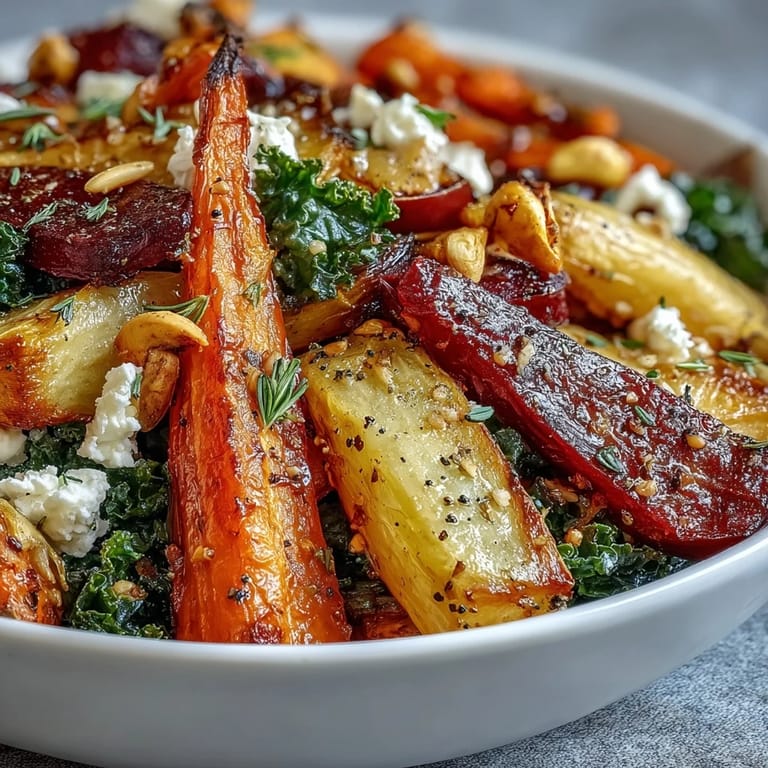
- Drizzle each bowl generously with the warm dressing, then scatter the toasted pumpkin seeds and crumbled feta across the top. Serve immediately while the vegetables are still warm and the kale hasnt begun to wilt.
 Save
Save One evening in December, I served this bowl to someone going through a difficult time, and they told me later it was the first meal that week that actually made them want to sit down and eat slowly. Food has this quiet power when its made with intention, and this dish seems to bring that out naturally.
The Magic of Roasted Root Vegetables
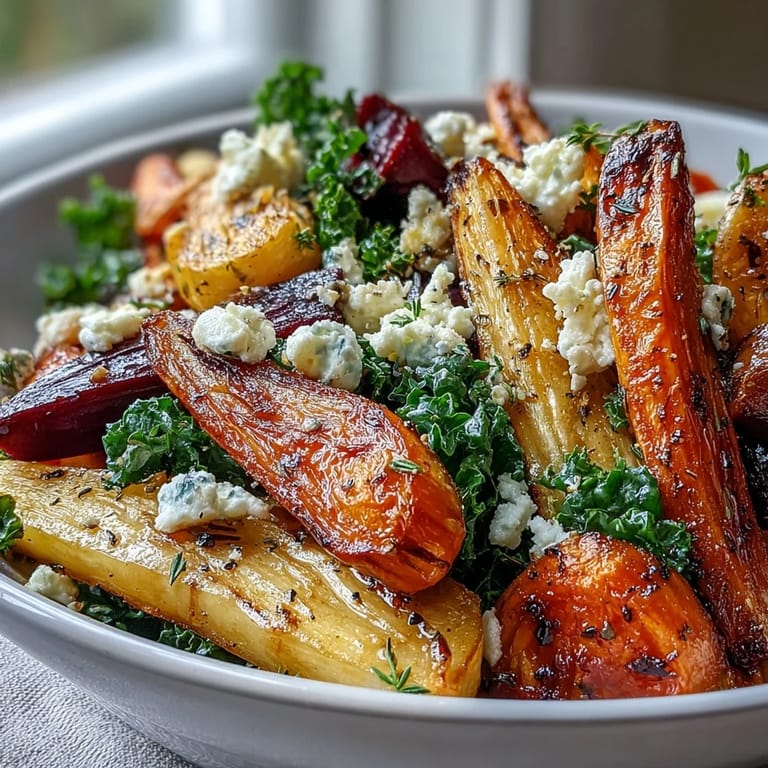
Roasting transforms root vegetables in a way that boiling or steaming never quite achieves. The dry heat of the oven concentrates their natural sugars, creating caramelized edges and tender centers that feel almost decadent. I learned this by accident one winter when I ran out of time to simmer vegetables and threw them in the oven instead, and it completely changed how I approach them now. The thyme infuses into the oil and clings to everything, making each piece taste like it was meant to be paired with that herb all along.
Why Massage the Kale
Raw kale can feel aggressive and tough, but massaging it with a little oil breaks down the structure of the leaves and makes them silky without cooking them. I used to avoid raw kale entirely until a chef friend showed me this trick, and suddenly it became something I actually wanted to eat. The oil also helps the kale absorb the flavors of the dressing more effectively, so youre not just eating leaves on top of vegetables, youre creating an integrated dish where everything tastes like it belongs together.
Building Flavor Through the Warm Dressing
A warm dressing is the secret weapon of this bowl because it bridges the gap between the roasted heat of the vegetables and the cooler kale, and the warmth helps release the aromatics of the shallot and mustard so they bloom across your palate. The apple cider vinegar cuts through any richness while the honey rounds everything out into something that tastes both complex and comforting. The minced shallot adds a sweet, mellow onion flavor that melts into the oil rather than asserting itself loudly, and the Dijon mustard emulsifies everything into a silky coating that clings to the vegetables.
- Always whisk the dressing over medium heat so the oil emulsifies properly and the shallot softens evenly.
- Taste and adjust the seasoning before serving because salt levels vary depending on your vegetables and oil.
- Keep the dressing warm by leaving it on the stove until the moment you drizzle it over the bowls.
 Save
Save This bowl became my answer to winter gray days and the moments when I need something nourishing but not heavy. It proves that simple ingredients, when treated with care and intention, become something worth returning to again and again.
Questions & Answers
- → Can I prepare the vegetables ahead of time?
Yes, you can peel and cut the root vegetables up to 24 hours in advance. Store them in an airtight container with cold water to prevent browning. Drain and pat dry before roasting.
- → What other vegetables work in this bowl?
Butternut squash, turnips, rutabaga, or red onion make excellent additions. Just keep the pieces similar in size for even cooking. Brussels sprouts also pair beautifully with these flavors.
- → How do I store leftovers?
Keep components separate in airtight containers for up to 3 days. Reheat vegetables at 375°F for 10-12 minutes. Store the dressing at room temperature and whisk before serving.
- → Can I make this without an oven?
Yes, you can cook the vegetables on the stovetop. Cut them into smaller pieces and sauté in batches over medium-high heat for 8-10 minutes each until tender and browned.
- → What protein can I add to make it more filling?
Chickpeas, lentils, grilled chicken, or baked tofu work wonderfully. Simply roast or cook your chosen protein alongside the vegetables, or use leftover cooked protein.