 Save
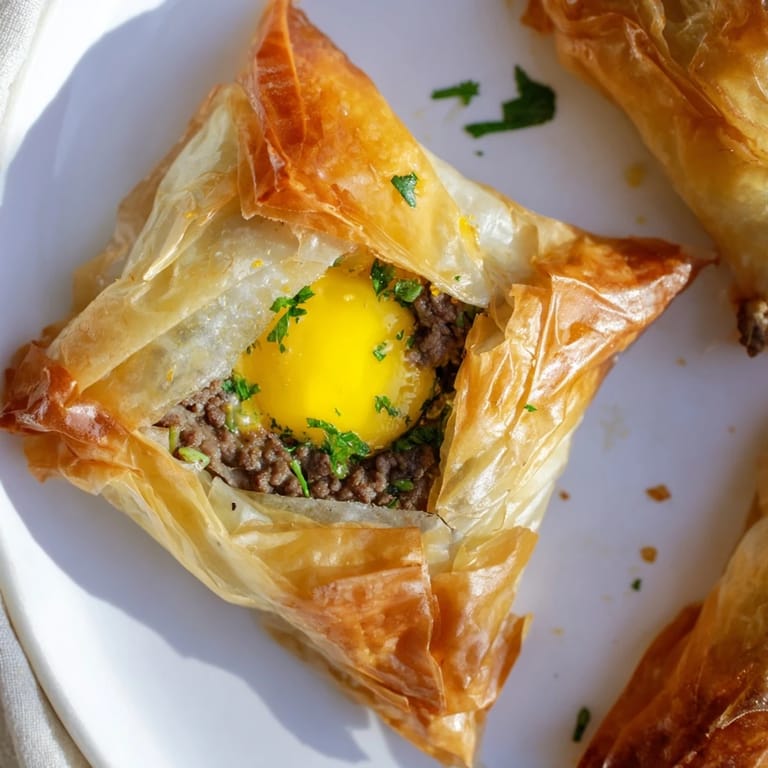
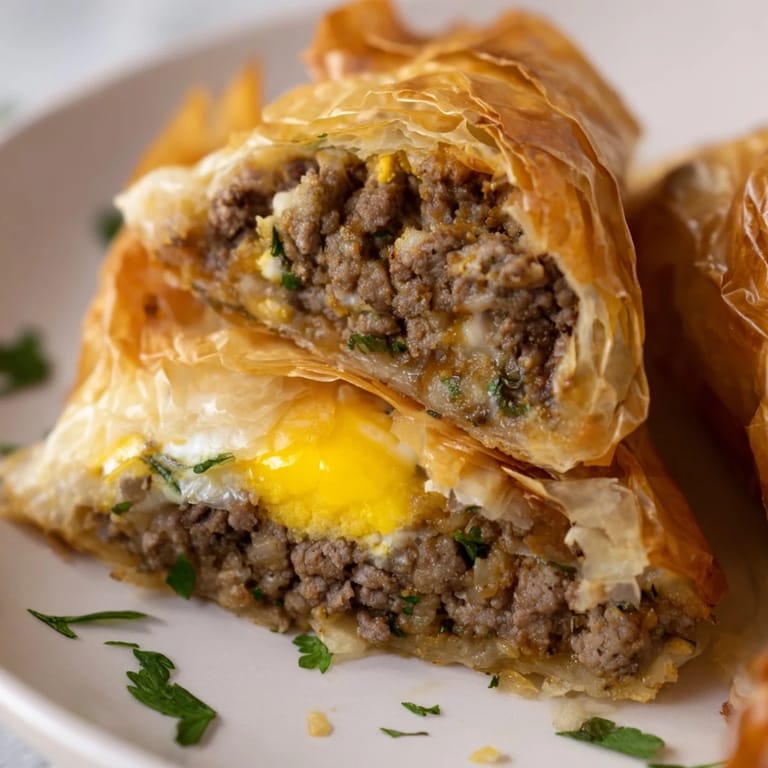
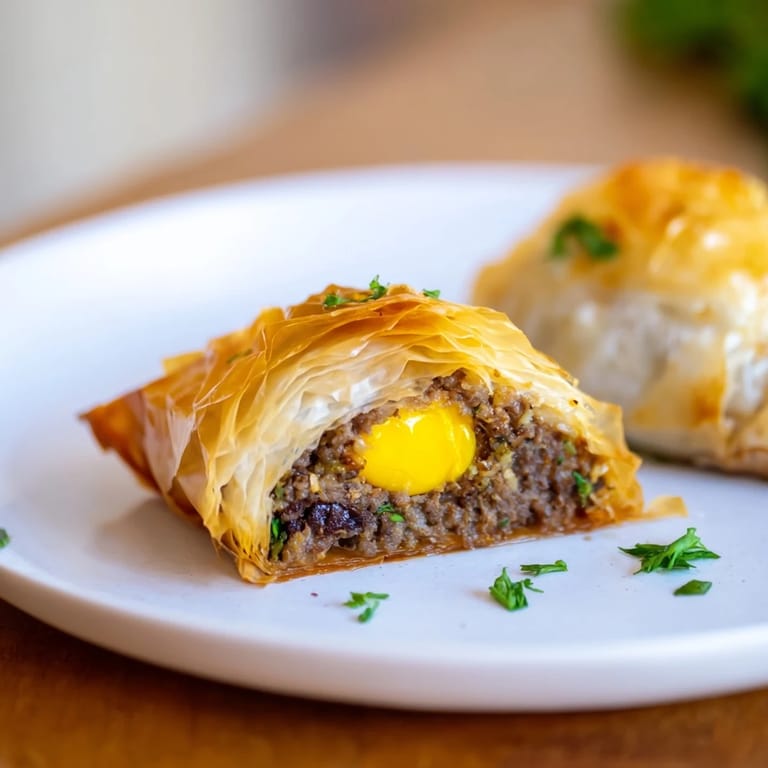
Save My first brik came to me by accident at a bustling Tunis market, where an vendor pulled a golden, crackling triangle from hot oil and handed it to me with a knowing smile. The moment I bit through that shattered phyllo shell and met the warm, runny yolk inside, I understood why this humble pastry had survived centuries of Tunisian kitchens. Years later, I still chase that exact moment—the contrast of crisp and soft, the way the egg yolk mingles with seasoned meat—and now I make them whenever I want to feel that same small magic at home.
I made these for a group of friends one winter evening, and I remember the kitchen filling with smoke and the sound of oil crackling in the pan—my neighbor actually came over to ask if something was burning, only to leave with a warm brik in hand. There's something about serving food that sizzles and steams right from the pan that turns dinner into an event.
Ingredients
- Ground beef or lamb, 120 g: This is where the soul of your brik lives; lamb gives you that deeper, more traditional flavor, but beef is just as reliable and easier to find.
- Onion, 1 small, finely chopped: The onion softens into almost nothing during cooking, becoming the foundation that carries all your spices.
- Fresh parsley, 1 tbsp: Don't skip this—it brightens the meat and adds a little green fleck that feels intentional, not accidental.
- Ground cumin and coriander, 1 tsp and 1/2 tsp: These warm spices are the signature; if you only have one, cumin is the one to keep.
- Salt and pepper: Taste your meat mixture before you wrap anything—this filling should taste good enough to eat plain.
- Phyllo pastry sheets, 4 large: Handle these like they're delicate but not fragile; they're tougher than they look, though keeping them under a barely damp towel prevents them from drying out.
- Eggs, 4 large: Room temperature is ideal so the yolk cooks gently while staying runny in the center; straight from the fridge means you risk hard-cooked eggs.
- Gruyère or mozzarella cheese, 4 tbsp: This is optional but traditional in some versions—it adds a small note of salt and richness that makes the filling feel more complete.
- Oil for frying: Use something neutral and high-heat tolerant; the oil needs to reach about 350°F to get that shattered, golden crust without absorbing greasiness.
Tired of Takeout? 🥡
Get 10 meals you can make faster than delivery arrives. Seriously.
One email. No spam. Unsubscribe anytime.
Instructions
- Wake up the spices in the meat:
- Sauté the onion in a little oil until it turns translucent and soft, then add your meat and spices. You're looking for the oil to release the cumin and coriander's fragrance—your nose will tell you when it's ready. Let it all brown and cook through, then stir in the parsley and taste a tiny pinch to make sure the seasoning sings.
- Build your pastry pocket:
- Lay a phyllo sheet down and spoon about 2 to 3 tablespoons of meat mixture into the center. Create a shallow well in the filling, as if you're cradling something precious.
- Nestle the egg:
- Crack an egg directly into that well, trying to keep the yolk intact. Add cheese if you're using it—just a small scatter across the top.
- Seal the pastry:
- This is where patience matters; fold the phyllo over the filling methodically, folding one corner, then another, until you've created a triangle or rectangle. Dip your finger in water and run it along the edges to seal them—you want no escape routes for the egg or filling.
- Heat your oil carefully:
- Get your frying pan hot enough that a small piece of phyllo sizzles instantly when it hits the oil, but not so hot that the pastry browns before the egg cooks. About 3 to 4 centimeters of oil is right.
- Fry until golden:
- Slide your brik in gently, and don't move it around—let each side spend 2 to 3 minutes undisturbed getting golden and crispy. You'll know it's ready when the edges are amber and the pastry sounds papery when you tap it.
- Drain and serve immediately:
- Use a slotted spoon to lift it out and set it on paper towels. Eat it while it's still crackling; the moment you let it cool, you lose half the magic.
 Save
Save There was an evening when a friend bit into one of these and the yolk ran down her chin, and instead of being embarrassed, she laughed and asked for another one immediately. That's when I realized this food doesn't need to be fancy or perfectly plated to matter—it just needs to be honest and hot.
Variations Worth Trying
Brik is endlessly forgiving—I've made them with tuna mixed with a little mayo and capers, which becomes almost a melted tuna melt inside crispy pastry. Potato versions exist too, where thinly sliced potatoes replace the meat, making the dish lighter and more vegetarian-friendly. The filling is just a vehicle for that egg, so think of what you'd want to taste alongside a warm yolk.
The Oil Temperature Question
The most common mistake I see is oil that isn't hot enough, which means the phyllo absorbs oil instead of crisping, and everything tastes soggy by the time it cools. If your oil is actually hot enough, the pastry will fry so quickly that it seals itself before the egg leaks out. Once you feel that moment when the pastry goes from pale to golden in seconds, you'll know you've got it right.
Serving and Storage
Serve these with lemon wedges—a squeeze of acid over the yolk is essential and changes everything. A simple green salad alongside makes it feel like a meal rather than just a snack, and that's when you can really appreciate the balance of richness and freshness.
- These are best eaten fresh and hot; if you must make them ahead, fry them and rewarm in a 350°F oven for about 5 minutes to restore crispness.
- The filling can be made a day ahead and stored in the fridge, which actually makes assembly easier when you're ready to cook.
- Phyllo sheets dry out quickly, so work methodically and keep unused sheets under a barely damp kitchen towel.
 Save
Save This is the kind of food that teaches you something every time you make it, whether it's about heat control or timing or the simple pleasure of watching something transform in hot oil. I think that's why it's lasted so long in Tunisian kitchens—it rewards attention and care in the most delicious way.
Questions & Answers
- → What type of meat is best for the filling?
Ground beef or lamb works well, providing a savory and rich base balanced by spices and herbs.
- → Can I use different cheese in the filling?
Gruyère or mozzarella adds a mild creamy texture, but it's optional depending on your preference.
- → How do I prevent the phyllo from tearing?
Handle phyllo sheets gently and consider layering two sheets for extra strength before adding filling.
- → What oil is recommended for frying?
Sunflower or vegetable oil is preferred as they withstand high heat and allow the pastry to crisp evenly.
- → How can I add a spicy flavor?
Add a pinch of harissa or chili flakes to the meat mixture for a subtle, authentic heat.