 Save
Save The kitchen window was wide open one June afternoon when I pulled a tray of golden, blistered vegetables from the oven and realized I'd forgotten to start the couscous. Instead of panicking, I boiled the broth, stirred in the grains, and let them steam while I whisked together lemon and olive oil in a jam jar. By the time my neighbor knocked to borrow sugar, the whole salad was tossed, fragrant, and somehow better than any version I'd planned. That happy accident taught me that the best meals don't always follow the script.
I brought this to a potluck once, worried it might seem too simple next to lasagnas and pies. Instead, three people asked for the recipe before dessert was served. One friend ate it straight from the bowl while standing in the kitchen, mint leaves stuck to her fork, and told me it tasted like summer in the mountains. I've made it for picnics, for myself on slow Sundays, and once for a coworker who'd just moved and had nothing but a hot plate and hope.
Ingredients
- Zucchini: Dice it into chunks that feel right in your hand, not too small or they'll vanish into mush, and let the oven work its magic on the edges.
- Red and yellow bell peppers: The mix of colors isn't just pretty, it gives you sweet and slightly smoky notes that make every forkful different.
- Red onion: Cut into wedges so they hold their shape and turn jammy soft in the oven, adding little pockets of sweetness.
- Cherry tomatoes: Halve them so they burst and release their juices, which mingle with the olive oil and create a natural sauce.
- Olive oil: Use a good one for roasting and an even better one for the dressing, because you'll taste every drop.
- Couscous: It cooks in five minutes under a lid and fluffs up like tiny clouds, soaking up every bit of lemon and vegetable flavor.
- Vegetable broth: This adds a gentle savory backbone, but water works fine if that's what you have on hand.
- Lemon juice and zest: The zest is where the magic lives, those oils wake up the whole dish and make it sing.
- Dijon mustard: Just a teaspoon emulsifies the dressing and adds a quiet sharpness you'll notice without naming.
- Garlic: Mince it fine so it melts into the dressing and doesn't punch you in the mouth.
- Honey or maple syrup: A half teaspoon balances the acid and makes the lemon taste brighter, not harsh.
- Fresh parsley and mint: Chop them roughly and toss them in at the end for color and a cool herbal lift.
- Feta cheese: Crumbled over the top, it adds creamy salt and tangy richness that clings to the couscous.
- Toasted pine nuts or almonds: Optional, but they give you crunch and a nutty warmth that makes the salad feel complete.
Tired of Takeout? 🥡
Get 10 meals you can make faster than delivery arrives. Seriously.
One email. No spam. Unsubscribe anytime.
Instructions
- Get the oven ready:
- Preheat to 425 degrees and line your baking sheet with parchment so nothing sticks and cleanup is a breeze. This high heat is what gives you those caramelized edges.
- Toss and roast the vegetables:
- In a big bowl, coat the zucchini, peppers, onion, and tomatoes with olive oil, salt, and pepper, then spread them out in a single layer. Roast for 20 to 25 minutes, stirring halfway, until they're tender and starting to char in places.
- Cook the couscous:
- Bring the vegetable broth to a boil, stir in the couscous, olive oil, and salt, then cover and pull it off the heat. After five minutes, fluff it with a fork and watch the steam rise.
- Make the lemon dressing:
- Whisk together lemon juice, zest, olive oil, mustard, garlic, honey, salt, and pepper in a small bowl until it's smooth and glossy. Taste it and adjust, because this is what ties everything together.
- Combine and toss:
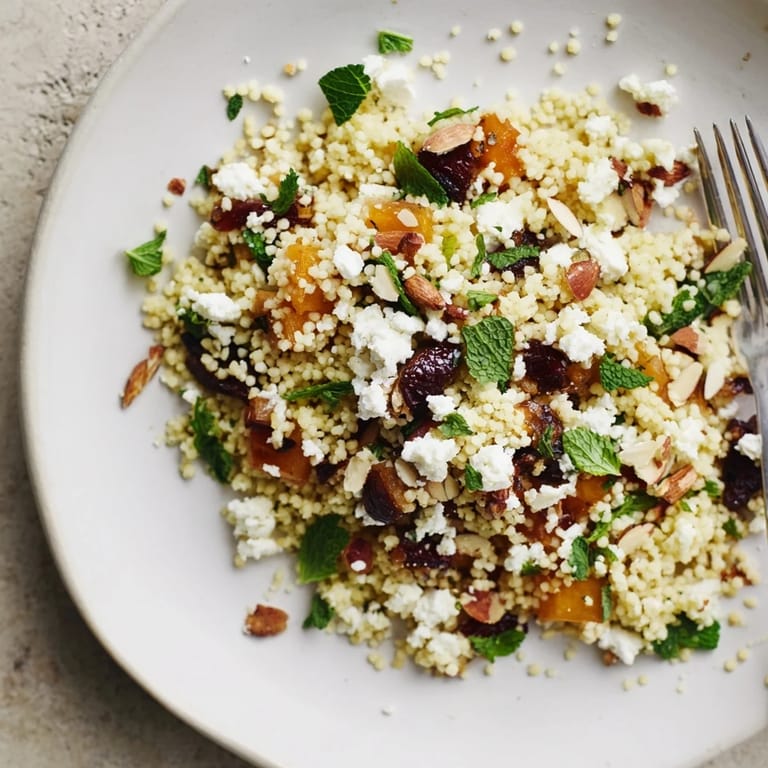
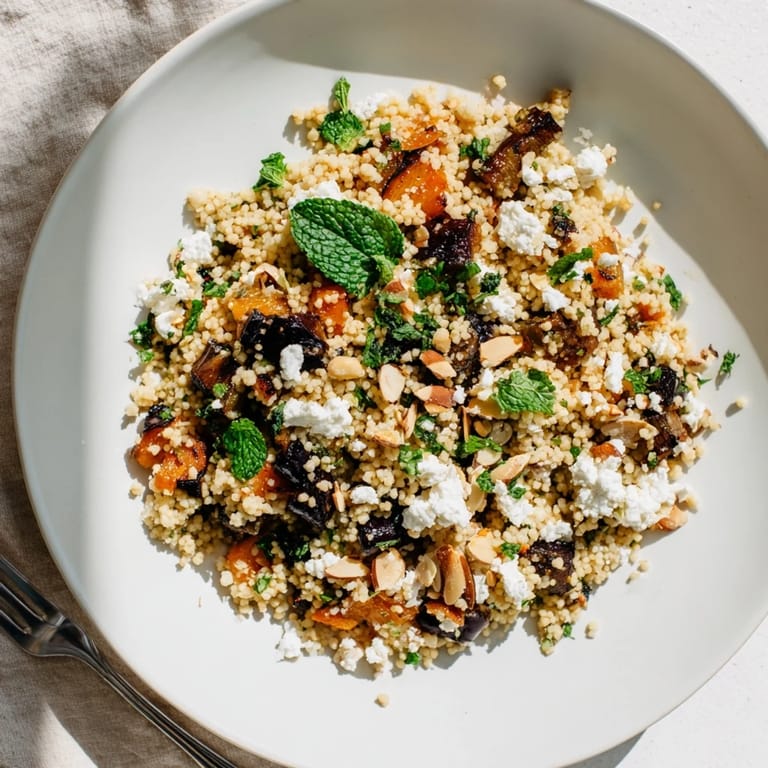
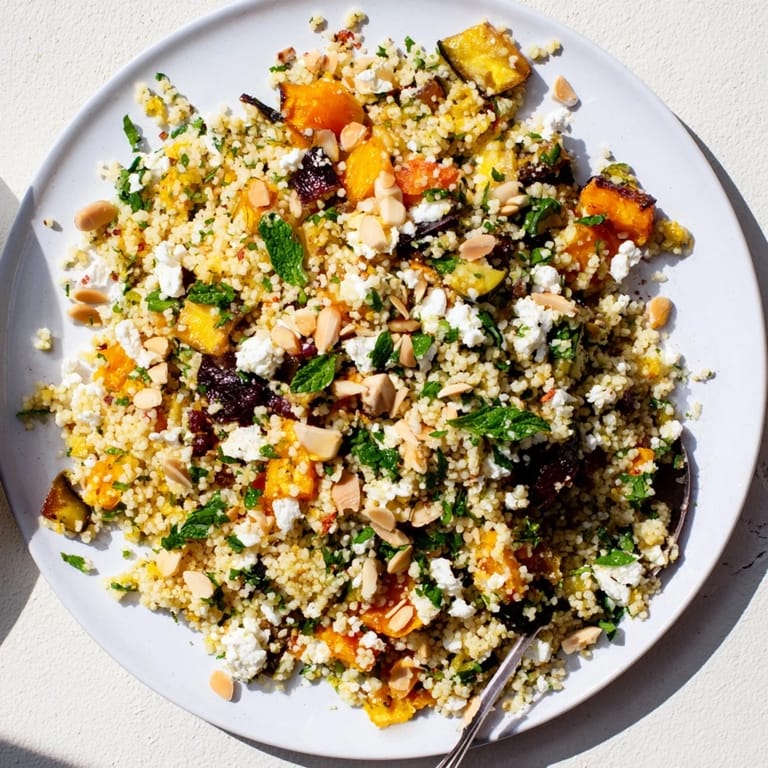
- In a large bowl, mix the couscous, roasted vegetables, parsley, and mint, then pour the dressing over and toss gently until every grain is coated. The warmth of the vegetables will help the dressing soak in.
- Finish and serve:
- Sprinkle the feta and toasted nuts on top just before serving, so they stay bright and crunchy. Serve it warm, or let it cool to room temperature and watch it disappear either way.
 Save
Save One evening I made this for myself after a long week, ate it on the couch with a big spoon, and felt my shoulders drop for the first time in days. There's something about the way the lemon cuts through the richness, the way the vegetables taste like they were kissed by fire, that makes you slow down and notice what you're eating. It's not fancy, but it's the kind of dish that reminds you why you love cooking in the first place.
Making It Your Own
I've swapped in eggplant, added roasted chickpeas for heft, and once stirred in leftover grilled chicken when I needed it to be dinner instead of a side. You can use pearl couscous if you want something chewier, or quinoa if you're avoiding gluten. The dressing works on just about anything, so if you have extra, drizzle it over greens or roasted potatoes the next day.
Serving and Storing
This salad shines on a big platter at a picnic, but it's just as good packed into a container for lunch the next day. It keeps in the fridge for up to two days, and the flavors actually deepen as it sits. If you're serving it cold, let it come to room temperature for ten minutes first so the olive oil loosens up and the flavors wake back up.
A Few Extra Thoughts
The first time I made this, I forgot the mint and it was still delicious, but the mint adds a coolness that makes the whole thing feel lighter and more alive. If you can't find fresh herbs, skip the dried ones and just add extra lemon zest instead. And if you're feeding someone who doesn't eat dairy, leave off the feta and add a handful of olives or a spoonful of tahini to the dressing for richness.
- Toast the nuts in a dry skillet over medium heat, shaking often, until they smell nutty and turn golden.
- Taste the dressing before you pour it over, because lemons vary and you might need a pinch more honey or salt.
- If you're making this ahead, keep the dressing separate and toss everything together just before serving so nothing gets soggy.
 Save
Save This salad has carried me through potlucks, weeknight dinners, and those moments when I wanted something nourishing without a lot of fuss. I hope it does the same for you.
Questions & Answers
- → Can I prepare this dish ahead of time?
Yes, this salad works wonderfully for meal prep. You can roast the vegetables and cook the couscous up to 2 days ahead. Store them separately in airtight containers in the refrigerator. Combine them with the dressing just before serving to maintain the best texture and flavor. Add feta and nuts right before eating for optimal freshness.
- → What vegetables can I substitute?
Feel free to customize based on seasonal availability and preference. Eggplant, asparagus, mushrooms, carrots, and broccoli all roast beautifully. Keep the total vegetable quantity around 4-5 cups. Adjust roasting time if using vegetables with different densities—denser vegetables may need a few extra minutes.
- → How do I make this vegan?
Omit the feta cheese or replace it with a plant-based alternative like nutritional yeast or cashew cream. The dish remains hearty and flavorful without dairy. Consider adding chickpeas, white beans, or lentils for additional protein content to make it a complete vegan main course.
- → Can I use quinoa instead of couscous?
Absolutely. Quinoa makes an excellent substitution with a slightly nuttier flavor and more protein. Use equal quantities and follow your quinoa package instructions for cooking time, which is typically similar. The couscous can also be replaced with farro, bulgur, or millet depending on your preference.
- → What's the best way to store leftovers?
Store the salad in an airtight container in the refrigerator for up to 2 days. The flavors actually deepen slightly as it sits. If the salad seems dry after refrigeration, drizzle with a little extra lemon dressing before serving. For best results, keep feta and nuts separate until serving time.
- → Can I add protein to make it more substantial?
Definitely. Grilled chicken, roasted chickpeas, grilled halloumi, or pan-seared salmon all pair wonderfully. Add 3-4 ounces of protein per serving. Alternatively, stir in a cup of cooked chickpeas or white beans directly into the salad for vegetarian protein that complements the Mediterranean flavors.