 Save
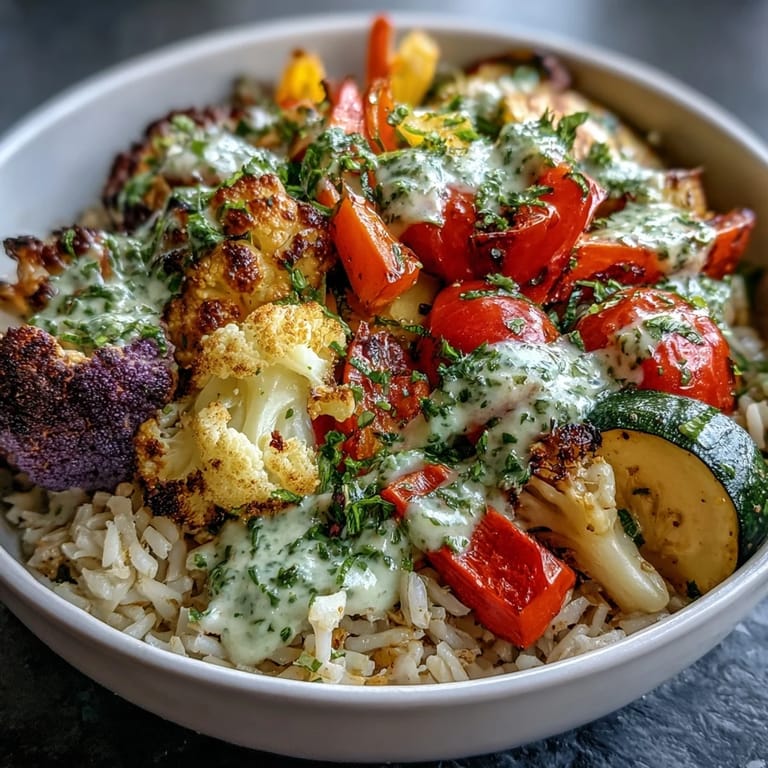
Save I stumbled onto this bowl concept on a Tuesday when my fridge was bursting with vegetables I'd bought with the best intentions but never used. Staring at the colorful heap, something clicked—what if I just roasted everything together? The result was so vibrant and satisfying that I've been making variations ever since, each time discovering a new favorite combination. It's become my go-to when I need to feel like I'm actually taking care of myself, and it happens to look Instagram-worthy without any pretense.
My friend Marco came over last spring when I was testing this bowl, and he took one bite of the herb sauce, closed his eyes, and said it tasted like summer even though it was still chilly outside. We ended up making three bowls that night and talking until the food got cold because we were too busy laughing. That's when I realized this recipe wasn't just about vegetables—it was about creating something memorable in less than an hour.
Ingredients
- Red bell pepper: The natural sweetness intensifies when roasted, so don't skip it even if you think you don't like peppers.
- Yellow bell pepper: Adds brightness and a slightly different flavor profile from the red—keep both for the color contrast.
- Purple cauliflower: This stays vibrant purple when roasted, which is half the visual magic here, but regular cauliflower works if that's what you have.
- Broccoli florets: They get crispy edges when roasted, which is the best part, so resist cutting them too small.
- Cherry tomatoes: Halving them prevents them from rolling around on the baking sheet and lets them caramelize properly.
- Zucchini: Slice uniformly so pieces cook evenly and don't turn to mush on one side while staying raw on the other.
- Carrot: Cut into similar-sized pieces as the zucchini so everything finishes at the same time.
- Olive oil: Extra virgin for the sauce later, but regular olive oil works fine for roasting and won't burn.
- Brown rice: Rinse it well beforehand—this step makes a real difference in texture and removes excess starch.
- Fresh parsley, cilantro, and basil: This trio is the soul of the sauce, so use fresh herbs, not dried, because the difference is absolute.
- Lemon juice: The acidity brightens everything and prevents the sauce from feeling heavy.
Tired of Takeout? 🥡
Get 10 meals you can make faster than delivery arrives. Seriously.
One email. No spam. Unsubscribe anytime.
Instructions
- Heat the oven and prep your vegetables:
- Set your oven to 425°F while you chop everything on your cutting board, aiming for roughly uniform sizes so nothing cooks faster than anything else. The prep takes longer than the roasting, so get comfortable here.
- Coat and spread:
- Toss all your vegetables with olive oil, salt, and pepper in a bowl first so the seasoning reaches everything, then spread them in a single layer on your baking sheet. Don't overcrowd—they need space to roast, not steam.
- Roast until golden:
- Twenty-five to thirty minutes in the oven, stirring halfway through so the vegetables that were on the edges move to the center and vice versa. You're looking for caramelized edges and tender centers, which smells absolutely incredible.
- Cook your rice properly:
- While vegetables roast, rinse your brown rice under cold water, combine it with water and salt in a saucepan, bring to a boil, then reduce heat and cover. Set a timer for 30-35 minutes—brown rice takes longer than white, so don't rush it—and you'll know it's done when the water is absorbed and you can fluff it with a fork.
- Blend the herb sauce:
- Combine parsley, cilantro, basil, lemon juice, garlic, olive oil, salt, and pepper in a blender or food processor and blend until smooth and vibrant green. The sauce should pour easily but still have some body to it, not watery.
- Assemble your bowl:
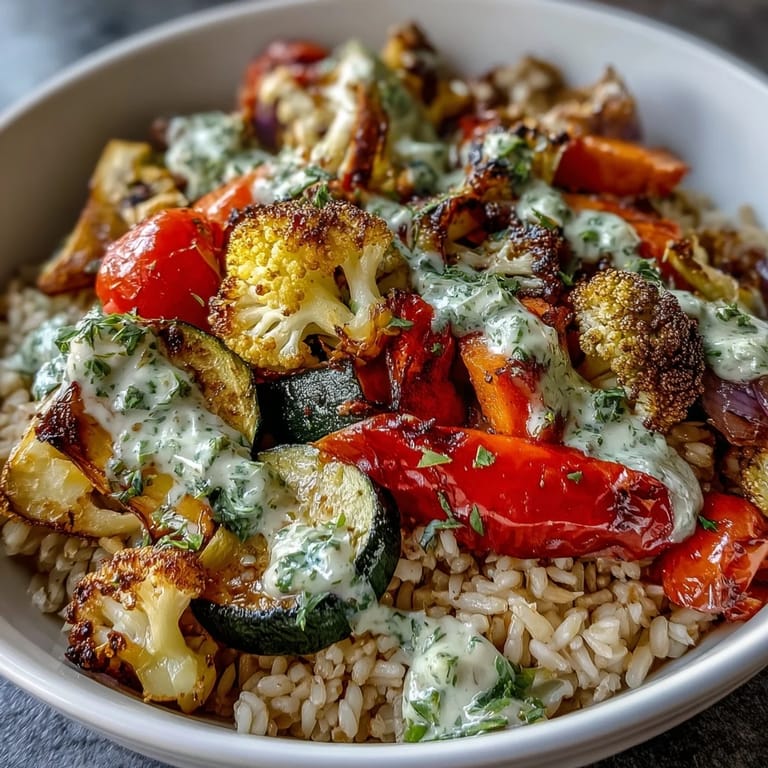
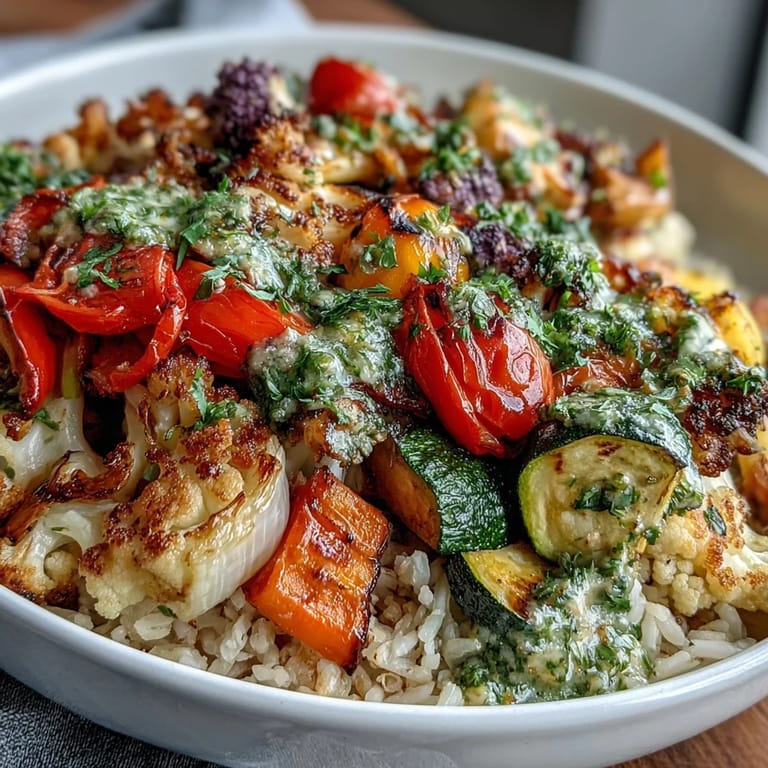
- Divide the fluffy brown rice among bowls, pile the warm roasted vegetables on top, and drizzle generously with the herb sauce. The warmth of the vegetables will slightly warm the sauce, which is exactly what you want.
 Save
Save There was an evening when I made this bowl for my sister who'd been vegetarian for exactly one week and wasn't sure if she could actually stick with it. She took a bite and immediately relaxed, asking for the recipe because she realized plant-based eating could taste this good. That moment made me understand that this isn't just a bowl—it's proof that nourishing food can also be genuinely delicious.
Vegetables You Can Swap Without Guilt
The beauty of this bowl is its flexibility, so feel free to work with what's in your market or what you're tired of in your crisper drawer. Sweet potatoes get wonderfully caramelized and add natural sweetness, red onions become mellow and almost jammy when roasted, and asparagus gets crispy edges that rival the broccoli. Honestly, I've roasted almost every vegetable I can think of in this bowl, and the only real rule is to cut everything roughly the same size so nothing finishes before anything else.
Making It a Complete Meal
If you want to turn this from a side dish into a legitimate dinner, there are several directions you can go without complicating things. A can of chickpeas tossed with the vegetables before roasting adds protein and a subtle nuttiness, while cubed tofu absorbs the flavors beautifully and cooks at the same pace as the vegetables. I've also crumbled feta over the top after assembling the bowl, drizzled it with tahini sauce instead of the herb sauce, or added a fried egg on top for breakfast—the foundation is solid enough to support whatever you're in the mood for.
Sauce Wisdom and Last-Minute Tips
The herb sauce deserves its own moment of recognition because it's the component that transforms simple roasted vegetables into something memorable and intentional. Make it fresh each time rather than storing it because the herbs lose their vibrancy after a day or two, and part of what makes this bowl special is that green brightness. If you're serving this to people who are skeptical about vegetable bowls, don't undersell the sauce—it's honestly the reason they'll ask for seconds.
- Blend the sauce until completely smooth so it coats the vegetables evenly and looks as good as it tastes.
- If you don't have a food processor or blender, finely mince the herbs and garlic by hand and whisk everything together with a fork.
- Make extra herb sauce because you'll want it on leftovers, roasted chicken, or honestly just with crusty bread and some cheese.
 Save
Save This bowl has taught me that eating well doesn't require complicated technique or expensive ingredients—just attention to seasoning, texture contrast, and something green and fresh to tie it all together. Make it once and you'll understand why it's become my constant rotation.
Questions & Answers
- → What vegetables work best for roasting?
Bell peppers, cauliflower, broccoli, cherry tomatoes, zucchini, and carrots roast beautifully. They become tender and lightly caramelized while maintaining their texture. Sweet potatoes, red onion, and asparagus also work well.
- → Can I make the herb sauce ahead?
Yes, blend the herb sauce up to 2 days in advance and store it in an airtight container in the refrigerator. The flavors actually improve overnight. Give it a quick stir before serving.
- → How do I store leftovers?
Keep roasted vegetables, rice, and sauce in separate containers in the refrigerator for up to 4 days. Reheat vegetables and rice gently, then add fresh sauce just before serving for the best texture.
- → What can I add for more protein?
Chickpeas, cubed tofu, or tempeh can be roasted alongside the vegetables. Alternatively, serve with grilled chicken, pan-seared salmon, or a fried egg on top for extra protein.
- → Can I use quinoa instead of brown rice?
Absolutely. Quinoa cooks faster (about 15 minutes) and adds extra protein. Simply substitute 1 1/2 cups quinoa for the brown rice and cook according to package directions.
- → What other herbs can I use in the sauce?
Dill, tarragon, or mint work beautifully in the herb sauce. Adjust the ratios to your taste, keeping the total amount of fresh herbs around 2/3 cup for the right consistency.