 Save
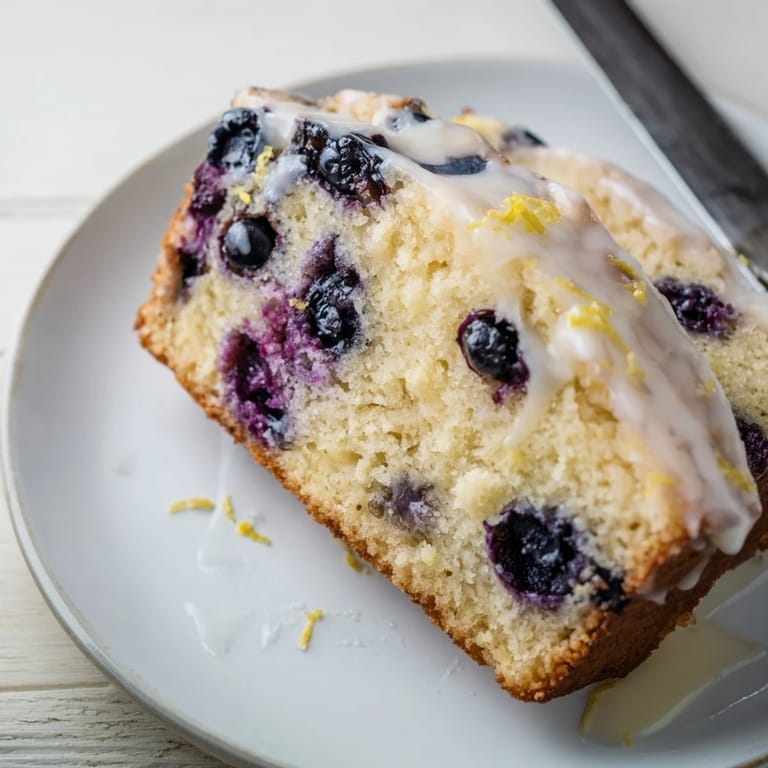
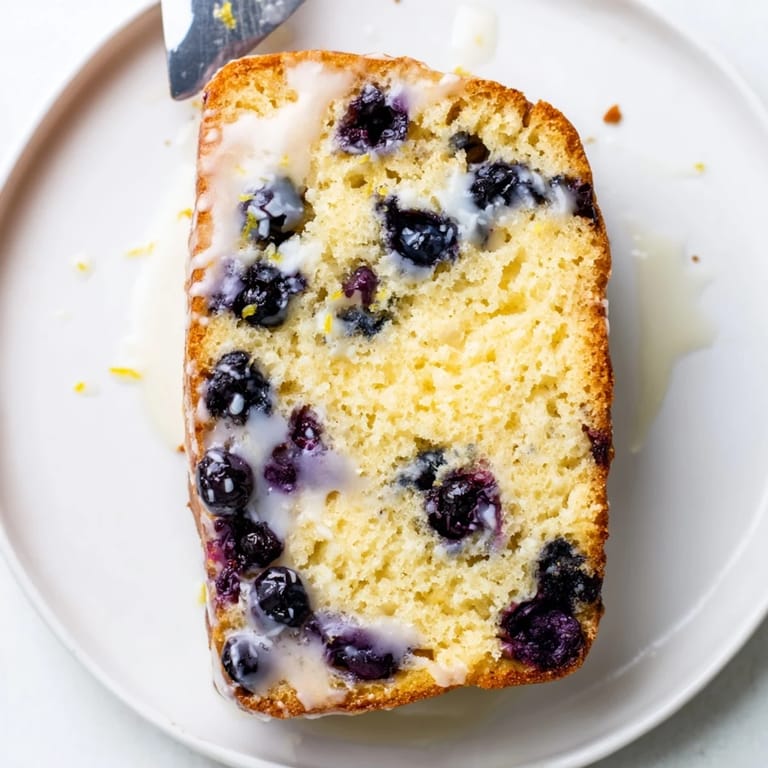
Save There's something about the way a blender whirs that promises shortcuts without sacrificing flavor. The first time I made this lemon blueberry yogurt loaf, I was rushing between errands with a craving for something homemade and zero patience for traditional mixing bowls. What emerged from my oven was tender, impossibly moist, and so bright with citrus that my kitchen smelled like a farmers market in the best way. I've made it at least a dozen times since, and the blender method never fails—it's become my go-to when I want a real cake that takes real effort out of the equation.
I remember my neighbor stopping by on a Tuesday afternoon just as I was pulling this loaf out to cool, and the smell alone convinced her to stay for tea. She sat at my kitchen counter with a slice still warm, and we talked for two hours about nothing important while she came back for thirds. That's when I realized this cake has a quiet magic—it's the kind of thing that makes people linger.
Ingredients
- Eggs: Two large ones bind everything and create structure without requiring a mixer; room temperature yields the smoothest blend.
- Plain Greek yogurt: The tangy backbone that keeps every slice tender and moist—don't swap for regular yogurt or the texture shifts entirely.
- Vegetable oil: Neutral oil keeps the crumb soft; butter would make this denser and less foolproof.
- Lemon zest and juice: Zest adds bright, intense citrus oil; juice brings acidity that balances sweetness and activates the baking soda.
- Vanilla extract: Just enough to deepen flavor without announcing itself.
- All-purpose flour: The foundation, measured by weight for precision; scooping can pack flour and make the cake dense.
- Granulated sugar: Creates structure and moisture; don't reduce without understanding how it changes the bake.
- Baking powder and baking soda: Baking soda reacts with the lemon juice and yogurt acid; baking powder adds lift throughout—both matter.
- Fine sea salt: Cuts sweetness and sharpens every other flavor in the crumb.
- Fresh or frozen blueberries: Tossing them in flour prevents sinking to the bottom, keeping them distributed throughout every slice.
Tired of Takeout? 🥡
Get 10 meals you can make faster than delivery arrives. Seriously.
One email. No spam. Unsubscribe anytime.
Instructions
- Get your oven and pan ready:
- Preheat the oven to 350°F and line a 9x5-inch loaf pan with parchment paper, letting it drape over two sides so you can lift the finished cake out cleanly. Greasing the paper prevents sticking at the edges.
- Blend the wet base:
- Crack eggs into the blender first, then add yogurt, oil, lemon zest, lemon juice, and vanilla. Blend until completely smooth—you're looking for no streaks of yogurt or egg visible. This usually takes about 60 seconds.
- Add dry ingredients carefully:
- Sprinkle flour, sugar, baking powder, baking soda, and salt directly into the blender and pulse—don't let it spin on high. Stop as soon as you can't see dry streaks; overmixing develops gluten and makes the cake tough and gummy.
- Fold in blueberries by hand:
- Toss blueberries with 1 tablespoon of flour (this keeps them from sinking to the bottom), then use a spatula to fold them gently into the batter so they stay whole and distributed. Never blend them in.
- Transfer and smooth:
- Pour the batter into the prepared pan and run a spatula across the top to level it, tapping the pan gently on the counter once to release air bubbles.
- Bake with an eye on browning:
- Slide into the oven for 50 to 55 minutes until a toothpick inserted into the center comes out clean with no wet batter clinging to it. If the top browns too fast—usually after 35 to 40 minutes—lay a loose sheet of foil across the top to protect it without trapping steam.
- Cool in stages:
- Let the loaf sit in the pan for 10 minutes so the crumb sets, then lift out using the parchment paper and transfer to a wire rack to cool completely. This prevents a soggy bottom.
- Make the glaze if you want it:
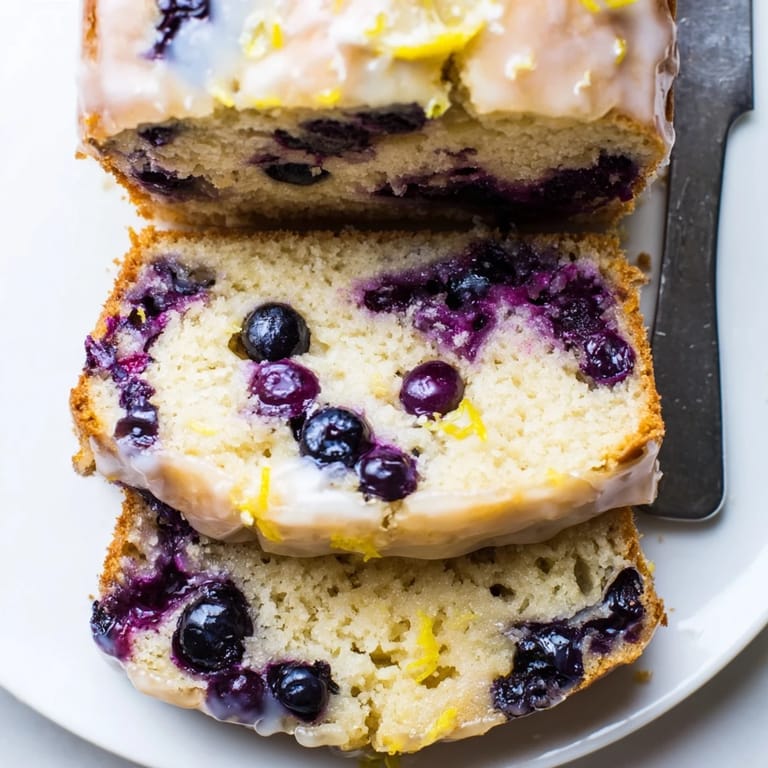
- Whisk powdered sugar with 1 to 2 tablespoons fresh lemon juice until smooth and drizzleable, then spoon it across the cooled loaf in thin lines or a light coat.
 Save
Save I baked this for a small gathering last summer, slicing it while still slightly warm and serving it with thin cups of Earl Grey. My friend's teenager asked for the recipe before even finishing the first slice, which felt like the highest compliment. That's when this loaf stopped being just breakfast for me and became something I reach for whenever I want to feel like I did something kind without making it obvious.
Why This Method Works
The blender emulsifies the wet ingredients perfectly, creating a silky batter that coats every flour particle. This method also aerates the mixture naturally—you don't need an electric mixer to incorporate air, which means less equipment cluttering your counters. The speed of blending also means you're less likely to overwork the batter compared to hand-mixing with a wooden spoon. Because everything starts wet and smooth, the yogurt's tang and lemon juice's acidity distribute evenly, so every bite tastes consistent. I stopped using the traditional creaming method years ago; this one-blender approach is faster, cleaner, and honestly makes a better cake.
Frozen Blueberries and Other Swaps
Frozen blueberries are not a compromise—they often work even better than fresh because they're riper when frozen and less likely to be mealy or underripe. I've used them straight from the bag without thawing, and the texture of the finished loaf is identical to versions made with fresh berries. If you want to experiment, frozen raspberries or blackberries create a different flavor profile but the same tender crumb. Roughly half a cup of shredded lemon or orange zest can replace blueberries entirely if you're in the mood for something purely citrus. One unexpected discovery: a handful of chopped fresh ginger adds warmth without overpowering the lemon, perfect for late autumn baking.
Storage and Making It Last
This loaf keeps wrapped in plastic or foil at room temperature for three days, and honestly improves slightly as flavors meld and the crumb continues to set. After that, refrigerate it for another three days, though the texture becomes less tender. Slices freeze beautifully for up to three months—I often bake two loaves at once and freeze one, pulling slices out as needed for breakfast or afternoon cravings. Thaw at room temperature for an hour or toast from frozen for a warmed, almost-fresh experience. I learned the hard way that metal tins retain moisture better than plastic bags if freezing, though either works.
- Wrap tightly so it doesn't absorb other flavors or dry out in the cold.
- Toast a frozen slice in a regular toaster if you want it warm without defrosting the whole loaf.
- A crumb that's been refrigerated actually slices cleaner than one served immediately after cooling.
 Save
Save This loaf has become my quiet rebellion against overthinking breakfast baking. It asks for ten minutes of your time and returns the favor with something that tastes like you spent an afternoon in the kitchen—which, honestly, feels like the best kind of kitchen magic.
Questions & Answers
- → Can I use frozen blueberries?
Yes, frozen blueberries can be used directly without thawing. Toss them in flour before folding to prevent sinking.
- → How can I make it dairy-free?
Substitute coconut yogurt for Greek yogurt and use a neutral vegetable oil to keep the texture moist and tender.
- → What is the best way to prevent blueberries from sinking?
Coat the blueberries lightly with flour before folding them gently into the batter to ensure even distribution.
- → Can I add other flavors to this loaf?
Adding almond extract or a pinch of cinnamon can enhance the flavor profile without overpowering the lemon and blueberry notes.
- → What is the ideal baking temperature and time?
Bake at 350°F (175°C) for approximately 50-55 minutes until a toothpick inserted comes out clean.