 Save
Save There's something about a bubbling casserole of four cheeses that makes a kitchen feel like home, no matter where you're cooking. Years ago, a friend brought this dish to a potluck on a cold evening, and I watched it disappear faster than anything else on the table—people kept going back for just one more forkful. That night, I realized it wasn't fancy or complicated, but it had this quiet magic that made everyone happy. I've made it countless times since, and it never fails to turn an ordinary Tuesday into something special.
The first time I made this for my sister's book club, I was nervous about getting the cheese ratio right—but once that foil came off and the top turned golden, everyone leaned forward at the same moment, breathing in the smell of melted cheese and tomato. One of her friends actually asked for the recipe before sitting down to eat, which felt like the highest compliment possible. That's when I knew this wasn't just dinner; it was something people would ask for again.
Ingredients
- Penne or rigatoni: About 1 pound of either shape works perfectly—they both hold sauce beautifully and cook just enough to stay tender without falling apart in the oven.
- Ricotta cheese: This is your creamy base; use whole milk ricotta if you can find it, as it makes everything more luxurious.
- Shredded mozzarella cheese: Low-moisture mozzarella melts evenly and won't make the dish watery—this matters more than you'd think.
- Grated Parmesan cheese: Fresh Parmigiano-Reggiano brings a sharpness that lifts the whole dish; pre-grated works but tastes thinner.
- Grated Romano cheese: Saltier and more assertive than Parmesan, it gives the top layer character and prevents the casserole from being one-note.
- Marinara sauce: Use something you'd actually eat on its own—this is the backbone, and a good sauce makes the difference between good and unforgettable.
- Garlic: Just two cloves minced into the sauce; you want them to perfume it, not overpower.
- Olive oil: Two tablespoons is enough to bloom that garlic and carry the flavors forward.
- Dried basil and oregano: These dry herbs need time to bloom in the warm sauce; don't skip this step.
- Red pepper flakes: Optional but worth adding if you like a gentle warmth underneath all that cheese.
- Salt and black pepper: Essential for seasoning the sauce itself; don't wait until the end.
- Fresh basil: A small handful scattered on top just before serving brings brightness and a fresh taste.
Tired of Takeout? 🥡
Get 10 meals you can make faster than delivery arrives. Seriously.
One email. No spam. Unsubscribe anytime.
Instructions
- Get the oven ready and prepare your dish:
- Turn your oven to 375°F and run a light coating of olive oil or butter around a 9x13-inch baking dish—this is your canvas. Let the oven preheat while you move on; you'll need it ready when the pasta is cooked.
- Cook the pasta until it's almost there:
- Fill a large pot with salted water, bring it to a rolling boil, then add your pasta and cook it about 2 minutes less than the package says. You want it to have a gentle resistance when you bite it because it's going into the oven, where it'll continue softening. Drain it but don't rinse—that starch helps everything cling together.
- Build the sauce while the pasta finishes:
- Pour olive oil into a saucepan over medium heat, then add your minced garlic and let it turn fragrant for about a minute. Pour in the marinara sauce, then sprinkle in the basil, oregano, red pepper flakes if you're using them, salt, and black pepper. Stir everything together and let it simmer gently for 5 minutes so the flavors meld—you'll notice the smell shift and deepen.
- Bring everything together in one bowl:
- In a large mixing bowl, combine the hot drained pasta with the ricotta, 1 cup of mozzarella, half a cup of Parmesan, half a cup of Romano, and 2 cups of your warm sauce. Use a wooden spoon to fold everything together gently but thoroughly, making sure each piece of pasta gets coated. The mixture should look creamy and rich.
- Layer it into the baking dish:
- Transfer the pasta mixture into your prepared baking dish, spreading it evenly. Pour the remaining sauce over the top, then sprinkle the last of your mozzarella, Parmesan, and Romano across the surface. You should see a nice blanket of cheese on top—this is what will turn golden and crispy.
- Bake it covered first, then uncover to finish:
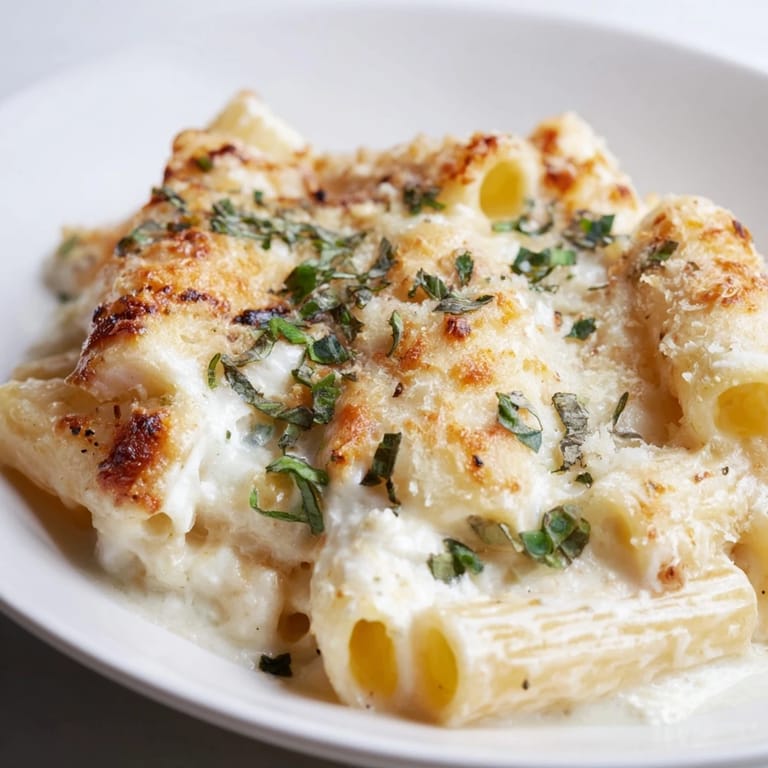
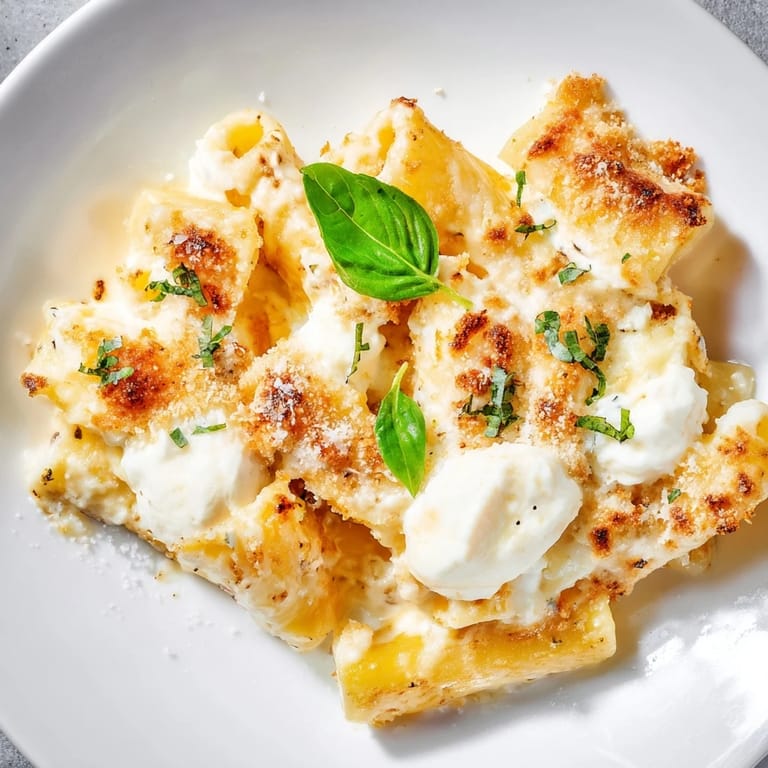
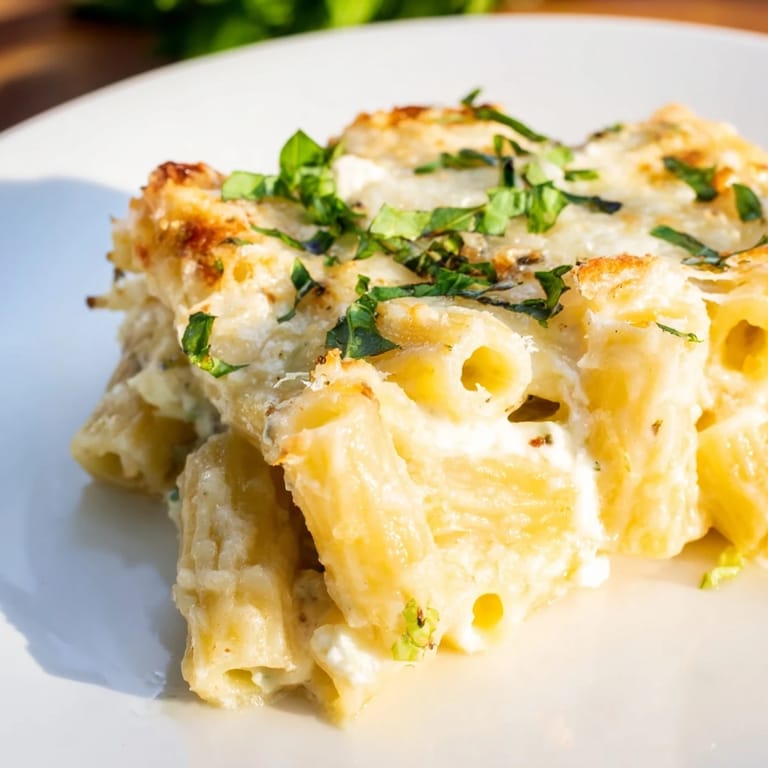
- Lay a piece of aluminum foil loosely over the baking dish—not tight, just resting on top—and slide it into the oven for 20 minutes. Then carefully remove the foil (watch out for the steam) and bake for another 10 to 15 minutes, or until the top is golden and you can see bubbles around the edges. The cheese on top should be browned in places, almost caramelized.
- Let it rest before serving:
- Pull the baking dish from the oven and set it on a cooling rack for 5 minutes. This pause lets everything set slightly so you can cut clean portions. Just before serving, scatter fresh basil across the top if you have it—the brightness matters.
 Save
Save I made this dish for a friend the week he moved into his first apartment, and watching him take that first bite in an almost empty kitchen—just a folding table and determination—was unexpectedly moving. He said it made the space feel less lonely, which is exactly what good food is supposed to do. That moment taught me that the simplest dishes often carry the most meaning.
Why Four Cheeses Matter
Each cheese plays a specific role here. Ricotta brings creaminess and softness, mozzarella provides that satisfying stretch and mild flavor, Parmesan adds a sharp, salty edge that keeps things from being one-dimensional, and Romano reinforces that sharpness with an almost peppery bite. Using all four means the dish has complexity and depth—you're not just eating cheese, you're tasting a conversation between four different flavors. It's the difference between a simple cheese pasta and something people actually want to come home to.
Variations and Additions
While this recipe is already complete on its own, there's real flexibility if you want to build on it. Sautéed spinach folded in adds a subtle earthiness and color without changing the core dish. Mushrooms bring an umami depth that some people swear elevates the whole thing. Even a handful of caramelized onions tucked into the middle creates little pockets of sweetness. The beauty is that the four-cheese sauce is sturdy enough to support these additions without getting overwhelmed.
Serving and Pairing
This is hearty enough to stand alone, but it appreciates a simple green salad with a sharp vinaigrette alongside—something to cut through all that richness. A light Chianti or Pinot Grigio works beautifully if you're drinking wine; the acidity balances the creaminess perfectly. Even just a crusty piece of bread to wipe the plate clean feels essential. What matters most is serving it warm, straight from the oven when the cheese is still bubbling slightly at the edges.
- A simple arugula salad with lemon vinaigrette is the ideal partner for cutting through the cheese.
- Leftovers reheat beautifully in a 325°F oven for about 15 minutes, covered loosely with foil.
- This dish freezes well before baking—assemble it, wrap it tightly, and bake straight from frozen, adding about 10 extra minutes to the cooking time.
 Save
Save There's a reason this recipe has stayed in my rotation for years—it never tries to be something it isn't, and it never disappoints. Make it once, and it becomes the dish people remember.
Questions & Answers
- → What pasta types work best for this dish?
Penne or rigatoni hold the sauce well due to their shape and texture, making them ideal choices for this baked pasta.
- → Can I substitute the cheeses without changing the flavor too much?
Using part-skim ricotta or low-moisture mozzarella can lighten the dish, but the distinctive flavors of Parmesan and Romano provide essential sharpness.
- → How do I know when the casserole is perfectly baked?
The casserole is ready when the top is golden brown and bubbling, typically after removing the foil the last 10–15 minutes of baking.
- → Is it possible to add vegetables to enhance the dish?
Yes, sautéed spinach or mushrooms can be mixed in for extra texture and flavor without overpowering the cheese blend.
- → What herbs complement the flavors in this dish?
Dried basil, oregano, and fresh basil garnish add aromatic layers that balance the creamy cheeses and tomato sauce.