 Save
Save There's something almost theatrical about sliding a plate in front of someone and watching their eyes light up as they spot three different egg preparations perched on a single slice of toast. I stumbled onto this idea during a lazy Sunday morning when I couldn't decide between scrambled, soft-boiled, or fried eggs, so I made all three instead. What started as indecision became my favorite way to wake up—it's like a breakfast tasting menu that actually makes sense on one plate.
My neighbor once asked why I was cooking three eggs at once, and I insisted she sit down to try it. She came back the next weekend asking for the "recipe"—which made me realize this wasn't just a whim, it was worth repeating. Now whenever friends sleep over, they're expecting this plate waiting for them.
Ingredients
- 1 large slice sourdough or country-style bread: The foundation matters here—a good quality bread with structure holds up to the eggs without getting soggy, and the slight tang plays beautifully with the richness of three different yolks.
- 1 large egg for scrambling: This is your creamy, gentle element; keep the heat low and don't rush it.
- 1 large egg for soft-boiling: Exactly 6½ minutes gets you that jammy, runny yolk that's almost like a sauce.
- 1 large egg for frying: This one stays whole and proud, a little glossy and golden at the edges.
- 1 tbsp unsalted butter: Split it between the scrambled and fried eggs so each gets its own buttery moment.
- 1 tsp olive oil: A touch of oil with the fried egg helps it develop those lacy, crispy edges.
- Salt and freshly ground black pepper, to taste: Season each egg separately so flavors build rather than blur together.
- Chopped fresh chives, chili flakes, microgreens (optional): These aren't just garnish—they add freshness and a tiny bit of heat that lifts the whole plate.
Tired of Takeout? 🥡
Get 10 meals you can make faster than delivery arrives. Seriously.
One email. No spam. Unsubscribe anytime.
Instructions
- Toast the bread until golden:
- Preheat your oven to 180°C (350°F) and place the bread on a baking sheet. Let it toast for 5-7 minutes until the edges turn crispy and the color deepens to golden—this gives you something sturdy enough to hold the eggs without falling apart.
- Soft-boil the egg with precision:
- Bring a small pot of water to a rolling boil, gently lower in one egg, and set a timer for exactly 6½ minutes. When it's done, immediately transfer it to ice water to stop the cooking—this is how you get that liquid center that feels luxurious on the toast.
- Scramble gently over low heat:
- Heat ½ tablespoon butter in a nonstick skillet over medium-low heat. Whisk one egg with salt and pepper, pour it in, and stir slowly with a spatula until the curds are soft and creamy, about 2 minutes. The moment it looks barely set, take it off the heat—carryover cooking will finish it perfectly.
- Fry the egg with confidence:
- In the same skillet (just wipe it clean), add the remaining ½ tablespoon butter and the teaspoon of olive oil over medium heat. Crack in the third egg and let it sit until the whites turn opaque and the edges get a little crispy, about 2-3 minutes. Keep the yolk runny and bright.
- Assemble the flight on toast:
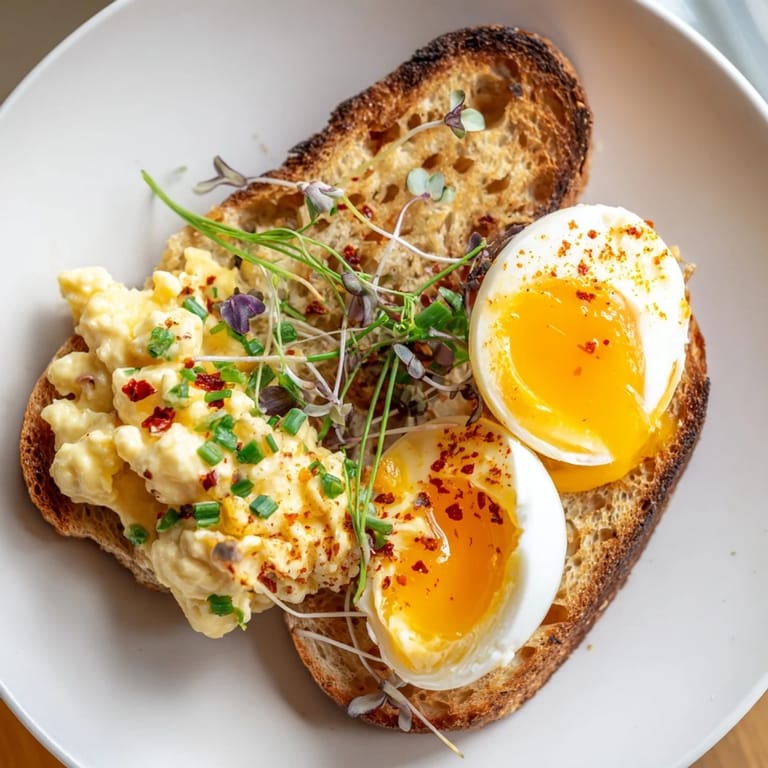
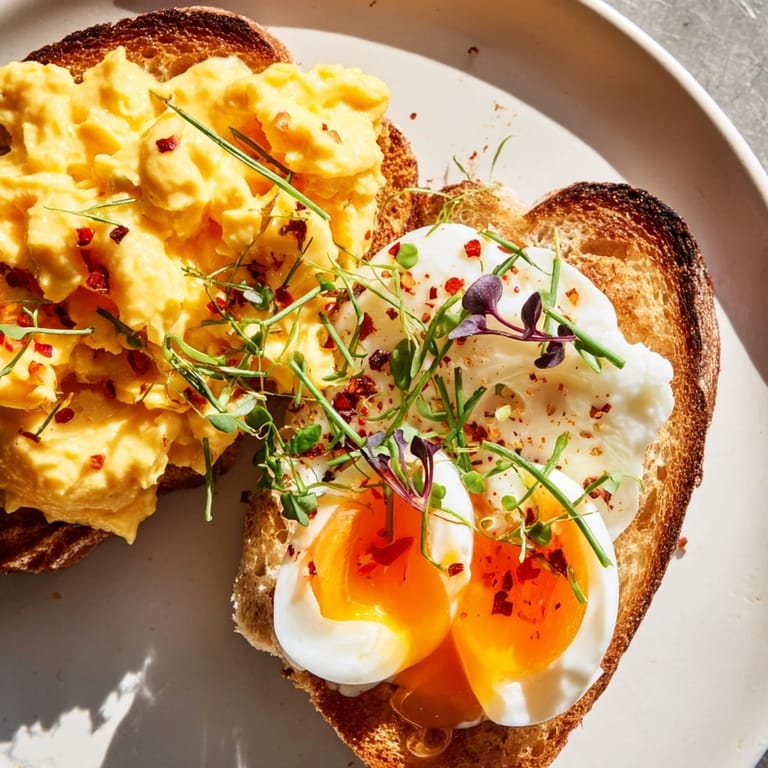
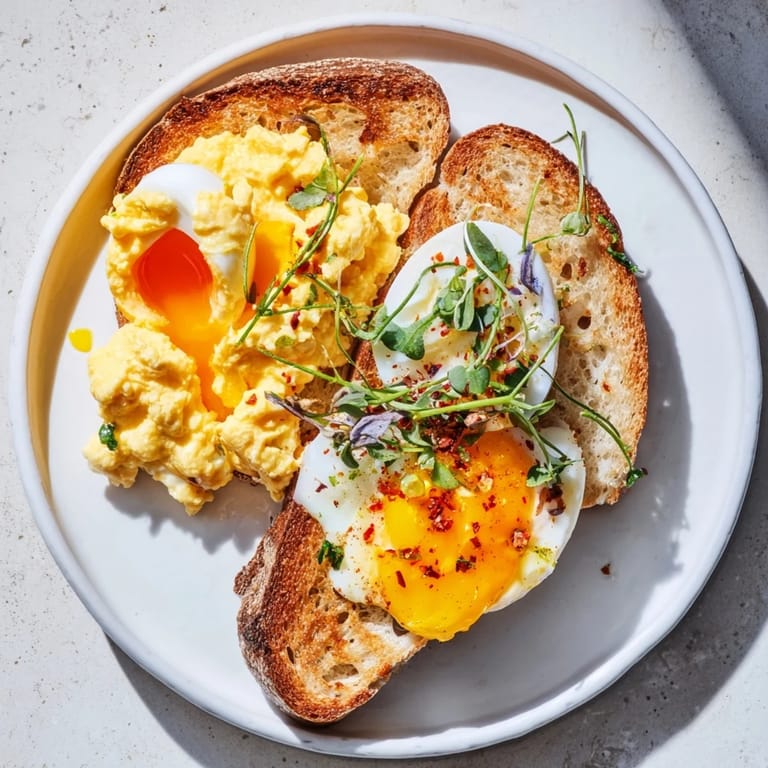
- Place your toasted bread on a plate and divide it into three sections. Spread the warm scrambled egg on one third, place the halved soft-boiled egg on the second third so the jammy yolk faces up, and lay the fried egg on the last third. The presentation matters because you're eating with your eyes first.
- Finish with a flourish:
- Scatter chives, a pinch of chili flakes, and a few microgreens across the whole plate if you have them. Serve immediately while everything is still warm and the yolks are exactly how they should be.
 Save
Save There's a moment, right when you're plating it, where you realize how foolish it would be to choose just one way to eat an egg. The beauty of this breakfast is that every bite can be different depending on which section you reach for first, and that spontaneity feels like a small gift to yourself on a morning when you deserve one.
Why the Soft-Boil Changes Everything
The soft-boiled egg is what transforms this from a plate of eggs into something that feels intentional. That jammy, barely-set yolk acts like a sauce that runs across the crispy toast and mingles with the other eggs, creating little flavor combinations you didn't plan for but absolutely want. It's the moment you realize eggs are more than protein—they're the building blocks of texture and surprise.
The Order of Operations Actually Matters
Start with the soft-boil first because it needs to cool in ice water while you handle the other two, keeping everything on a nice timeline. The scrambled egg comes next and is fast—just a few minutes of gentle stirring—leaving the fried egg for last so it arrives at the plate still sizzling. This sequence might seem fussy, but it's actually the most relaxed way to get three perfect eggs at the same moment.
Toast as Your Unsung Hero
Don't skip toasting the bread because it's not just about crunch. A properly toasted slice develops a subtle caramelization that echoes the golden yolks and adds a depth of flavor that unites everything on the plate. It also keeps the bread from absorbing all the moisture from the eggs, so you get a few bites of actual texture instead of a soggy mess. Here's what transforms a good breakfast into a great one.
- Choose bread with character—sourdough, spelt, or a sturdy country loaf; soft sandwich bread will collapse under the weight.
- Don't be shy with the toasting time; aim for deep golden because pale toast gets lost between three rich egg preparations.
- If your bread is thick, you might add an extra minute or two to make sure it's crispy all the way through.
 Save
Save This simple plate taught me that breakfast doesn't need to be complicated to feel special. A few eggs, one good slice of toast, and three minutes of attention are all it takes.
Questions & Answers
- → How do you achieve a perfectly soft-boiled egg?
Bring water to a gentle boil, lower the egg carefully, and cook for about 6½ minutes before shocking in ice water to set the yolk softly.
- → What is the best bread choice for this dish?
Sourdough or country-style bread with a sturdy texture works best to hold the different egg styles without becoming soggy.
- → Can this preparation be customized with other egg styles?
Yes, swapping any egg for a poached or an omelette version adds variety while keeping the flavor profile balanced.
- → What garnishes complement the eggs and toast?
Fresh chives, chili flakes, and microgreens add color, mild heat, and freshness that enhance the overall flavor.
- → How should the eggs be arranged on the toast?
Divide the toasted slice into thirds and place each egg style—scrambled, soft-boiled halves, and fried—on separate sections for a pleasing presentation.