 Save
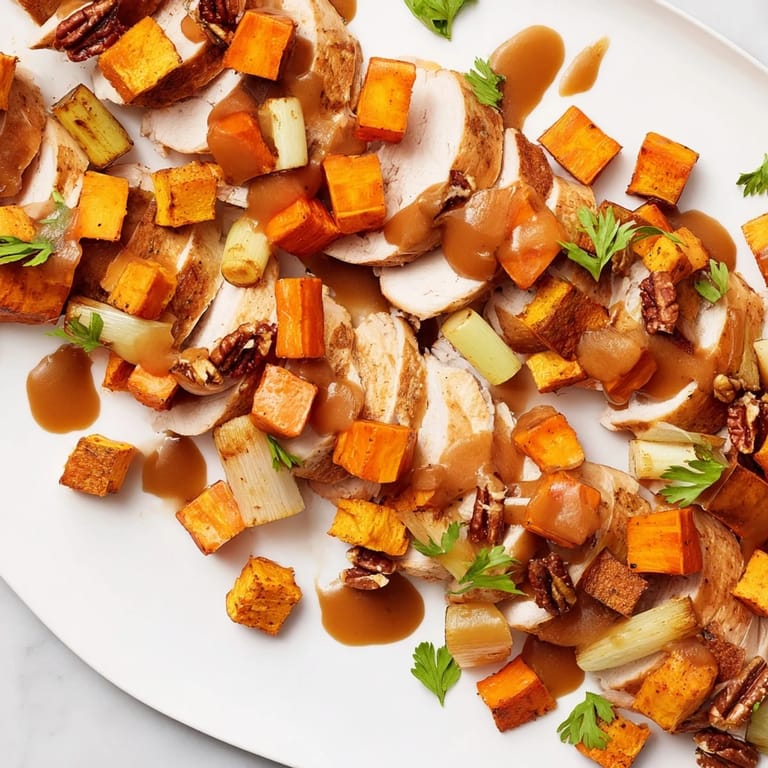
Save I'll never forget the year my grandmother decided to reinvent our Thanksgiving table. She wanted something that told a story visually, something that spoke to the journey we were all on together. That's when she created Chains of the Mayflower, a dish that arranges turkey and root vegetables in overlapping rings across a platter, each piece linked to the next like a chain stretching across time. The first time I made it myself, in my own kitchen, I understood what she meant by that metaphor. Every slice of golden turkey, every roasted carrot and sweet potato, seemed to represent a thread connecting us to harvest traditions and to each other.
I remember one autumn evening when I served this to friends who'd never heard of it before. As they gathered around the table and saw those interlocking rings of caramelized vegetables and sliced turkey, their faces lit up. One friend said it felt like edible art, and honestly, that stuck with me. It reminded me that food isn't just about nourishment; it's about creating moments that linger.
Ingredients
- Boneless turkey breast (1.5 kg, skin on): This is your canvas. The skin ensures the meat stays juicy during roasting, and having it boneless means more even cooking and easier slicing. I learned to always pat it dry before seasoning because that's what gives you that beautiful mahogany color.
- Olive oil (4 tbsp total, divided): Use good quality here. The oil on the turkey creates that golden crust, and the oil on the vegetables helps them caramelize into something almost nutty.
- Dried thyme and sage (1 tsp each): These aren't just flavoring; they're the essence of autumn. Don't skip them or substitute with fresh unless you double the amount.
- Carrots, parsnips, sweet potatoes, and celery root: The stars of your side show. Each vegetable brings different sweetness and texture. The parsnips add an almost buttery note, while the celery root grounds everything with its earthy minerality.
- Smoked paprika and ground cumin (1 tsp and ½ tsp): These warm spices are what make the vegetables taste intentional rather than like afterthoughts. The smoke in the paprika especially adds depth.
- Chicken or turkey stock (500 ml): This is gravy foundation. Use homemade if you can; it makes a noticeable difference in richness.
- Unsalted butter and cornstarch (2 tbsp each): Together they create silky gravy with no lumps. The butter is non-negotiable for flavor.
- Soy sauce or tamari (1 tbsp): This might seem like an odd choice, but it adds umami depth that makes people ask what's in your gravy.
- Fresh parsley and pecans for garnish: The parsley brightens everything at the last moment, and the pecans add a toasted crunch that's purely autumn on a plate.
Tired of Takeout? 🥡
Get 10 meals you can make faster than delivery arrives. Seriously.
One email. No spam. Unsubscribe anytime.
Instructions
- Prepare your mise en place and heat the oven:
- Start by preheating your oven to 200°C (400°F). Peel and cut your carrots, parsnips, sweet potatoes, and celery root into roughly 1-inch pieces. This is the meditative part of cooking, where your knife work becomes a rhythm.
- Season the turkey with intention:
- Pat your turkey breast completely dry with paper towels. This step matters more than you'd think. Rub it all over with 2 tbsp olive oil, then sprinkle with thyme, sage, salt, and pepper. Let your hands coat every surface. The ritual of this prepares you for what comes next.
- Begin roasting the turkey:
- Place the seasoned turkey skin-side up in your roasting pan. Slide it into the oven. You'll roast it for about 1 hour 15 minutes until the internal temperature reaches 74°C (165°F). Start checking around the 1-hour mark. The kitchen will start to smell incredible around minute thirty.
- Meanwhile, prepare the root vegetables:
- In a large bowl, toss your cut vegetables with 2 tbsp olive oil, smoked paprika, cumin, salt, and pepper. Spread them in a single layer on a baking sheet. About halfway through the turkey's cooking time, put these vegetables in the oven. Stir them halfway through their 40 to 45 minutes. You want them golden at the edges and completely tender when a fork slides through easily.
- Rest the turkey and make the gravy:
- When the turkey reaches temperature, remove it from the oven and cover it loosely with foil. Let it rest for 15 minutes. While it rests, make your gravy. Melt butter in a saucepan over medium heat, whisk in cornstarch until it's completely smooth with no lumps, then slowly add your stock while whisking constantly. This prevents clumping. Add soy sauce, then let it simmer 5 to 7 minutes until it coats the back of a spoon. Taste it, season with salt and pepper.
- Slice and arrange in chains:
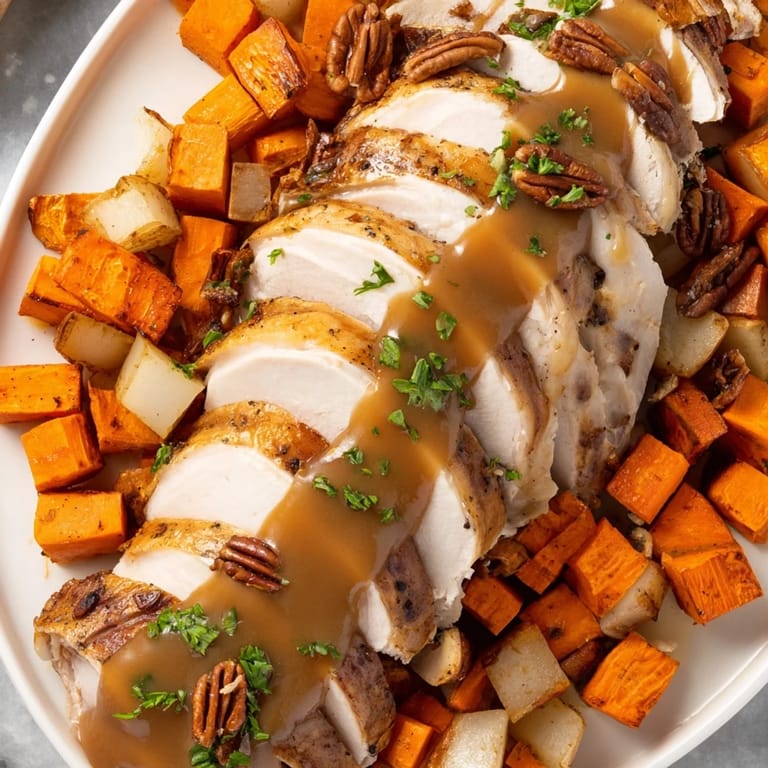
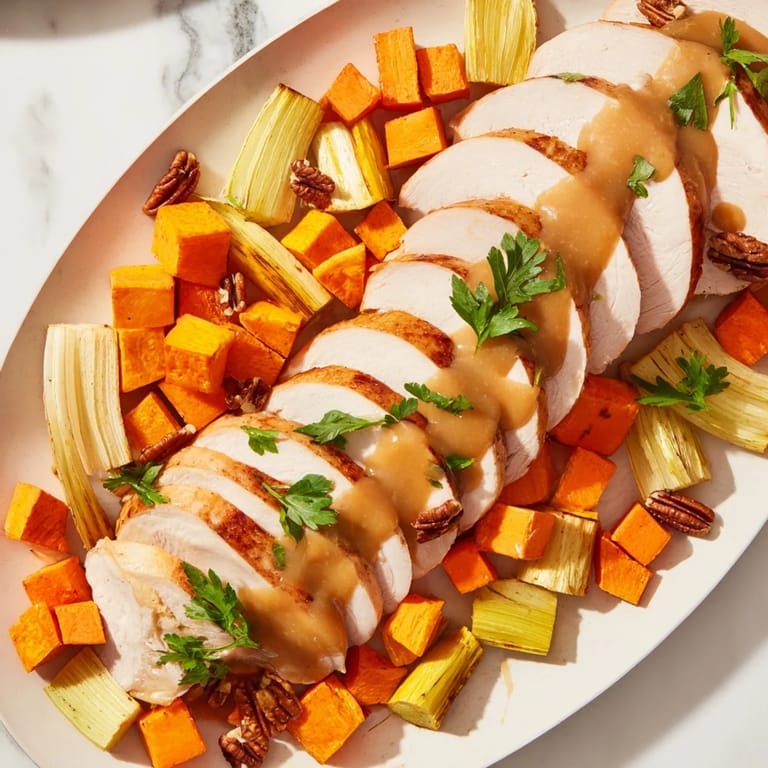
- Slice the rested turkey into ½-inch thick pieces. Now comes the creative part. On a large platter, arrange the turkey slices and roasted vegetables in overlapping rows or concentric rings, each piece slightly overlapping the next like links in a chain. It doesn't need to be perfect. The imperfections make it beautiful. Drizzle the gravy over everything.
- Finish with garnish and serve:
- Scatter your fresh chopped parsley across the platter and top with toasted pecans if using. Step back and look at what you've created. This is when you know it was worth it.
 Save
Save I think about the dinner where my eight-year-old nephew pointed at the platter and said it looked like a chain holding everyone together. That's when I truly understood why my grandmother created this dish. It became something more than turkey and vegetables that night; it became a symbol of connection we could see and taste and share.
Why This Dish Works for Thanksgiving
Chains of the Mayflower exists at that perfect intersection of ambition and attainability. It doesn't require fancy techniques or rare ingredients, yet it looks like something a professional chef would present. The beauty is that most of the cooking happens hands-off in the oven. You prep, you season, and then you have time to set the table, arrange flowers, or simply breathe before guests arrive. The roasted vegetables cook at the same temperature as the turkey once you time it right, which means your oven does most of the work. This isn't a dish that demands constant attention; it rewards patience and planning.
Making It Your Own
One of the things I love most about this recipe is how willingly it accepts modifications. The core technique is so solid that you can play with it. Some years I add roasted Brussels sprouts for earthiness, other times I include beets for a jewel-toned pop of color. One memorable autumn, a guest brought homemade cranberry sauce, and we drizzled that across the platter alongside the gravy. The vegetables can shift too. I've used parsnips as the star, or added more sweet potato for earthiness. The soy sauce in the gravy is my secret weapon, but I've also made it with balsamic vinegar when I wanted something different. The chain arrangement is flexible too. Some years I do concentric circles, other times I arrange everything in linear rows. What matters is that the spirit of the dish remains: beautiful, connected, intentional.
Serving and Pairing Thoughts
This dish stands beautifully on its own, but it also plays well with others. The tangy brightness of cranberry sauce is a classic pairing that cuts through the richness. A simple green salad with a sharp vinaigrette before this course feels elegant. For wines, I think of something with good acidity and moderate tannins; a Pinot Noir or even a quality rosé works beautifully. If you're serving vegetarian guests, the portobello mushroom substitution is more than an afterthought—it's genuinely delicious. Portobello caps when roasted develop an almost meaty texture, and they absorb the gravy beautifully.
- Make the gravy ahead and reheat it gently just before serving to save yourself stress
- All your vegetables can be prepped and even partially roasted hours ahead, then finished while the turkey rests
- This dish reheats beautifully; cover it loosely and warm it in a 160°C oven for about 20 minutes if needed
 Save
Save This recipe is really about bringing people to a table and creating a moment worth remembering. Every time you make it, you're not just cooking dinner; you're building a tradition. That's the real magic of Chains of the Mayflower.
Questions & Answers
- → What gives the root vegetables their earthy flavor?
The combination of smoked paprika and ground cumin enhances the natural earthiness, while roasting intensifies their sweetness and depth.
- → How is the turkey kept moist during cooking?
Rubbing the turkey breast with olive oil and herbs followed by roasting to the proper internal temperature ensures juicy, tender meat. Resting under foil helps retain moisture.
- → Can the gravy be made gluten-free?
Yes, by using gluten-free stock and tamari instead of soy sauce, the gravy remains thick and flavorful without gluten.
- → What is the purpose of the pecans in the dish?
Toasted pecans add a crunchy texture and nutty note that complements the softness of the turkey and roasted vegetables.
- → How does the chain-like presentation contribute to the dish?
The linked arrangement symbolizes connection and community, reflecting the Mayflower’s journey and the festive spirit of the season.
- → Are there vegetarian alternatives suggested?
Yes, roasted portobello mushrooms can replace the turkey, and vegetable stock used in the gravy offers a plant-based option.