 Save
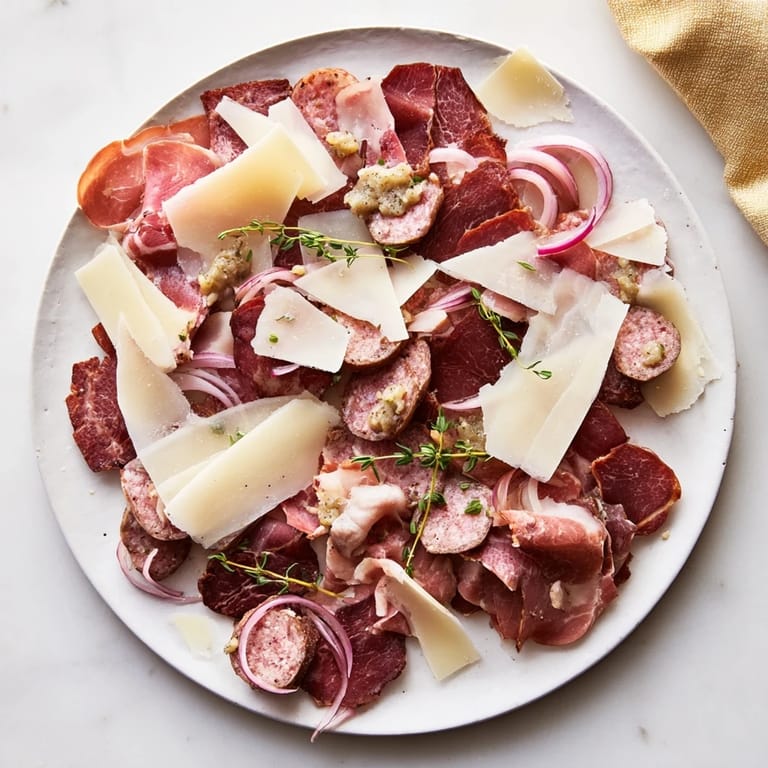
Save There's something about assembling a charcuterie board that feels less like cooking and more like curating a small edible gallery. The first time I made this particular arrangement, I'd just come home with a wedge of Parmigiano Reggiano so good I almost didn't want to slice it, and some smoked beef that seemed to demand a showcase. What started as a simple lunch became this celebration of contrasts—rough, hearty meats playing against delicate, paper-thin cheese ribbons that catch the light like silk. It taught me that sometimes the best dishes are really just about letting ingredients speak for themselves.
I remember serving this to a friend who kept saying she didn't eat much cheese, then found herself reaching for the shaved Manchego about five times during our conversation. She was drawn to how thin it was, almost like tasting the essence of the cheese rather than a thick wedge. That moment made me realize the texture here is just as important as the flavor—it's not indulgence, it's refinement.
Ingredients
- Smoked beef: Buy it from a good butcher or deli counter and ask them to slice it thick, then hand-tear it for an untamed, rustic look that catches more seasoning and lets the smoke really shine.
- Rustic country ham: The rougher cut, the better; it shouldn't be neat little slices but rather torn chunks that announce their presence on the board.
- Smoked sausage: Slice into thick rounds or wedges so you get that satisfying bite and show off the color inside.
- Parmigiano Reggiano: The aged bite of this cheese is non-negotiable; use a cheese plane or vegetable peeler to create thin, translucent shards that practically melt on your tongue.
- Aged Manchego: Spanish, slightly firm, with a nuttiness that bridges the gap between the sharp Parmigiano and the creamy Gruyère.
- Gruyère: The most forgiving of the three cheeses and the creamiest; its subtle sweetness rounds out the board.
- Cornichons: These tiny pickles cut through the richness like tiny flavor palate cleansers; don't skip them.
- Red onion: Sliced paper-thin so it wilts slightly and becomes almost sweet, providing crisp contrast.
- Grainy mustard: A touch of acid and texture that wakes up every flavor on the board.
- Fresh thyme or rosemary: Don't underestimate the aroma; it tells your guests something good is coming before they even taste it.
- Crusty bread: Optional but highly encouraged; the bread becomes a vehicle for everything else, though the board shines on its own too.
Tired of Takeout? 🥡
Get 10 meals you can make faster than delivery arrives. Seriously.
One email. No spam. Unsubscribe anytime.
Instructions
- Build the foundation:
- Lay your meats directly on a wooden board or platter in overlapping layers or casual mounds, letting them sprawl across the surface without trying too hard to be neat. The rougher and more organic it looks, the more inviting it becomes.
- Shave and drape the cheeses:
- Using a cheese plane or vegetable peeler, create thin ribbons of each cheese by pulling the tool toward you in one smooth motion, then lay them artfully over and around the meats like delicate scarves. If a ribbon tears or crumbles, that's part of the charm.
- Add the supporting cast:
- Scatter cornichons around the board, arrange your red onion slices in small clusters, and place tiny dollops of grainy mustard in empty spaces, treating them like punctuation marks rather than afterthoughts. These elements are the ones that make people pause and say, 'Oh, that's nice.'
- Garnish with herbs:
- Tuck fresh thyme or rosemary sprigs into gaps and across the board; they add a whisper of aroma and a flash of green that makes everything look more alive. Brush them with your fingers as you arrange them so their oils release into the air.
- Serve with intention:
- Bring the board to the table and let people gather around it while it's still cool and the cheeses still have that faint sheen. If you're including bread, slice it fresh and warm just before serving.
 Save
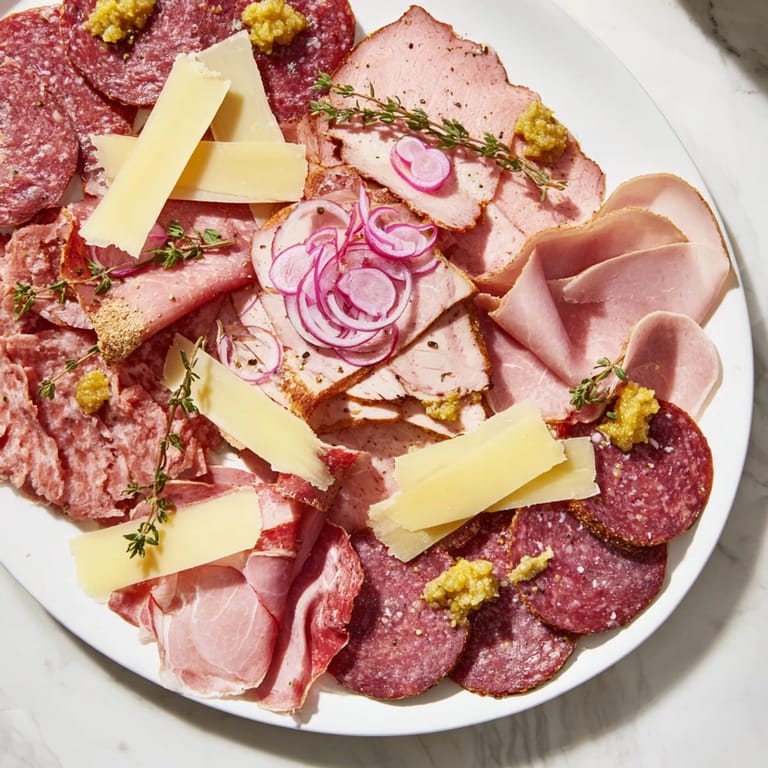
Save I hosted a dinner once where we didn't touch the bread at all, and no one missed it—everyone was too busy balancing thin shavings of Gruyère with a cornichon and a tiny dab of mustard on the back of a fork, reinventing the bite with each attempt. That's when I understood this board isn't really about feeding people in the traditional sense; it's about giving them permission to play with their food, to slow down, and to let flavors build their own story.
The Art of the Shave
A vegetable peeler is your secret weapon here, and it transforms everything it touches. I learned this by accident one evening when my cheese plane had gone missing, so I grabbed a peeler in desperation and discovered it actually created thinner, more elegant ribbons than the plane ever did. The key is to angle the cheese at about forty-five degrees and pull the peeler toward you with steady, confident pressure; you want each shaving to be nearly transparent. For Parmigiano Reggiano especially, these thin sheets pick up light differently than thicker cuts, creating an almost translucent appearance that makes people instinctively slow down and look at what they're about to eat.
Pairing and Progression
The beauty of this board is that it doesn't demand a formal eating order, yet there's a natural rhythm if you let it develop. Start with something like a piece of smoked beef wrapped around a bit of Gruyère, which is mellow and forgiving, then move to the sharper combination of aged Manchego with country ham, and finish with the assertive pairing of Parmigiano Reggiano and smoked sausage. A bold red wine like a Côtes du Rhône or a crisp, dry white like an Albariño will open up flavors you didn't know were there, turning a simple board into an experience worth savoring.
When Good Bones Elevate Everything
This board works because it trusts its ingredients to carry the weight, with no heavy sauces or complicated techniques to muddy the waters. I've learned that the moment you add something unnecessary—extra garnishes, flavored oils, anything that draws attention away from the meats and cheeses themselves—you've shifted from refinement into decoration. That said, there are a few last-minute additions that feel like natural extensions rather than distractions.
- Toasted walnuts or candied almonds add a sweet-savory crunch that catches people by surprise.
- Dried figs or apricots provide bursts of concentrated sweetness that make the salty, smoky elements taste even bolder.
- A small dish of fleur de sel on the side gives guests permission to adjust the seasoning of each bite, turning them into thoughtful participants in the meal.
 Save
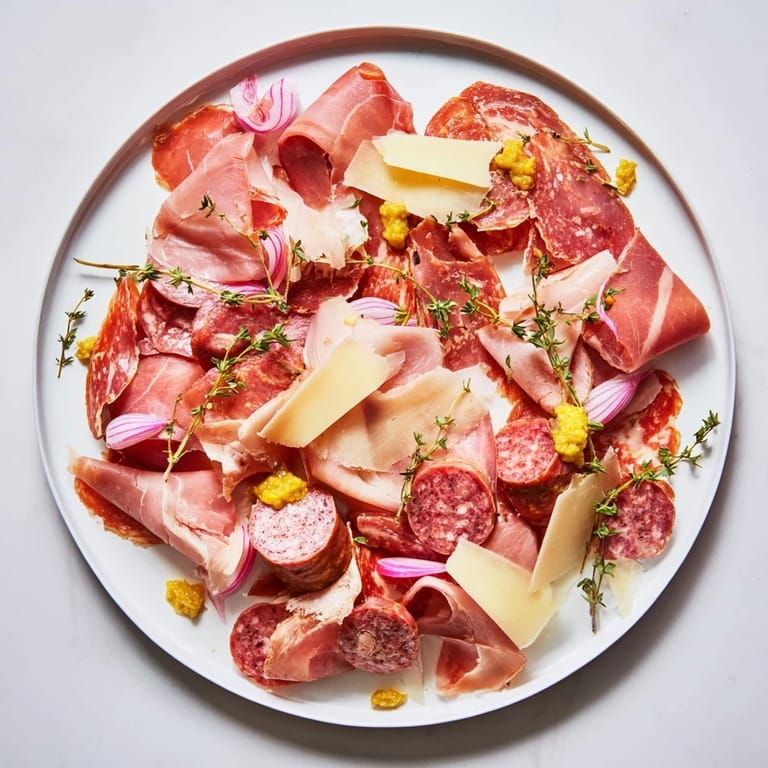
Save A good board teaches you that sometimes the most elegant meals are the ones that ask the least of you and offer the most to everyone around the table. This one has become my go-to when I want to feel like I've made something special without spending hours in the kitchen.
Questions & Answers
- → What meats are ideal for this platter?
Smoked beef, rustic country ham, and smoked sausage provide a hearty and flavorful base with contrasting textures.
- → Which cheeses complement the meats best?
Thinly shaved Parmigiano Reggiano, aged Manchego, and Gruyère add a delicate, slightly nutty richness that balances the meats.
- → How should the cheeses be prepared?
Use a vegetable peeler or cheese plane to shave cheeses into thin, translucent ribbons for an elegant presentation.
- → What accompaniments enhance the platter's flavors?
Cornichons, thinly sliced red onion, grainy mustard, and fresh herbs like thyme or rosemary add brightness and aromatic notes.
- → Can this be served with bread?
Yes, rustic country loaf or crusty baguette slices complement the platter but are optional depending on dietary preferences.
- → Are there suggested pairings with drinks?
Bold red wines or crisp, dry white wines enhance the flavors and textures of the meats and cheeses beautifully.