 Save
Save My first proper fish and chips wasn't at a fancy restaurant—it was standing outside a seaside chippy on a drizzly afternoon, vinegar and salt stinging my fingers as I bit into fish so crispy it shattered like spun glass. That moment changed how I thought about simple food. Years later, I realized I could chase that exact magic at home, and the secret wasn't fancy technique, just respect for good ingredients and the physics of hot oil.
I made this for my dad on his birthday, right when he was missing England most, and watching his face when he bit into that first piece told me everything. The kitchen filled with that unmistakable golden-fried aroma, and suddenly we were both transported—not just by taste, but by the effort itself, the care in getting every detail right.
Ingredients
- White fish fillets (cod or haddock, 150g each): Thick, meaty fillets stand up to the batter and frying without breaking apart; ask your fishmonger for the freshest catch and pat them bone-dry before cooking.
- All-purpose flour: This is your base; the gluten structure holds the batter together and creates that satisfying crunch.
- Cornstarch: The secret weapon for extra crispness; it fries lighter and crisper than flour alone, and even a small amount makes a difference.
- Baking powder: Creates tiny air pockets in the batter that puff up in hot oil, giving you that lacy, light texture inside the crunch.
- Sea salt: Use proper sea salt for the final seasoning, not table salt; the crystals are bigger and taste cleaner.
- Cold sparkling water or beer: The carbonation creates lift in the batter, and cold liquid means the flour doesn't overdevelop gluten, keeping things tender inside the crispy shell.
- Sunflower or vegetable oil: High smoke point and neutral flavor; never use olive oil, which burns and masks the delicate fish.
- Russet or Maris Piper potatoes: Starchy varieties that fluff up beautifully; waxy potatoes will stay dense no matter how long you fry.
- Malt vinegar: Bright and slightly sweet, it cuts the richness of the fried food in a way regular vinegar can't quite manage.
Tired of Takeout? 🥡
Get 10 meals you can make faster than delivery arrives. Seriously.
One email. No spam. Unsubscribe anytime.
Instructions
- Soak those potatoes:
- Cut your potatoes into thick fries and let them sit in cold water for at least 15 minutes, up to an hour; this draws out excess starch and means they'll fry up light and fluffy instead of gluey. Pat them completely dry with a clean towel before they hit the oil.
- First fry the chips low and slow:
- Heat your oil to 150°C (300°F)—a thermometer here is non-negotiable, guessing will ruin everything—and fry the potatoes in batches for 4 to 5 minutes until they're tender but pale yellow. This step cooks them through; they'll look underdone, but that's exactly right.
- Build your batter while chips rest:
- Whisk flour, cornstarch, baking powder, salt, and pepper together, then slowly add cold sparkling water or beer, stirring until you get a thick batter that coats the back of a spoon like pancake batter. Keep it cold; if it sits too long, whisk gently once more before using.
- Crank up the heat for crispy chips:
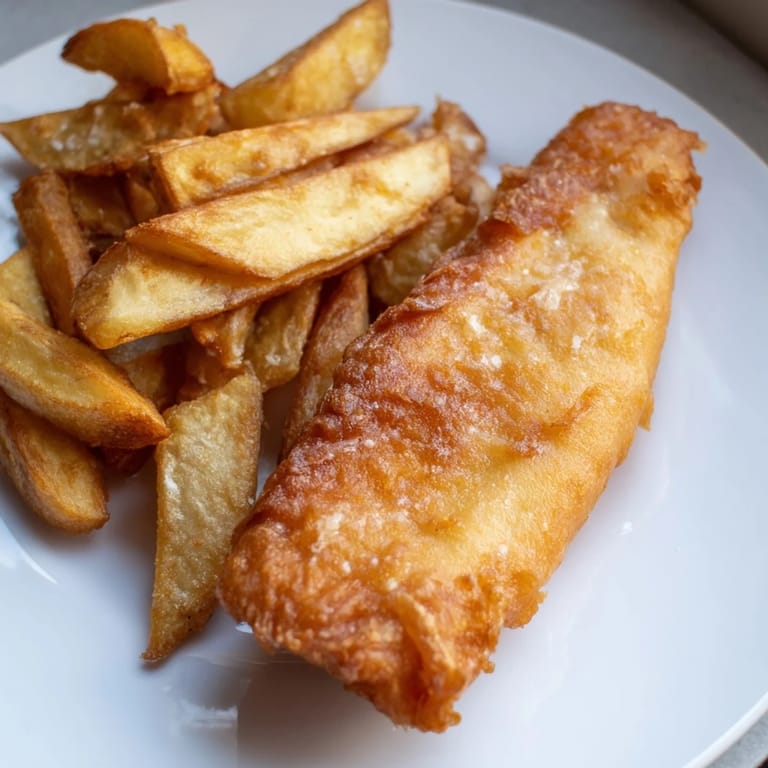
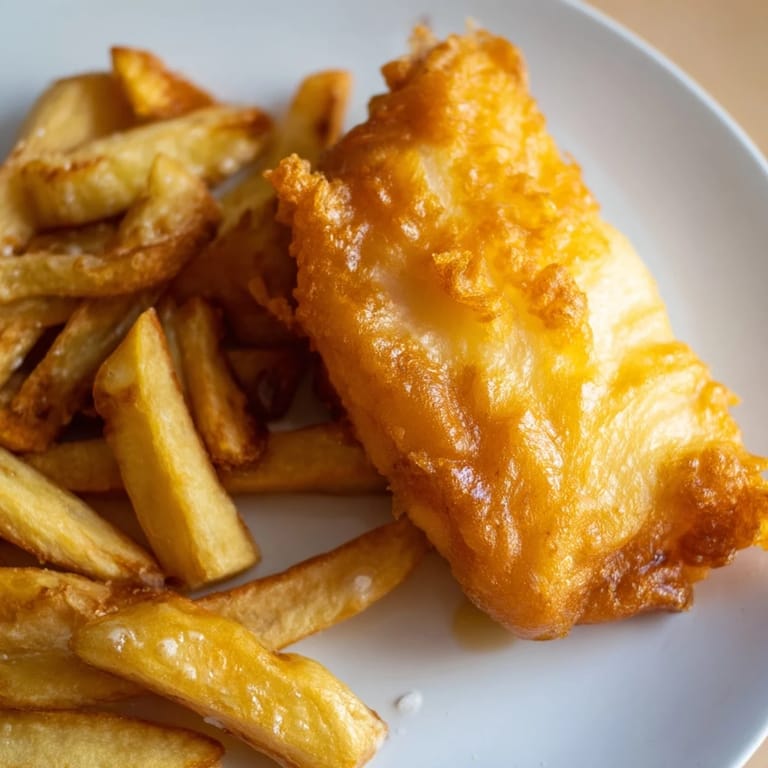
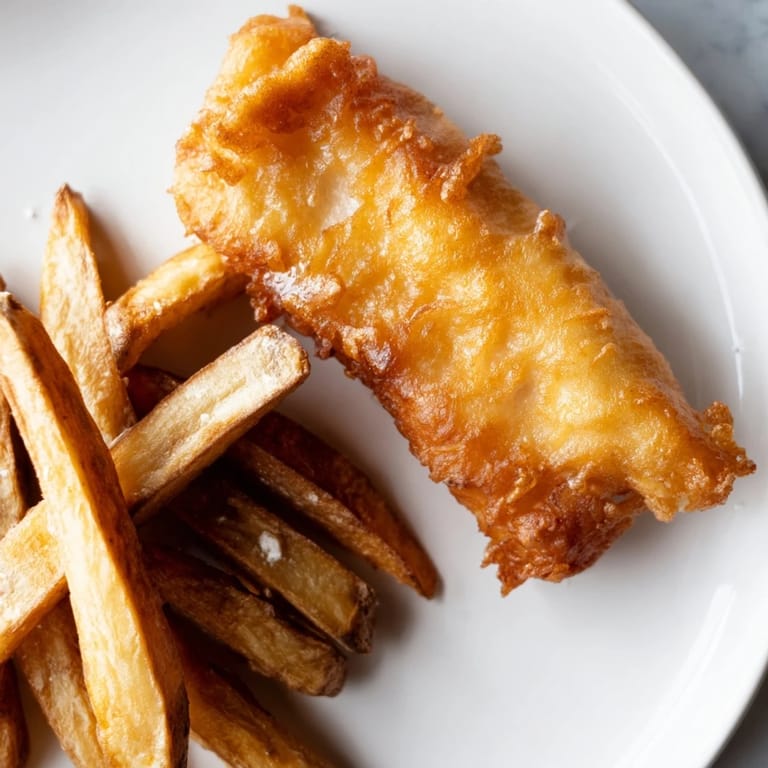
- Increase oil temperature to 190°C (375°F) and fry the potatoes a second time for 2 to 3 minutes until they're golden and crackle when you touch them. This final fry creates the contrast that matters: crunchy outside, fluffy inside.
- Prepare the fish for its moment:
- Pat fish fillets dry with paper towels, dust lightly with flour to help the batter stick, then dip each one into the batter, tilting to let excess drip off back into the bowl. You want a medium-thick coating, not a clump.
- Fry with confidence and attention:
- Carefully lower fish into 190°C (375°F) oil and fry for 5 to 7 minutes, turning once halfway through, until the batter is deep golden brown and the fish flakes easily at the thickest part. Work in batches so the oil temperature stays steady; crowding the pot drops the heat and gives you soggy fish.
 Save
Save My neighbor smelled the frying from across the fence and showed up asking what I was making, and ten minutes later we were sharing paper-wrapped bundles with malt vinegar dripping down our wrists, talking about nothing important while the food did all the talking. That's when I understood this dish isn't really about technique at all—it's about generosity, about filling a kitchen with warmth and the smell of something honest and good.
Why the Double Fry Works
The first fry at low temperature cooks the potato through without coloring it, and the second fry at higher heat shatters the surface into crispy golden shards while keeping the inside pillowy and soft. This two-step process is why chip shop chips taste different from what most home cooks make—they're not rushing; they're building texture through patience and physics. Skip the first fry and you'll get crispy potatoes that are raw inside, or overcooked gray ones surrounded by burned oil. The method might seem fussy, but it's actually foolproof once you understand what you're doing.
The Science of Crispy Batter
Baking powder creates tiny bubbles in the batter that expand violently when they hit hot oil, creating pockets of air that stay crispy even as they cool. Cornstarch fries faster and crispier than flour because its starch granules are smaller and absorb less oil during cooking. The beer or sparkling water adds carbonation, which creates even more lift and ensures the batter is never dense or heavy. Cold liquid means the gluten in the flour relaxes rather than tightens, so the interior stays tender and delicate beneath all that satisfying crunch.
Serving and Storage
Fish and chips demand immediate eating, straight from the oil while everything still crackles and steams. Malt vinegar is traditional and correct, cutting through the richness in a way no other vinegar quite manages; if you can't find it, fresh lemon wedges work beautifully. Tartar sauce is optional but made me a believer once I tried a proper homemade version, and mushy peas add a gentle earthiness that balances the crispy richness perfectly.
- Store leftovers in an airtight container in the fridge, though honestly, reheating will soften the batter—eat it fresh if you possibly can.
- You can prepare the chips up to the first fry earlier in the day; just drain them well and refrigerate until you're ready for the second fry.
- The batter is best used immediately, but if you must hold it, keep it cold and whisk gently before using again.
 Save
Save This dish is about respecting ingredients and understanding heat, but mostly it's about feeding people something that makes them happy. Make it when you want to feel a little bit closer to someone, or when you want to remember why simple food done well matters more than anything complicated ever could.