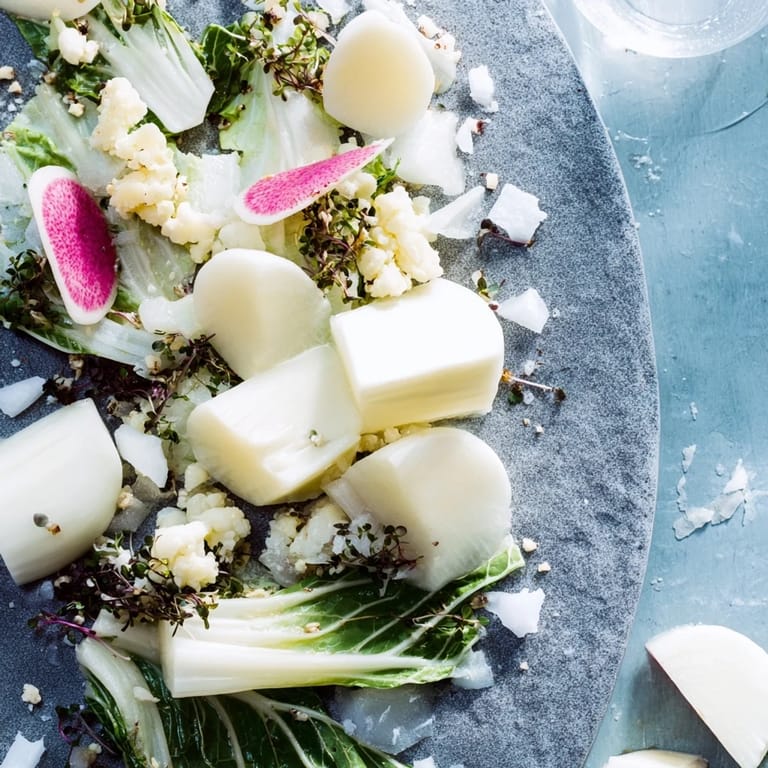
 Save
Save I discovered this dish on a cold afternoon while flipping through a design magazine, mesmerized by a photograph of an arctic landscape rendered entirely in whites and pale grays. The image stayed with me, and I found myself wondering what it would taste like if I could eat the tundra itself. That's when I started playing with these clean, crisp vegetables, arranging them on a chilled stone like a edible art installation. What began as an aesthetic experiment turned into something genuinely delicious—a lesson that beauty and flavor don't have to compete.
I made this for my sister's dinner party on an unusually still winter evening, and watching her guests lean in to photograph their plates before eating told me everything. One friend mentioned it reminded her of the time she hiked in Iceland, and suddenly everyone at the table was sharing travel stories while eating vegetables that somehow tasted like wind and open sky. That's when I realized this dish isn't just about the ingredients—it's about the conversation it sparks.
Ingredients
- Daikon radish: Its crisp, almost fruity crunch is the backbone here; slicing it thin on a mandoline makes all the difference between pleasant and ethereal.
- Kohlrabi: This often-overlooked vegetable brings a delicate sweetness and pale color that reinforces the tundra aesthetic, plus it stays pleasantly firm when kept cold.
- Belgian endive: Use the leaves as is—they're naturally elegant and add a subtle bitter note that keeps the plate from becoming one-dimensional.
- Cauliflower florets: Finely chopped into the tiniest pieces you can manage; they scatter like snow and add a light, almost cloud-like texture.
- Unsweetened coconut flakes: Toast them lightly yourself if possible, as pre-toasted versions can taste a bit cardboard-y and lose that subtle nuttiness.
- White and black sesame seeds: Lightly toasting the white seeds before combining brings out their soft, almost buttery undertone; the black seeds add visual contrast and a whisper of earthiness.
- Microgreens: Pea shoots or radish sprouts work beautifully, added at the very last moment so they stay perky and don't wilt into the dressing.
- Flaky sea salt: The final seasoning should be generous enough to taste but restrained enough to let every other ingredient shine.
- Extra-virgin olive oil: Use one you genuinely enjoy, because its flavor is the only warmth on this plate.
- Fresh lemon juice and white wine vinegar: The acidity keeps everything tasting bright and prevents the dish from sliding into blandness despite its minimalist approach.
- White pepper: It dissolves into the dressing more gracefully than black pepper and maintains the pale color palette.
Tired of Takeout? 🥡
Get 10 meals you can make faster than delivery arrives. Seriously.
One email. No spam. Unsubscribe anytime.
Instructions
- Chill your stage:
- Pop that stone or marble platter into the freezer for exactly 15 minutes. This isn't just for looks—the cold is essential, keeping every ingredient crisp and making each bite feel refreshing rather than limp.
- Build the dressing:
- In a small bowl, whisk together the olive oil, lemon juice, white wine vinegar, and white pepper until they've bonded into something cohesive. Taste it; it should make your mouth water, a little sharp but balanced.
- Scatter with intention:
- Remove the chilled stone and begin arranging the daikon, kohlrabi, and endive leaves across it with deliberate randomness, as if a gentle arctic wind had scattered them. Leave plenty of negative space; the emptiness is part of the design.
- Layer the texture:
- Sprinkle the finely chopped cauliflower, coconut flakes, and sesame seeds in a windswept pattern, letting some gather in small drifts while other pieces stand alone. Step back occasionally to see if it feels balanced visually.
- Add the soul:
- Drizzle the dressing lightly over the entire arrangement with a steady hand, aiming for coverage without sogginess. The vegetables should glisten but never look drowning.
- Final flourishes:
- Scatter the microgreens across the top and finish with a small pinch of flaky sea salt just before serving. This last step matters—serve within moments so the greens stay bright and the whole plate retains its snappy, cold character.
 Save
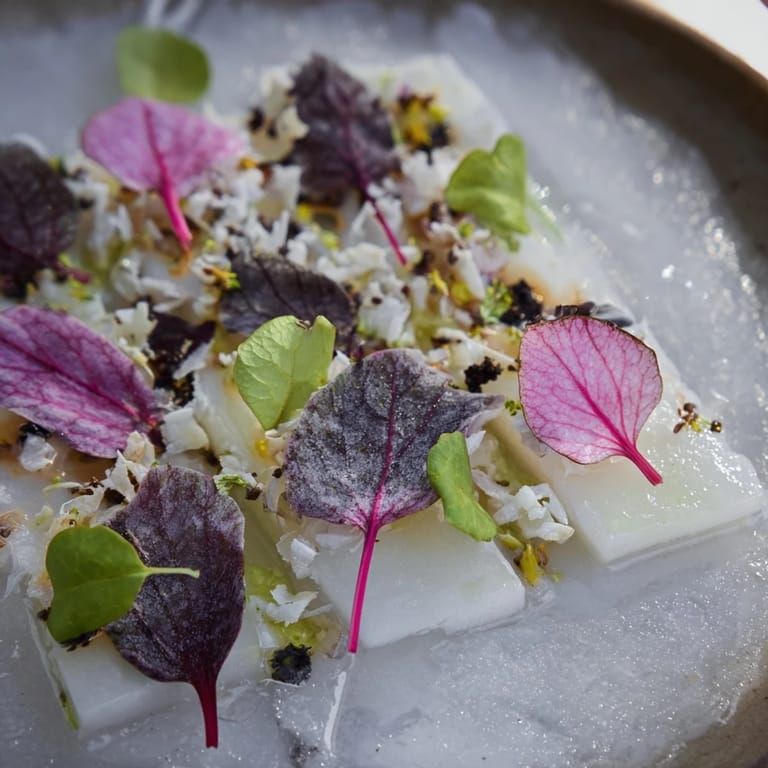
Save There was a moment during that first dinner party when the table went quiet mid-conversation, and I realized everyone was just eating, thinking, tasting. That silence felt like the biggest compliment I could receive. This dish isn't trying to impress with technique or exotic ingredients; it's simply offering a pause, a moment of calm prettiness in the middle of your day.
The Art of Negative Space
What makes this dish work isn't what you put on the plate—it's the deliberate emptiness you leave behind. Too many garnishes scattered everywhere, and suddenly you've lost the tundra and gained visual noise instead. The spaces between ingredients matter as much as the ingredients themselves. Think like you're laying out a zen garden rather than plating a traditional dish, and you'll understand the restraint that makes this beautiful.
Playing with Temperature and Time
The cold is doing more work than you might think. When vegetables are properly chilled, their crisp texture becomes almost audible when you bite into them, and the contrast between the cold vegetables and the room-temperature dressing creates an unexpected complexity on the palate. If you're preparing this ahead of time, keep everything separate until the last possible moment—the cauliflower can be finely chopped and chilled, the stone can sit in the freezer, and the dressing can rest in a small bowl. Just don't combine them until you're ready to serve, or you'll watch your edible artwork slowly surrender to moisture.
Variations and Seasons
While this dish is inherently a winter inspiration, you can shift it subtly with the seasons and what's available at your market. In spring, replace the kohlrabi with thinly shaved fennel or snap peas sliced lengthwise. Summer might bring delicate cucumber ribbons or even thin slices of green apple for a whisper of tartness. Fall could introduce paper-thin radish varieties, shaved celeriac, or even thin apple slices. The core principle stays the same: pale, crisp, cool, and arranged with intention.
- For added protein, scatter smoked whitefish flakes or a few cold poached shrimp across the top just before serving.
- Experiment with yuzu juice or rice vinegar if you want to shift the acidity profile toward something lighter and more floral.
- A chilled glass of dry white wine or Nordic aquavit pairs beautifully and reinforces the landscape you're evoking.
 Save
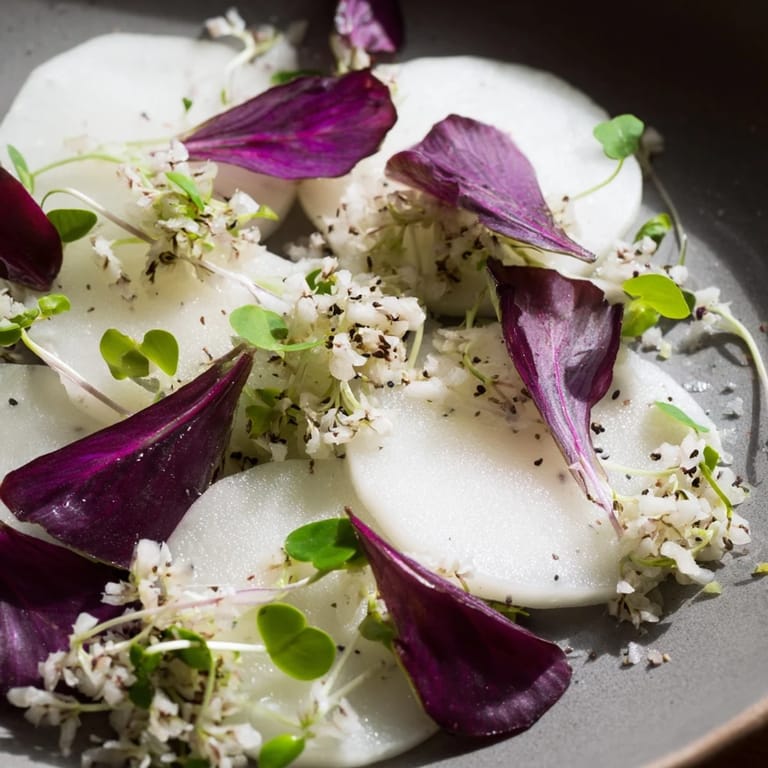
Save This dish taught me that sometimes the most memorable meals aren't the complicated ones, but the ones that respect your guests enough to let them think and taste and simply be present. I hope it brings that same quiet beauty to your table.
Questions & Answers
- → What is the best way to prepare the vegetables?
Thinly slice the daikon and kohlrabi with a sharp knife or mandoline for crisp texture and delicate presentation.
- → How should the serving platter be prepared?
Chill a large stone or marble platter in the freezer for at least 15 minutes before plating to keep the dish crisp and fresh.
- → Can I substitute the dressing ingredients?
Yes, yuzu juice or rice vinegar can replace lemon juice and white wine vinegar for a different acidity profile.
- → What garnishes enhance the flavors of this dish?
Toasted white and black sesame seeds, coconut flakes, and microgreens add texture and subtle earthy notes.
- → Is this dish suitable for specific dietary needs?
It is vegetarian and gluten-free but contains sesame seeds and coconut, which may cause allergies.