 Save
Save I still remember the moment I decided to turn a simple salad into something unforgettable. It was the night before Hanukkah, and I wanted to create something that would make everyone at the table pause and smile before we even took our first bite. That's when the Star of David salad was born—a dish that transformed our holiday table into something truly magical, where fresh vegetables became art and every color told its own story.
The first time I made this platter was for my daughter's class Hanukkah celebration, and I watched her eyes light up when she saw the six-pointed star arranged on the table. The other parents stood there amazed that something so visually stunning could come from just fresh ingredients and a little patience. That's when I realized this wasn't just a salad anymore—it was a memory we'd all share.
Ingredients
- Baby spinach and arugula: These tender greens form your foundation and provide that peppery bite that makes Mediterranean salads sing. I always wash and dry mine ahead of time so they're ready to use, and the slight peppery edge of arugula adds complexity that plain lettuce never could
- Cucumbers: Slice them thin so they're delicate enough to outline your star shape perfectly. I learned the hard way that thick cucumber slices break when you're trying to arrange them into geometric patterns
- Cherry tomatoes: Halved and bright, they bring both sweetness and acidity. The small size means they nestle perfectly into the star sections without overwhelming the design
- Bell peppers in yellow and red: These aren't just flavor—they're your visual anchor. The contrast between the warm reds and cheerful yellows is what makes the star pop
- Purple cabbage: Shredded fine, it adds a subtle earthiness and creates color harmony you can't get any other way. It also holds up beautifully and doesn't wilt like some other vegetables
- Red onion: Use it sparingly and slice it paper-thin so it adds bite without overwhelming. I learned to soak mine in cold water for five minutes if I want less intensity
- Feta cheese: Crumbled generously, it brings that salty, creamy element that ties everything together. I always buy it fresh from the dairy section rather than pre-crumbled
- Kalamata olives: Halved and scattered at the star's points, they add that briny depth that whispers Mediterranean with every bite
- Capers: These tiny flavor bombs are optional but they're worth seeking out. They add a sharp, tangy pop that elevates the entire dish
- Pine nuts: Toasted until golden, they add a buttery richness. Toast them yourself in a dry pan for just a few minutes—the difference between fresh toasted and stale pre-toasted is everything
- Extra virgin olive oil: Use the good stuff here—it's the base of your dressing and you'll taste every drop. I splurge on a bottle I actually love because it matters when it's this prominent
- Lemon juice and red wine vinegar: Together they create brightness without harshness. The lemon is sunshine, the vinegar is sophistication
- Honey and Dijon mustard: Just enough sweetness and mustard sharpness to balance everything. This is where the magic happens in the dressing
Tired of Takeout? 🥡
Get 10 meals you can make faster than delivery arrives. Seriously.
One email. No spam. Unsubscribe anytime.
Instructions
- Prepare your canvas:
- Start with a large, flat serving platter or tray—this is your stage. I use a white ceramic platter because it makes every color sing, but any clean, flat surface works. Make sure it's completely dry before you begin
- Layer your greens:
- Spread the baby spinach and arugula in a thin, even layer across the entire platter. This isn't just a bed—think of it as the background color for your painting. Press gently so everything stays in place but don't compress it. You want visible, beautiful greens showing through
- Outline your star:
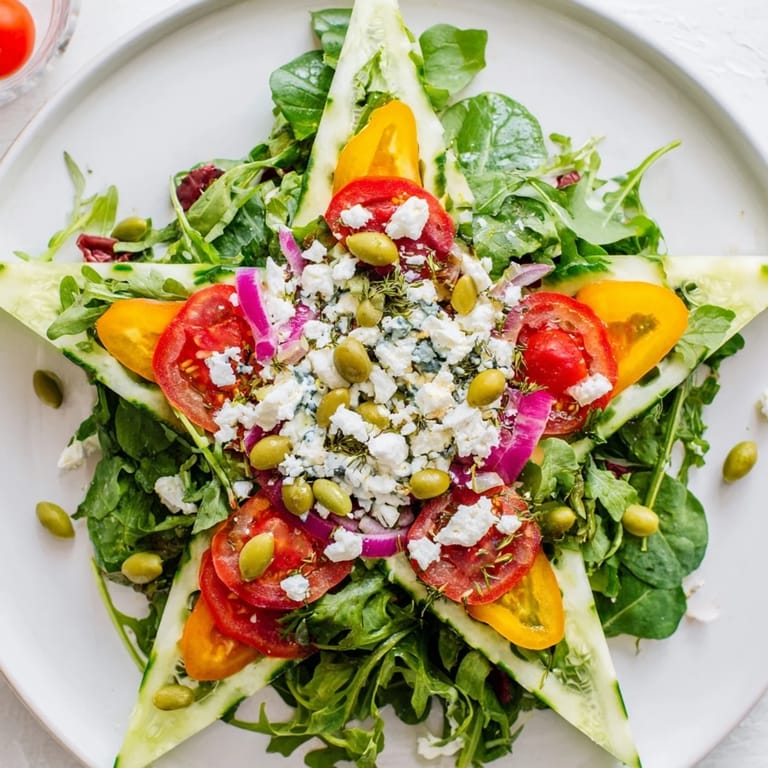
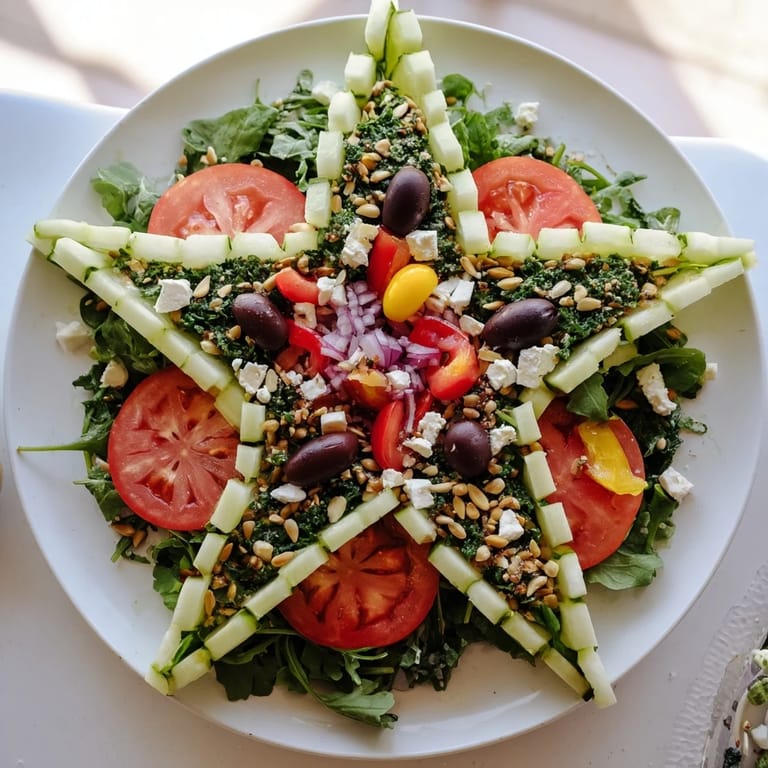
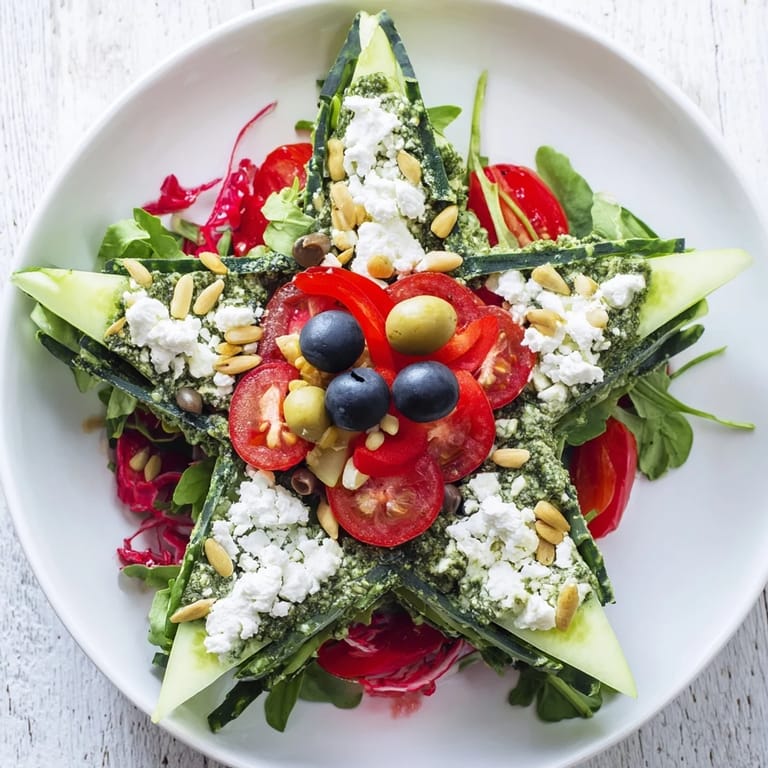
- Here's where it gets fun. Take your cucumber slices and arrange them into two overlapping equilateral triangles to form that iconic six-pointed star. Work slowly and step back often to check your angles. I use cookie cutters as guides if I'm nervous about the geometry, and honestly, that takes away the stress
- Fill with color:
- Now fill each of the six triangular sections with groups of cherry tomatoes, bell peppers, and purple cabbage. Think about color balance—put yellows next to reds, keep the cabbage where it will show. This is where your artistic eye comes in. Take your time and let each section tell its own color story
- Add the finishing touches:
- Scatter feta cheese, olives, capers, and toasted pine nuts around the star's edges and points. These are your jewelry—use them to accentuate, to highlight, to make the star shimmer with texture and richness. Don't be shy here
- Make your dressing:
- Whisk together the olive oil, lemon juice, red wine vinegar, honey, mustard, salt, and pepper in a small bowl. Whisk until it becomes creamy and emulsified. Taste it and adjust—if it's too sharp, add a touch more honey. If it's too sweet, add a squeeze more lemon. This dressing should make your mouth want to say yes
- The final moment:
- Right before serving, drizzle the dressing evenly over the salad, or serve it alongside in a small bowl so people can add as much as they like. Serve immediately and watch people pause before they eat—that moment of appreciation is exactly why you made this
 Save
Save What I love most about this salad is how it transforms a meal into a celebration. I've watched families gather around it, heard kids ask for seconds of vegetables they normally push aside, and seen people actually take photographs before eating because it's just that beautiful. It became less about the salad and more about the moment—the gathering, the tradition, the joy of sharing something made with your hands and your heart.
Creating Your Own Star
The wonderful thing about this recipe is that it's more of a framework than a rigid set of rules. I've made it with whatever vegetables were seasonal and beautiful—summer versions burst with tomatoes and zucchini, winter versions lean into hearty roasted beets and root vegetables. The shape stays the same, but your ingredients can dance to whatever's in season. One autumn I used roasted butternut squash and pomegranate seeds, and it was absolutely stunning. The star shape is just an excuse to celebrate whatever produce makes your heart happy.
Variations for Every Table
This salad is endlessly adaptable, which is part of why I return to it again and again. For protein, I've scattered everything from gently cooked chickpeas to grilled chicken strips, crumbled hard-boiled eggs, or even grilled tofu for vegan versions. For a creamier version, I've drizzled tahini dressing instead of the lemony vinaigrette, and it becomes something entirely different but equally magical. The vegan cheese substitutes have gotten so good lately that most people genuinely can't tell the difference from traditional feta.
The Joy of Presentation
There's something about putting effort into how food looks that changes how it tastes and how it makes people feel. This salad taught me that presentation isn't superficial—it's an act of care. When you arrange vegetables into a meaningful shape, when you think about color and balance, when you take those extra few minutes to make something beautiful, everyone at your table feels that intention. That's worth every extra minute.
- Use a sharp knife for clean cuts that look professional and keep vegetables fresher longer
- If cucumber slices are too floppy, let them sit on paper towels for ten minutes to release excess moisture first
- Remember that this salad is most beautiful served right away, so assemble it as close to serving time as possible without stressing yourself
 Save
Save This salad has become my answer to the question of how to make something meaningful when I want to celebrate. Whether it's a holiday or just a Tuesday when I want to remind my family that they're worth a little extra effort, the Star of David salad delivers both beauty and flavor in equal measure.
Questions & Answers
- → How do you create the Star of David shape using vegetables?
Arrange overlapping cucumber slices into two equilateral triangles on a large platter. Fill interior spaces with colorful veggies like cherry tomatoes, bell peppers, and cabbage to highlight the star's sections.
- → What dressing complements the salad platter best?
A light vinaigrette made from extra virgin olive oil, lemon juice, red wine vinegar, honey, and Dijon mustard enhances the fresh flavors without overpowering the ingredients.
- → Can this salad accommodate dietary restrictions?
Yes, using vegan feta substitutes and omitting pine nuts makes it suitable for dairy-free or nut-sensitive diets while maintaining flavor and texture.
- → What are some tips for assembling the platter neatly?
Use a large flat serving tray and arrange greens evenly first. Employ a sharp knife or cookie cutters to guide the cucumber triangles for precise geometric shapes.
- → How can I add protein to this salad platter?
Incorporate cooked chickpeas or grilled chicken strips within the star sections to boost protein while keeping the fresh salad aesthetic.