 Save
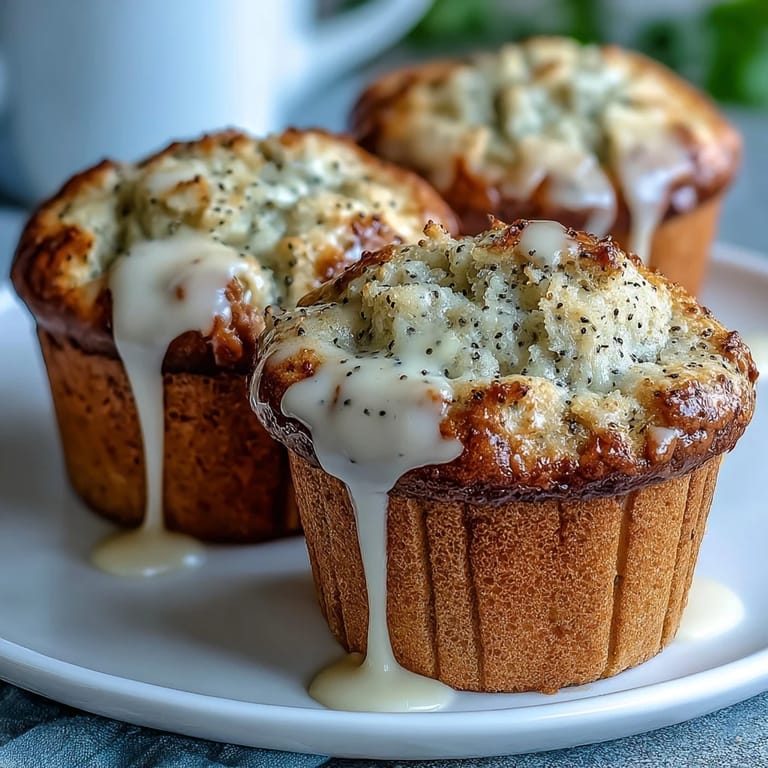
Save My neighbor knocked on the door one Saturday morning with a box of these muffins, still warm and smelling like sunshine and butter. I bit into one and immediately understood why she'd been raving about them—the brightness of the lemon hit first, then that subtle crunch of poppy seeds, and finally that glossy glaze that made everything feel intentional and special. She laughed when I asked for the recipe, saying it was her secret weapon for impressing people without spending hours in the kitchen. Now I make them whenever I want to feel like spring has arrived, regardless of what the calendar says.
I brought these to a book club meeting last May, mostly because I'd made too many and didn't want them going to waste. One friend took a bite and immediately asked if I'd bought them from a bakery, which felt like the highest compliment. What started as an accidental contribution became a running joke—now whenever it's my turn to host, someone always asks if I'm bringing "those muffins." That's when you know a recipe has crossed from just being good to being something people actually remember.
Ingredients
- All-purpose flour (2 cups): This is your foundation, and measuring by weight rather than scooping ensures you won't accidentally pack in too much and end up with dense muffins.
- Granulated sugar (3/4 cup): Don't skip the sugar or reduce it thinking you'll make them healthier—the sweetness balances the tartness of the lemon perfectly.
- Poppy seeds (2 tbsp): These tiny seeds add texture and visual interest, so don't grind them or toast them; just let them be themselves.
- Baking powder and baking soda (1 1/2 tsp and 1/2 tsp): Together they create the rise and tender crumb, with the soda specifically reacting to the acidic lemon juice for extra lift.
- Salt (1/2 tsp): This ingredient deserves respect because it amplifies the lemon flavor rather than making things taste salty.
- Eggs (2 large, room temperature): Room temperature eggs blend more smoothly with the wet ingredients, creating a more uniform batter texture.
- Whole milk or buttermilk (3/4 cup): Buttermilk adds a subtle tang that complements the lemon, but whole milk works beautifully if that's what you have on hand.
- Unsalted butter, melted and slightly cooled (1/2 cup): Melting the butter first means it incorporates evenly throughout, and cooling it slightly prevents it from scrambling the eggs.
- Fresh lemon juice (1/4 cup): Fresh is truly non-negotiable here—bottled juice tastes hollow by comparison and won't give you that brightness.
- Lemon zest (2 lemons): The zest carries the essential oils that make these muffins taste like actual lemon, so don't be shy with it.
- Vanilla extract (1 tsp): Just enough to deepen the flavor without announcing itself as vanilla.
- Powdered sugar (1 cup): For the glaze, and sifting it first prevents lumps that refuse to dissolve.
- Fresh lemon juice for glaze (2–3 tbsp): Add gradually because you're looking for a consistency that drapes rather than pools or stays thick.
Tired of Takeout? 🥡
Get 10 meals you can make faster than delivery arrives. Seriously.
One email. No spam. Unsubscribe anytime.
Instructions
- Get your oven ready:
- Preheat to 375°F (190°C) and line your muffin tin with paper liners or a light grease. This step matters because you want the muffins to bake evenly from all sides without sticking.
- Combine all your dry ingredients:
- In a large bowl, whisk together the flour, sugar, poppy seeds, baking powder, baking soda, and salt until everything looks evenly distributed. Take your time here—you're creating a uniform base that will help the muffins rise predictably.
- Mix the wet ingredients separately:
- In another bowl, whisk the eggs, milk, melted butter, lemon juice, lemon zest, and vanilla extract until the mixture is smooth and the zest is distributed throughout. This separation is important because it keeps you from overworking the flour.
- Bring wet and dry together gently:
- Pour the wet ingredients into the dry ones and use a spatula to stir just until combined—a few small lumps are actually your friend here. Overmixing at this stage will activate the gluten and turn your muffins tough, which is the opposite of what you want.
- Fill the muffin cups:
- Divide the batter evenly so each cup is about 3/4 full, using an ice cream scoop if you have one for consistency. This helps all the muffins bake at the same rate and rise to roughly the same height.
- Bake until they're golden:
- Bake for 16–18 minutes, keeping an eye on them around the 15-minute mark because ovens vary. The muffins are done when a toothpick inserted into the center comes out clean or with just a few moist crumbs clinging to it.
- Cool with patience:
- Let the muffins sit in the tin for 5 minutes—this gives them enough strength to transfer to a wire rack without falling apart. Then move them to the rack to cool completely, which allows the glaze to stick properly rather than sliding right off.
- Make your glaze:
- Whisk powdered sugar and lemon juice together gradually until you have a consistency that's thick enough to cling to the muffin but thin enough to drizzle smoothly. Add the optional zest if you want an extra hit of lemon flavor.
- Top and finish:
- Drizzle the glaze over completely cooled muffins and let it set for about 10 minutes before serving, which gives it just enough time to harden slightly without becoming brittle.
 Save
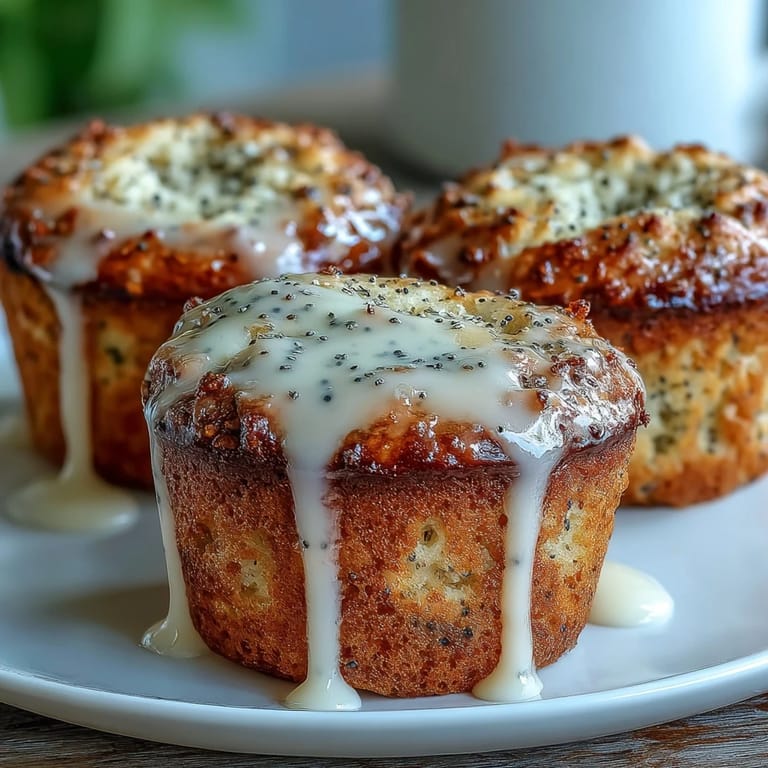
Save There's something about offering someone a warm muffin with a cup of tea that feels like a small kindness, even if it took less than an hour to make. These muffins have a way of turning an ordinary Tuesday afternoon into something that feels deliberate and thoughtful, which might be why people remember them.
Why Fresh Lemon Matters
The first time I made these with bottled lemon juice, thinking it would save time, the result was disappointing in a way I couldn't quite articulate until I made them again with fresh juice. The difference isn't subtle—it's the distinction between something that tastes lemony and something that tastes alive. Fresh lemons contain volatile oils that bottled juice has lost during processing, and those oils are what give the muffins their characteristic brightness. Once you taste the difference, you'll understand why I'm so adamant about this.
The Science of Not Overmixing
Muffins fail not because of bad ingredients but because of enthusiasm with the spatula. Every time you stir, you're developing gluten, which creates a tougher, denser crumb structure that's the opposite of what you want in a tender muffin. The batter should look slightly lumpy and rough when you stop stirring—this is intentional, not a sign that you didn't mix enough. I learned this the hard way after making genuinely awful muffins that tasted like rubber, and now I deliberately stop myself mid-stir to avoid repeating that mistake.
Storing and Serving Your Muffins
These muffins stay fresh at room temperature in an airtight container for up to two days, which makes them perfect for meal prep or bringing to gatherings. The glaze keeps them from drying out as quickly, and they're honestly just as good on day two as they are the moment they cool. I've found that storing them in the refrigerator extends their life to about five days, though the texture does become slightly denser—still perfectly edible, just not quite as tender as fresh.
- Keep them in an airtight container and they'll stay fresh longer than you'd expect.
- These pair beautifully with Earl Grey tea, sparkling mimosas, or just a simple cup of coffee.
- Leftover muffins can be gently reheated in a 300°F oven for five minutes if you want to restore some of their original warmth and texture.
 Save
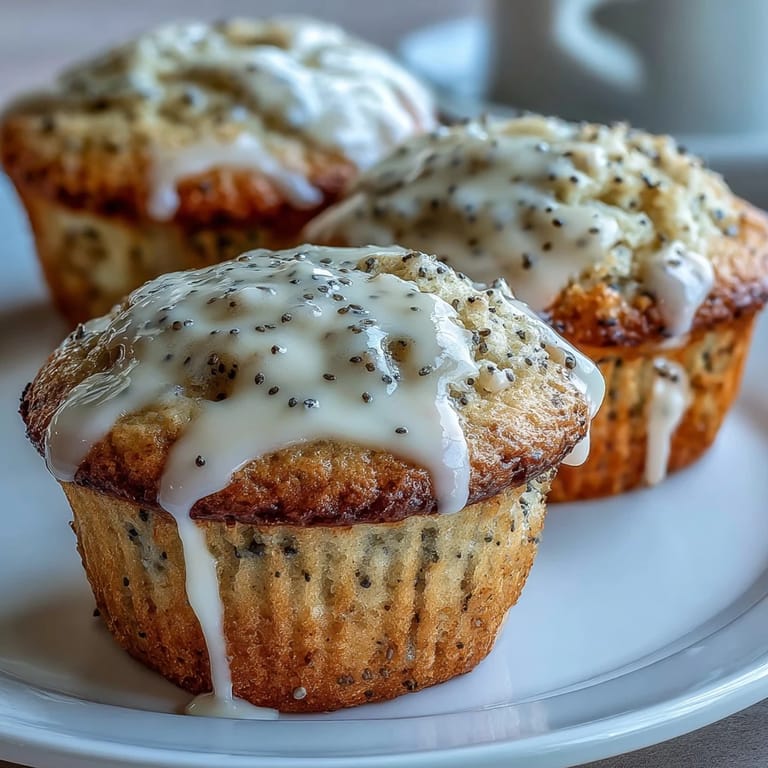
Save There's real joy in pulling a batch of these muffins from the oven and knowing you've made something that tastes like a bakery created it but with the warmth of your own kitchen behind it. They prove that simple recipes, made with attention and fresh ingredients, can be absolutely unforgettable.
Questions & Answers
- → Can I substitute buttermilk in this batter?
Yes, whole milk can be used instead of buttermilk if needed, although it may slightly affect the tenderness of the muffins.
- → How do I prevent the glaze from running off the muffins?
Allow the muffins to cool completely before drizzling the glaze. This helps the glaze set properly and cling to the surface.
- → What is the best way to store these muffins?
Store muffins in an airtight container at room temperature for up to two days to maintain freshness.
- → Can I add more lemon flavor?
Yes, increasing lemon zest in the batter or glaze will enhance the citrus brightness without overpowering the texture.
- → Are poppy seeds necessary for texture?
Poppy seeds provide a pleasant crunch and subtle nutty taste that complements the lemon; omitting them will alter the texture.