 Save
Save There's something about a perfectly balanced balsamic vinaigrette that can rescue even the most ordinary pile of greens. I discovered this when a friend casually mentioned she'd been reducing her balsamic vinegar like a glaze, and the next time I made salad, I decided to try it myself—the kitchen suddenly smelled like a warm Italian kitchen, and I knew I was onto something special. That simple technique transformed a weeknight side dish into the kind of salad people actually want to eat.
I made this for a potluck last spring where someone had forgotten to bring salad, and it became the dish people actually finished. One person went back for thirds and asked if I'd put something special in it, and I loved being able to say it was just good technique, not a secret ingredient—the kind of cooking that feels like a trick but isn't.
Ingredients
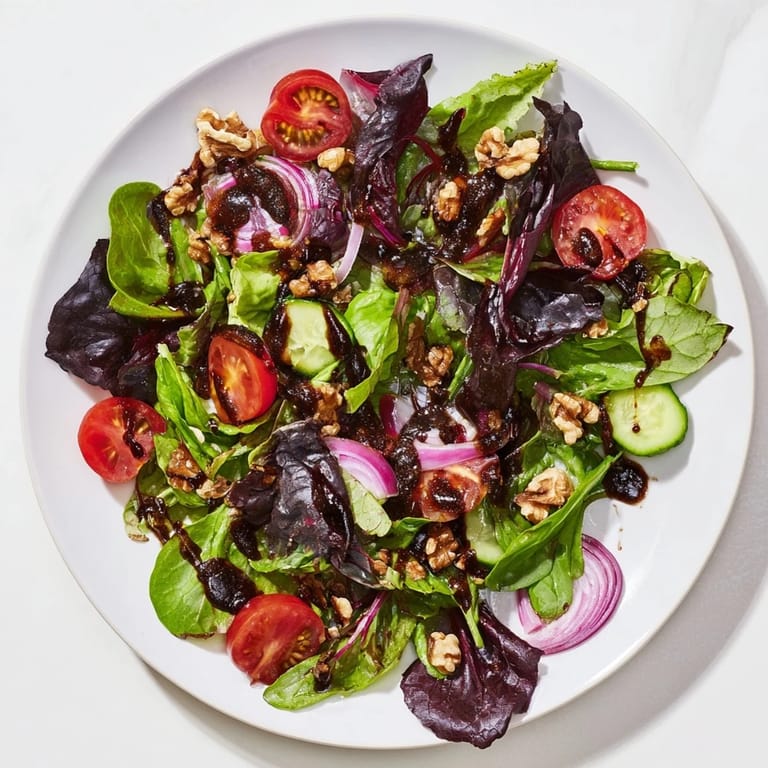
- Mixed salad greens: Use whatever you love—arugula brings a peppery snap, spinach adds earthiness, romaine gives you crunch, and radicchio brings a subtle bitterness that plays beautifully with the sweet-tart dressing.
- Cherry tomatoes: Halving them lets the dressing coat them properly instead of rolling off whole ones.
- Red onion: A thin slice adds sharpness that cuts through the richness of the oil and vinegar.
- English cucumber: Crisp and watery, it keeps the salad fresh and prevents everything from feeling heavy.
- Toasted walnuts: Optional, but they add a warm, slightly buttery texture that makes you want to keep eating.
- Balsamic vinegar: The star—reducing it concentrates the sweetness and creates a glossy syrup that clings to the leaves.
- Extra-virgin olive oil: Good quality matters here since it's one of only a few ingredients; cheap oil will taste flat and thin.
- Dijon mustard: Just a teaspoon acts as an emulsifier and adds a subtle depth that makes people wonder what you did differently.
- Sea salt and freshly ground black pepper: These aren't afterthoughts—they're what bring out the flavor of everything else.
Tired of Takeout? 🥡
Get 10 meals you can make faster than delivery arrives. Seriously.
One email. No spam. Unsubscribe anytime.
Instructions
- Reduce the balsamic into liquid gold:
- Pour the balsamic into a small saucepan and set it over medium heat. You'll notice it starts to bubble after about a minute, and as it simmers, the kitchen fills with a deep, sweet-tart aroma. Stir it occasionally so it reduces evenly, and after six to eight minutes it should look noticeably darker and thicker—when you tilt the pan, it should coat the bottom slowly.
- Build the greens:
- While the balsamic is reducing, wash and dry your greens if they need it, then pile them into your largest bowl. Add the halved tomatoes, thin red onion slices, cucumber slices, and walnuts if you're using them—at this point it looks pretty, but the dressing is what ties everything together.
- Whisk the dressing:
- In a small bowl, combine the cooled balsamic reduction, olive oil, mustard, salt, and pepper. Whisk vigorously until it emulsifies into something that looks almost creamy—this is where the mustard earns its place, helping the oil and vinegar actually stay together.
- Dress and toss:
- Drizzle the dressing over your greens and toss gently but thoroughly, making sure every leaf gets coated. The key is gentle—rough tossing bruises delicate greens and breaks apart tomatoes, so think of it as a turn and tumble, not a violent shake.
- Serve right away:
- A dressed salad sits best for only a few minutes before the greens start to wilt, so get it to the table while everything is still crisp and the flavors are bright.
 Save
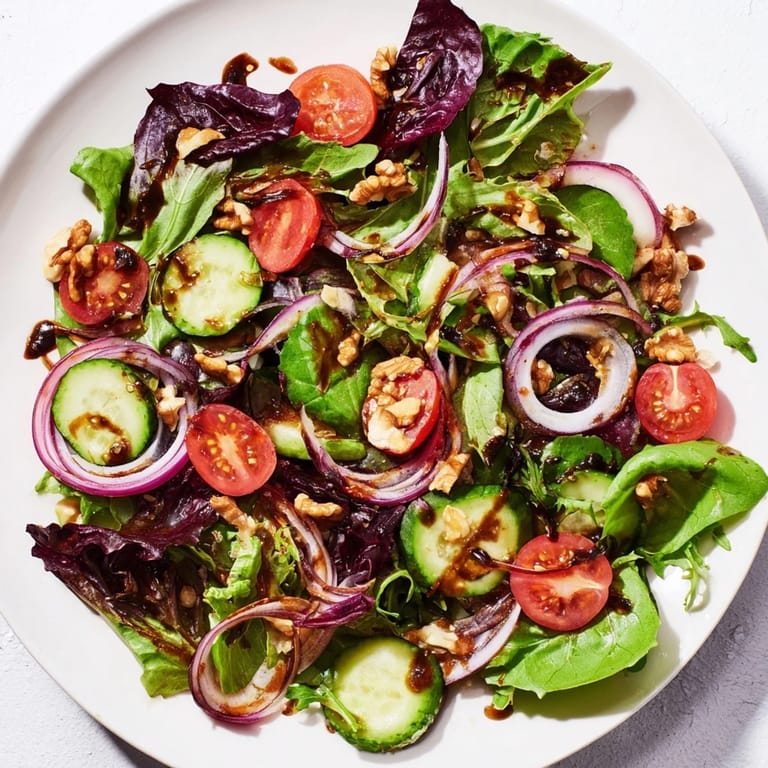
Save There's a moment right after you've tossed everything together when the warm balsamic reduction catches the light and clings to the greens in this glossy way that makes you actually want to eat salad. That's when I know I've gotten it right.
Making It Your Own
This salad is a canvas, honestly. If you want it richer, crumble feta or shave Parmesan over the top just before serving—the creaminess plays off the bright acidity in a way that feels almost indulgent. For something more substantial, top it with grilled chicken, warm chickpeas, or even a fried egg that you can break into it.
The Balsamic Reduction Secret
The reason this dressing tastes better than store-bought vinaigrettes is that reduction—it concentrates everything, making the flavor deeper and more complex than it has any right to be. You can make a batch ahead and keep it in a jar in the fridge for up to a week, which means you're only ever six minutes away from a restaurant-quality salad.
Timing and Storage
The beauty of this salad is that you can prep the greens and vegetables hours ahead, then dress it just before you eat. The balsamic reduction is actually better when it's had time to cool and set, so make it earlier in the day if you can.
- Store the dressing separately from the greens if you're planning to eat this over a few days.
- Any leftover balsamic reduction is incredible drizzled over roasted vegetables, fresh mozzarella, or even vanilla ice cream if you're feeling adventurous.
- The greens will last three to four days in the fridge if kept in a sealed container, and they'll taste fresher than pre-bagged salads.
 Save
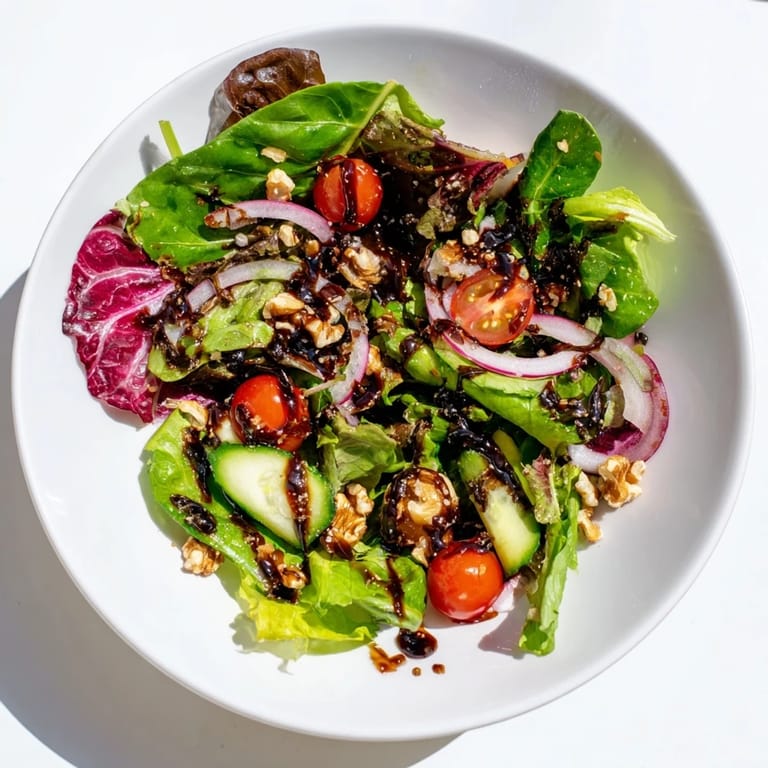
Save This is the kind of salad that tastes simple but makes people think you know something they don't about cooking. Sometimes the best food is just fresh ingredients treated with a little care and attention.
Questions & Answers
- → How do you make the balsamic reduction?
Simmer balsamic vinegar over medium heat for 6-8 minutes, stirring occasionally, until it reduces by half and thickens slightly.
- → Can I add nuts to this dish?
Yes, toasted walnuts are optional and add a crunchy texture that complements the greens and dressing.
- → Is the dressing suitable for vegans?
Yes, the dressing uses extra-virgin olive oil and balsamic vinegar, and Dijon mustard, all vegan-friendly ingredients.
- → How should I store leftovers?
Keep the balsamic reduction refrigerated in an airtight container for up to one week; toss salad just before serving for freshness.
- → What can I add for extra protein?
Grilled chicken or chickpeas can be added to boost protein content and make the dish more filling.