 Save
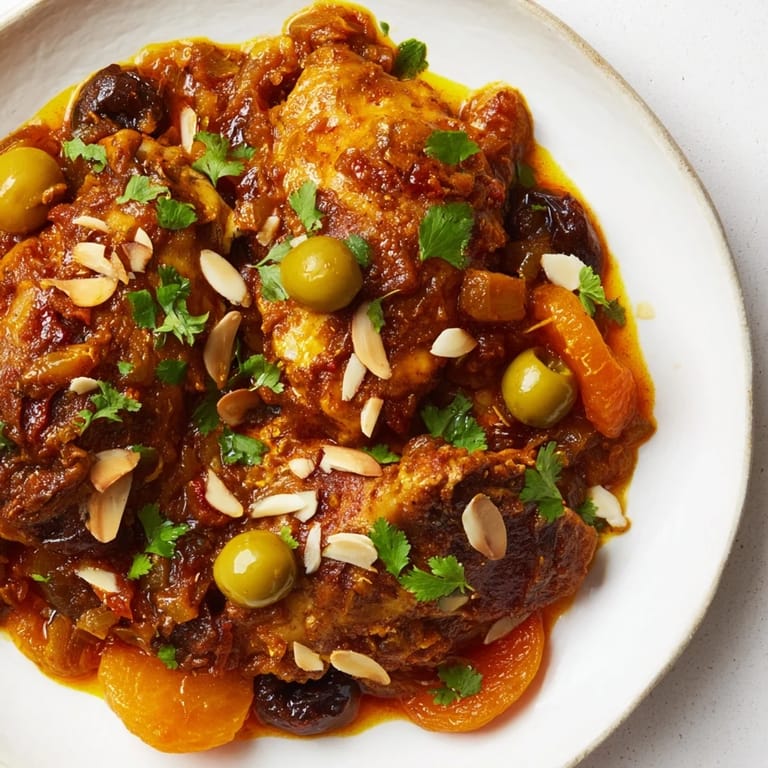
Save A friend brought a tagine to dinner years ago, and I watched the steam rise from that conical lid like something out of a fairy tale. The smell hit me first—cinnamon and ginger dancing with something savory I couldn't name. She explained it was Moroccan chicken with apricots, and I was skeptical until the first bite proved how wrong I was. Now it's the dish I make when I want to feel like I'm cooking somewhere far away, in a sun-baked kitchen with tiles on the walls.
I made this for a potluck once when I was nervous about impressing new neighbors, and someone asked for the recipe before dessert was even served. That's when I realized this dish has a quiet confidence—it doesn't need to shout or perform. It just sits there on the table, golden and aromatic, letting people draw their own conclusions about how much work went into it.
Ingredients
- Bone-in, skin-on chicken thighs (1.5 lbs): These are forgiving and stay tender through the long simmer; I learned the hard way that chicken breasts turn into rubber in a tagine.
- Onion and garlic (1 large onion, 3 cloves): The foundation that builds as it cooks, sweetening and mellowing into the sauce.
- Fresh ginger (1-inch piece, grated): Use fresh; dried ginger tastes like cardboard by comparison and won't give you that warm, alive quality.
- Carrot (1 large, sliced): Adds gentle sweetness and texture that holds up to the long cooking time.
- Dried apricots (1 cup, halved): The secret weapon that gives this dish its character; they plump up and create a sauce that's almost jammy.
- Preserved lemon rind (1, optional): Adds authentic tang and a brightness that bottled lemon juice can't touch, but don't skip it if you can find it.
- Ground cumin, coriander, cinnamon, paprika, turmeric (1 tsp each, plus ½ tsp pepper): Toast these in the oil's heat to wake them up; this is where the magic lives.
- Olive oil (2 tbsp): Use good oil for browning the chicken; it's tasting it, not just cooking with it.
- Chicken broth (1 cup): Low-sodium lets you taste the spices without fighting salt.
- Diced tomatoes (1 can, 14 oz, drained): Drain them well or your sauce becomes watery; this taught me something important.
- Green olives (½ cup, pitted): The briny punch at the end; add them late so they keep their snap.
- Slivered almonds and fresh cilantro (for garnish): The almonds add crunch and richness; cilantro brightens everything right before serving.
Tired of Takeout? 🥡
Get 10 meals you can make faster than delivery arrives. Seriously.
One email. No spam. Unsubscribe anytime.
Instructions
- Dry and season your chicken:
- Pat those thighs completely dry with paper towels—moisture is the enemy of a good golden sear. Salt and pepper them generously; you're building flavor from the very first step.
- Brown the chicken until golden:
- Heat your oil until it shimmers, then listen for the sizzle as the chicken hits the pan. Don't move it around; let it sit for 3–4 minutes per side to develop that caramelized crust that holds all the flavor.
- Build your soffritto:
- Once the chicken rests on a plate, add onion and carrot to the same pot with just a pinch of salt. The salt draws out their water, and they'll soften beautifully in about 5 minutes.
- Bloom your spices:
- Stir in the garlic, ginger, and all those warm spices—cumin, coriander, cinnamon, paprika, turmeric. You'll smell the moment they wake up in the heat, about 1 minute. This is when the kitchen smells like Morocco.
- Deglaze and add tomatoes:
- Pour in your drained tomatoes and scrape the bottom of the pot with a wooden spoon, pulling up all those browned bits. Let it cook for 2 minutes to marry the flavors.
- Return the chicken and add the apricots:
- Nestle the chicken back in, then scatter the apricots around it. Pour in the broth, add the preserved lemon slices if you have them, and bring everything to a gentle simmer.
- Let time do the work:
- Cover and cook low and slow for 45 minutes, stirring occasionally. The chicken will become so tender it nearly falls apart, and the apricots will dissolve into the sauce.
- Finish with olives and adjust:
- Add the green olives and cook uncovered for 10 minutes so the sauce concentrates slightly. Taste it now—does it need salt, more spice, or brightness from lemon?
- Serve with ceremony:
- Pour everything into a serving dish, scatter cilantro and toasted almonds over the top, and let people see what they're about to eat.
 Save
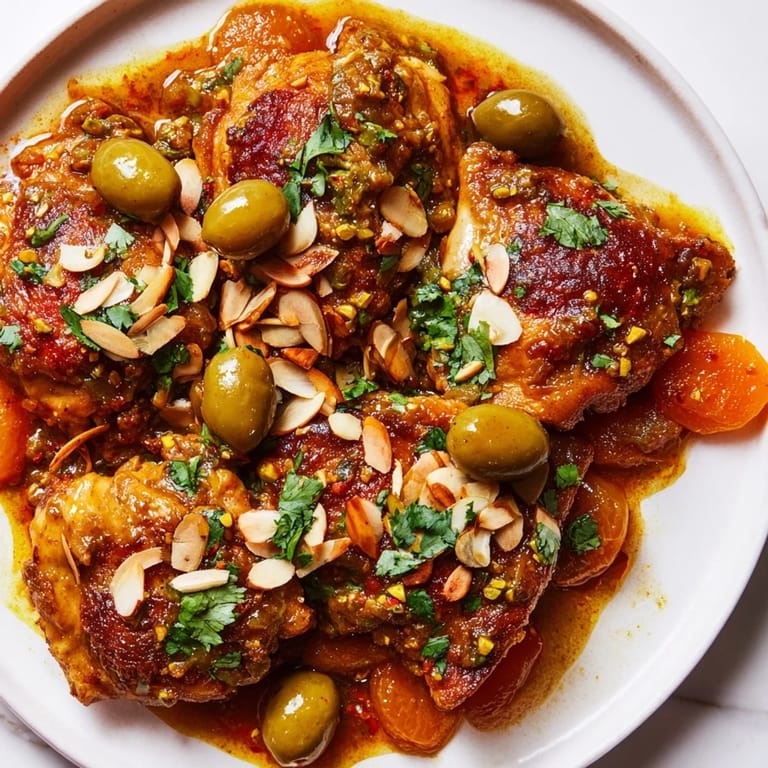
Save There's a moment, usually around the 30-minute mark, when I lift the lid and the aroma hits me so hard I have to step back. That's the moment this stops being a recipe and becomes something you're creating. It's when I remember why I love cooking Moroccan food—it asks you to slow down and trust the process.
The Magic of Slow Cooking
The tagine's shape—that conical lid—isn't just beautiful; it actually works. The design circulates steam back down, keeping the chicken moist while the sauce concentrates. I've made this in a Dutch oven and got excellent results, but there's something about using the actual vessel that makes you feel connected to the tradition. If you ever see a tagine at a flea market, grab it.
Serving Suggestions That Work
Couscous is the traditional partner—it's light and soaks up that golden sauce perfectly. Rice works too, especially if you cook it in chicken broth. Warm flatbread is my secret move when I'm feeling casual; you can tear it up and use it to scoop like you're meant to eat with your hands. I've even served it alongside roasted vegetables when someone in the group is gluten-free, and nobody missed the starch.
Making It Your Own
This recipe is forgiving enough to play with. Some people add a pinch of harissa for heat, and it doesn't break anything. If apricots aren't available, dried figs or dates work beautifully. I once substituted chickpeas and root vegetables for a vegetarian version and it was just as satisfying—the sauce carries all the personality. The preserved lemon is worth hunting down, but if your store doesn't carry it, a squeeze of fresh lemon juice added at the very end keeps things bright. Here's what matters most:
- Don't rush the browning step; it's where flavor gets built into the foundation.
- Taste before serving and trust your adjustments—your palate knows what it likes.
- Make extra if you have the freezer space; it truly tastes better the next day or three days later.
 Save
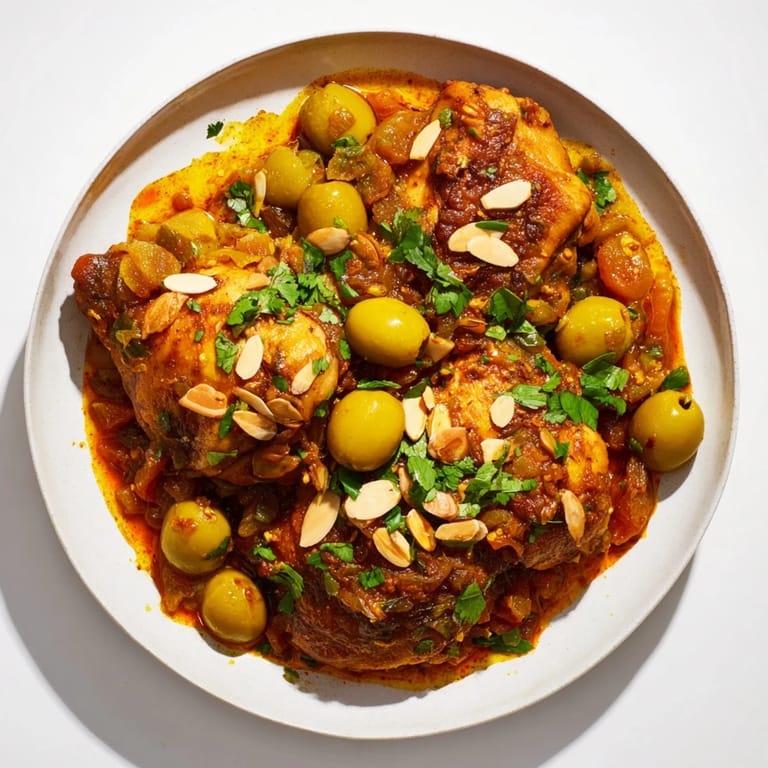
Save This tagine is the kind of recipe that reminds you why cooking matters—it brings people to the table and gives you an excuse to fill your kitchen with good smells for over an hour. Make it when you want to feel like you're traveling, or when you just want to prove to yourself that you can create something beautiful.
Questions & Answers
- → What cut of chicken works best for this dish?
Bone-in, skin-on chicken thighs are ideal for staying juicy and tender during the long simmering process.
- → Can dried apricots be substituted?
Yes, dried apricots add a subtle sweetness; dried peaches or figs can be used as alternatives.
- → What type of olives should I use?
Green olives, pitted and halved, provide the right briny contrast and texture for this dish.
- → Is preserved lemon necessary?
Preserved lemon adds a distinctive tang but can be omitted if unavailable without compromising the core flavors.
- → What sides complement this dish?
Steamed couscous, fluffy rice, or warm flatbread are traditional accompaniments that soak up the rich sauce.
- → Can this be made vegetarian?
Yes, substituting chicken with chickpeas and root vegetables creates a hearty vegetarian version.