 Save
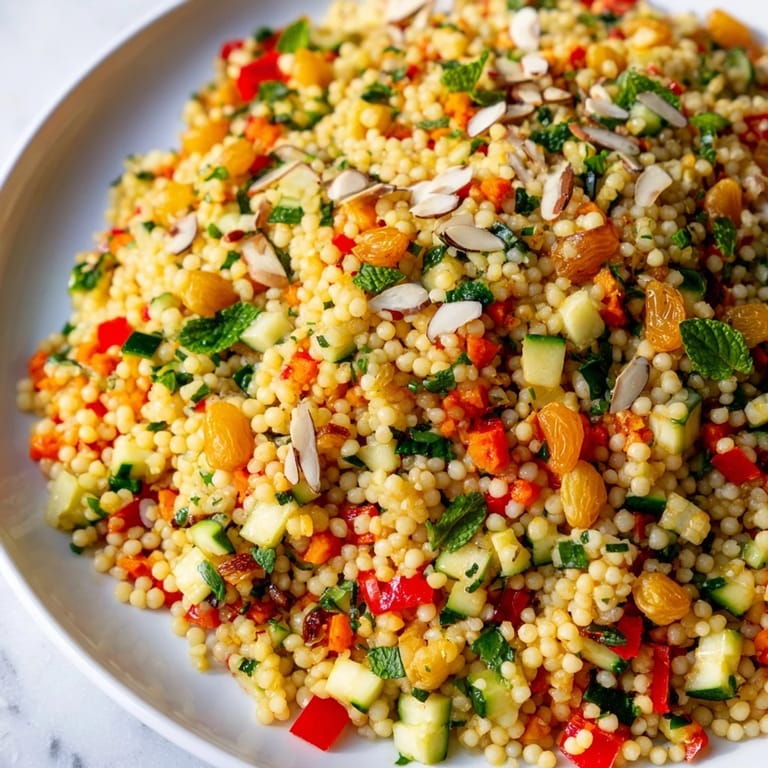
Save There's something about the smell of cumin hitting hot oil that instantly transports me to a sun-drenched kitchen I visited years ago, where an older woman was tossing vegetables with such ease that I knew I had to learn her way. This Moroccan couscous salad became my love letter to that moment, a dish that tastes like warmth and feels completely effortless once you understand its rhythm. It's the kind of salad that proves how a few good spices and fresh herbs can turn simple ingredients into something that tastes like you've been cooking all day. The beauty is that it comes together faster than you'd expect, and it's just as happy served warm as it is chilled the next day.
I made this for a friend who'd just moved into a new apartment, and we ate it straight from the bowl while sitting on her empty living room floor, talking about everything and nothing. The way the lemon caught the evening light, the way she went back for thirds without even realizing it—that's when I knew this recipe was keeper. It turned out to be the dish she requested every time we had a picnic or potluck for years after.
Ingredients
- Couscous: Use the regular pearled kind, not instant—it has better texture and actually benefits from the standing time that lets it absorb the broth.
- Vegetable broth: Hot broth is non-negotiable; it steams the couscous into those perfect fluffy grains that make this dish sing.
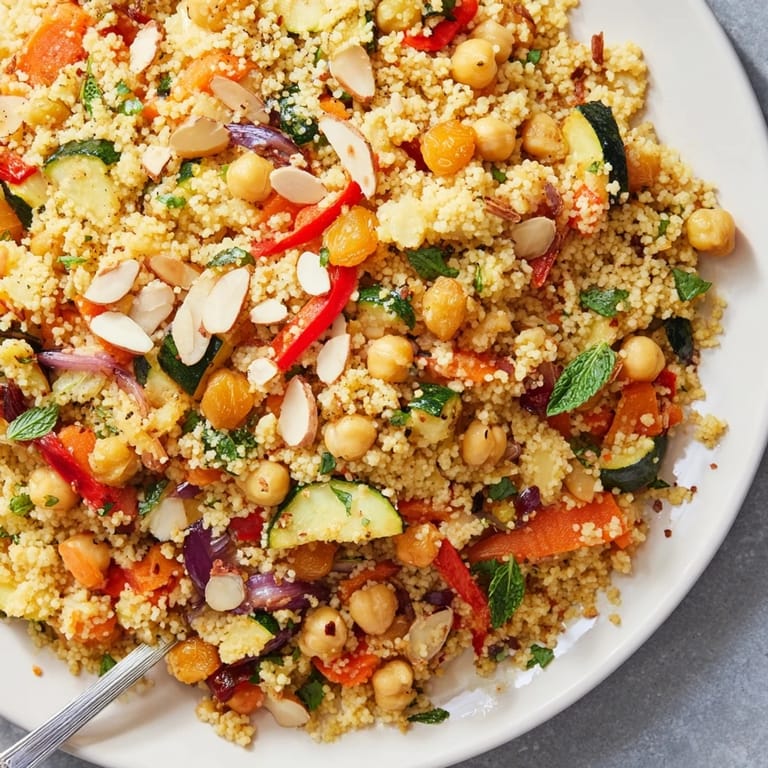
- Zucchini, bell pepper, carrot, red onion: The diced vegetables roast into tender, slightly caramelized pieces that become the soul of this salad—don't skip the roasting step.
- Cumin, coriander, smoked paprika: This spice trio is what makes it distinctly Moroccan; toast them briefly in your mind while the vegetables roast so they wake up together.
- Chickpeas: They add protein and a creamy texture that keeps the salad satisfying without heaviness.
- Raisins or golden sultanas: They plump up slightly as the warm salad cools, adding bursts of natural sweetness that play against the savory spices.
- Fresh parsley and mint: These herbs are the bright finale; add them just before serving so their flavor stays sharp and alive.
- Slivered almonds: Toasted nuts add a subtle crunch and nuttiness, but the salad is delicious without them too.
- Lemon juice, garlic, honey: The dressing pulls everything together with acidity and a whisper of sweetness that makes all the flavors pop.
Tired of Takeout? 🥡
Get 10 meals you can make faster than delivery arrives. Seriously.
One email. No spam. Unsubscribe anytime.
Instructions
- Heat your oven and prepare the vegetables:
- Set your oven to 425°F and line a sheet with parchment—this prevents sticking and makes cleanup a joy. Toss your diced vegetables with olive oil and spices, letting them get well coated before they hit the heat.
- Roast until golden:
- Spread everything in an even layer and roast for 20–25 minutes, stirring halfway through so they brown evenly. You're looking for edges that caramelize slightly and interiors that turn tender.
- Prepare the couscous:
- While vegetables roast, pour boiling broth over couscous in a bowl, add a splash of olive oil, and cover tightly with a plate. The steam does all the work here; just wait 5 minutes and let it rest undisturbed.
- Fluff and separate:
- Use a fork to gently break up the grains, moving from the edges toward the center so each couscous pearl stays distinct and light.
- Make the dressing:
- Whisk lemon juice with olive oil, minced garlic, and a touch of honey until it's bright and slightly glossy. Taste and adjust—this is your seasoning moment.
- Combine everything:
- Fold the roasted vegetables, chickpeas, raisins, and fresh herbs into the couscous, then drizzle the dressing over everything and toss gently so nothing breaks. The warm couscous will absorb the dressing beautifully.
- Serve and enjoy:
- Eat it warm or let it chill—both ways are wonderful, and it actually improves as it sits because the flavors deepen and marry together.
 Save
Save This salad taught me that the best food is the kind people ask for by name, and that a generous handful of fresh herbs can turn something good into something people remember. It's become the dish I make when I want to feel like I'm sharing a piece of that sun-drenched kitchen with everyone I feed.
Why Roasting Makes All the Difference
Raw vegetables would make this salad watery and one-dimensional, but roasting concentrates their natural sugars and adds a caramelized depth that transforms them completely. The high heat also brings out the sweetness in the carrots and the slight bitterness in the zucchini, creating complexity that raw ingredients simply can't match. When those roasted vegetables are still warm and slightly steaming, they absorb the flavors of the spices more completely, making every bite taste intentional.
The Role of Spices in Moroccan Cooking
Cumin, coriander, and smoked paprika aren't just seasonings in this dish—they're storytellers. Each spice brings warmth and an almost earthy personality that reminds you of clay-walled kitchens and aromatic markets. Together, they create a flavor profile that's unmistakably Moroccan without being aggressive; they sit under the bright herbs and lemon like a quiet foundation that holds everything up. This balance between warming spices and fresh brightness is what makes Moroccan cuisine so craveable and easy to return to again and again.
Storage, Serving, and Simple Variations
This salad lives happily in the refrigerator for three days, which makes it perfect for meal prep or feeding a crowd without last-minute cooking. The flavors actually improve as it sits, becoming deeper and more integrated, though you might want to add a squeeze of fresh lemon juice before serving if it's been refrigerated. Feel free to swap dried apricots for raisins, add feta cheese for richness, or toss in grilled chicken if you want to turn it into a more substantial main course.
- For vegan meals, use maple syrup instead of honey and skip the optional almonds if you have a tree nut allergy.
- This is wonderful alongside grilled lamb or chicken, or as part of a mezze platter with hummus and fresh flatbread.
- If you make it ahead, cover it tightly and bring it to room temperature before serving—cold salad tastes muted compared to room-temperature salad.
 Save
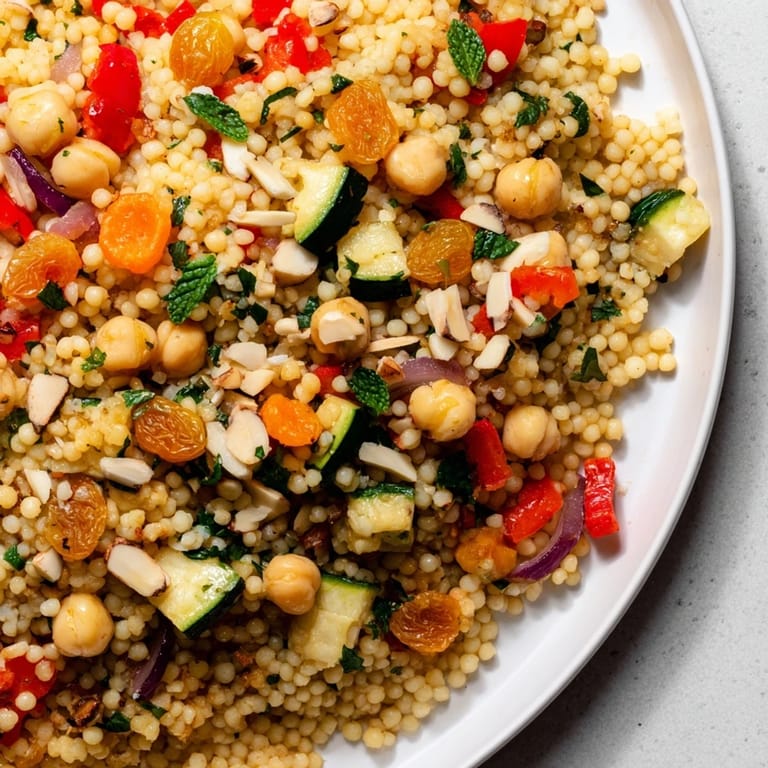
Save This Moroccan couscous salad is proof that simple ingredients become magic when you pay attention to technique and trust your instincts. Make it for yourself first, then make it for people you want to feed.
Questions & Answers
- → How do I fluff couscous perfectly?
After pouring hot vegetable broth over couscous, cover and let it absorb the liquid for about 5 minutes. Then use a fork to gently separate the grains for a light texture.
- → What vegetables work best for roasting?
Zucchini, red bell pepper, carrot, and red onion roast well, becoming tender and caramelized while retaining their flavor and texture.
- → Can I make this dish vegan?
Yes, replace honey with maple syrup in the dressing to keep it plant-based without losing sweetness.
- → What adds crunch to the salad?
Toasted slivered almonds provide a delightful crunch and complement the softness of couscous and vegetables.
- → How should this dish be served?
It's delicious served chilled or at room temperature, making it versatile for lunches or side dishes.