 Save
Save The first time I made The Midnight Sun, it was for a dinner party where someone had challenged me to create something that looked more like an art installation than food. I'd been staring at my kitchen counter, overwhelmed by the pressure, when I remembered a conversation with a Nordic chef about the long summer evenings where darkness never quite arrives. That's when it clicked: black and gold, night and day, all on one plate. The charcoal crackers came together almost by accident, but the moment the roasted carrots emerged from the oven glowing like embers, I knew I'd found something special.
I'll never forget watching my grandmother's face when she took her first bite at that dinner party. She closed her eyes, and I could see her tasting not just the food, but something about the way flavors told a story. She asked for the recipe that night, and I realized that this dish had somehow bridged the gap between her traditional cooking and my contemporary experiments in a way nothing else had.
Ingredients
- All-purpose flour: The foundation of your crackers—use the kind you trust, because it matters more than you'd think.
- Activated charcoal powder (food-grade): This is the drama of the dish; don't skip it or substitute, and always double-check it's meant for eating.
- Fine sea salt: Use fine here, not coarse, so it distributes evenly and doesn't create bitter pockets in your dough.
- Olive oil: For both the crackers and the dip; quality oil will lift the entire dish.
- Water: Room temperature works best for helping the dough come together smoothly.
- Large carrots: Pick ones that are bright and firm; they'll caramelize beautifully and turn sweet as they roast.
- Ground turmeric: Don't use old turmeric; its earthy warmth fades, so check your spice jar's age.
- Smoked paprika: The secret to depth; it adds complexity that makes people ask what the mystery ingredient is.
- Ground cumin: A pinch goes a long way, warming everything without overpowering.
- Greek yogurt: The backbone of creaminess; if using plant-based, pick one with good body so the dip holds its shape.
- Lemon juice: Freshly squeezed makes a real difference; bottled lacks the brightness this dip needs.
- Tahini: A spoonful adds richness and an almost nutty undertone that ties the spices together.
- Garlic clove: One small one, minced fine, so it doesn't shout but whispers into every bite.
- Honey: Optional but transformative; it rounds out the spices and adds a faint floral note.
Tired of Takeout? 🥡
Get 10 meals you can make faster than delivery arrives. Seriously.
One email. No spam. Unsubscribe anytime.
Instructions
- Start your oven and prep your workspace:
- Preheat to 400°F (200°C) and line your baking sheets with parchment paper. This matters because charcoal crackers are unforgiving if they stick, and you want them to release cleanly.
- Roast the carrots until they glow:
- Toss your chopped carrots with oil, salt, turmeric, paprika, and cumin, then spread them on a sheet and let them roast for 25–30 minutes. You'll know they're ready when the edges are lightly caramelized and the kitchen smells like warm spice. They should be soft enough to mash with your finger.
- Build your cracker dough:
- While the carrots work their magic, whisk your flour, charcoal, and salt in a bowl. The charcoal will turn everything dark immediately, which feels a bit like performing magic. Add your oil and water slowly, stirring until a rough dough forms.
- Knead until smooth:
- A minute or two of gentle kneading brings the dough together. You want it smooth but not overworked; it should feel alive in your hands, not tough.
- Roll thin and cut with intention:
- Place your dough between two sheets of parchment and roll it as thin as you can—thin crackers crisp better than thick ones. Cut into shapes you love; rectangles are elegant, but rounds or even irregular shards work beautifully.
- Bake your crackers until they crackle:
- Bake for 10–12 minutes; they'll go from looking slightly soft to sounding hollow and crisp when you tap them. They continue to crisp as they cool, so don't overbake just because they seem a bit tender fresh from the oven.
- Blend the dip into silk:
- Once the roasted carrots have cooled slightly, combine them with your yogurt, lemon juice, tahini, garlic, honey, and black pepper in a food processor. Blend until completely smooth—no grainy texture, just pure silk. Taste as you go, adjusting salt or lemon as needed.
- Compose your midnight sun:
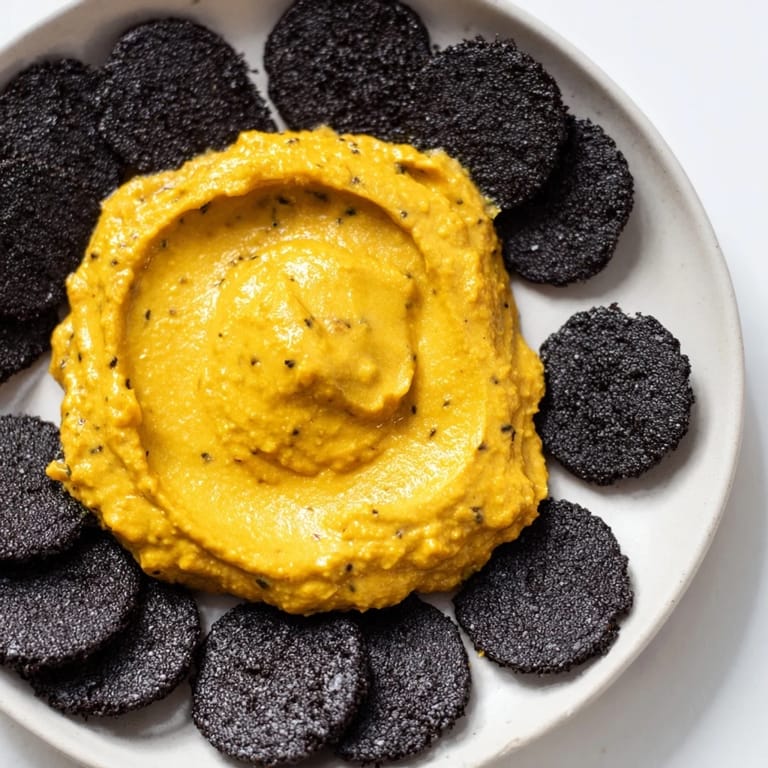
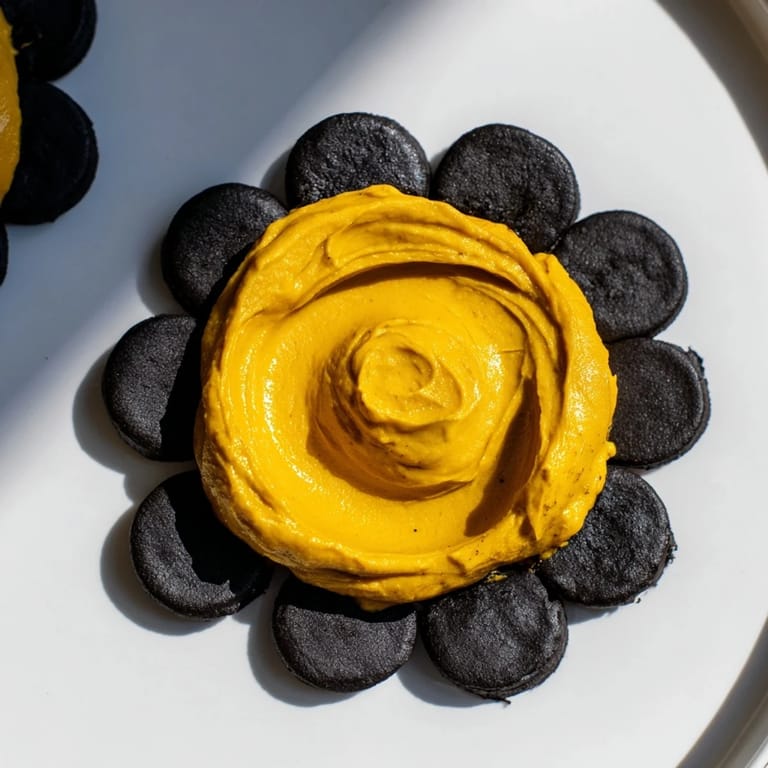
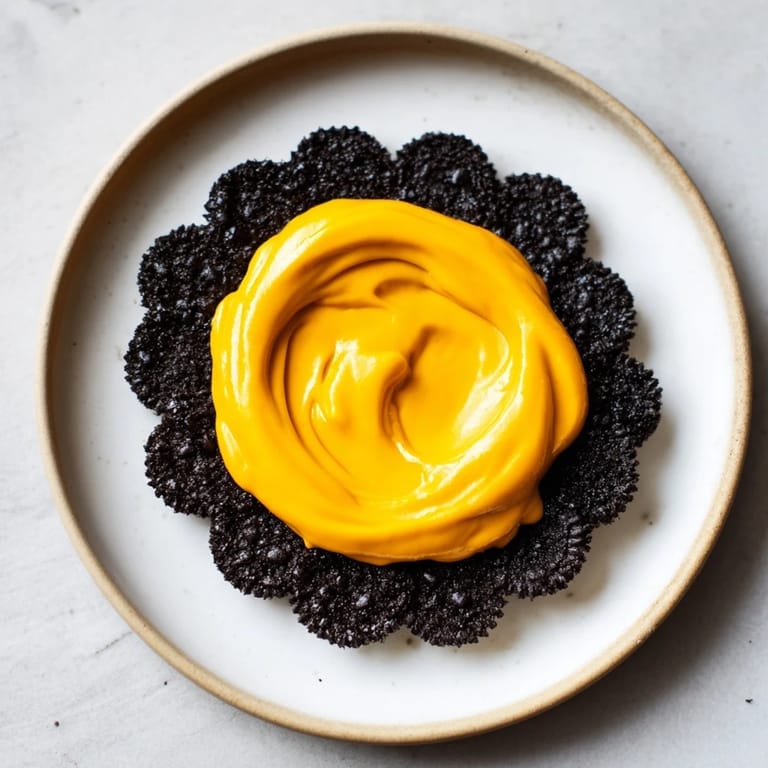
- Spoon the dip into the center of your serving plate or board and use the back of a spoon to create a thick circle. Arrange your charcoal crackers in a ring around the dip, points facing outward, like a sun rising over a dark horizon.
 Save
Save There's something deeply satisfying about watching someone reach for a cracker and slowly realize they're holding something inky black. The moment they dip it into that golden dip and the contrast hits their palate—earthy, creamy, bright—that's when this dish becomes more than food. It becomes a small ceremony, a pause, a moment where beauty and taste align perfectly.
The Story Behind the Colors
The inspiration for this dish came from thinking about light and darkness, about how the Nordic regions experience the midnight sun as a phenomenon that defies expectation. I wanted to capture that conversation between opposites on a plate. Black crackers seemed like the dark canvas, and roasted carrots with turmeric became the golden light. It's not just about visual drama; it's about creating a moment where guests pause and really look at what they're about to eat.
Making It Your Own
This recipe is more flexible than it appears. The charcoal crackers are sturdy enough to handle flavor variations—try adding a pinch of za'atar for herbaceous notes, or sprinkle them with fleur de sel before baking for salinity that pops. The dip can shift with the seasons too; I've added roasted beet for deeper earthiness in autumn and fresh herbs in summer. The framework stays the same, but your kitchen instincts can shape it into something uniquely yours.
Storage and Serving Wisdom
This is genuinely one of those recipes that improves with time. The crackers stay crisp for three days in an airtight container, and the dip actually tastes better the next day once the spices have settled and married together. I recommend making both the day before your gathering, then simply assembling the plate right before serving. The dip can also be dolloped into small cups and surrounded by crackers passed on a board, which feels more casual and intimate than a plated presentation.
- Keep the dip and crackers separate until the last moment so the crackers stay crisp.
- If the dip seems thick, thin it with a splash of water or extra lemon juice rather than adding more yogurt.
- Leftover crackers are delicious crushed over salads or crumbled into soups for unexpected texture.
 Save
Save When you serve this, you're offering more than an appetizer; you're offering a moment of pause and admiration. That's the real magic of The Midnight Sun.
Questions & Answers
- → What gives the crackers their black color?
Activated charcoal powder is mixed into the dough, lending the crackers their deep black hue and a subtle earthy taste.
- → Can the dip be made vegan?
Yes, substitute Greek yogurt with a plant-based alternative and use maple syrup instead of honey for a vegan-friendly dip.
- → How do I achieve the creamy texture of the dip?
Blending roasted carrots with yogurt, tahini, lemon juice, and seasoning until smooth creates a rich, creamy consistency.
- → What spices enhance the dip's flavor?
Turmeric, smoked paprika, cumin, and a touch of black pepper add warm, aromatic layers that complement the roasted carrot base.
- → Can the crackers be prepared ahead of time?
Yes, prepare the charcoal crackers up to a day in advance and store in an airtight container to maintain crispness.