 Save
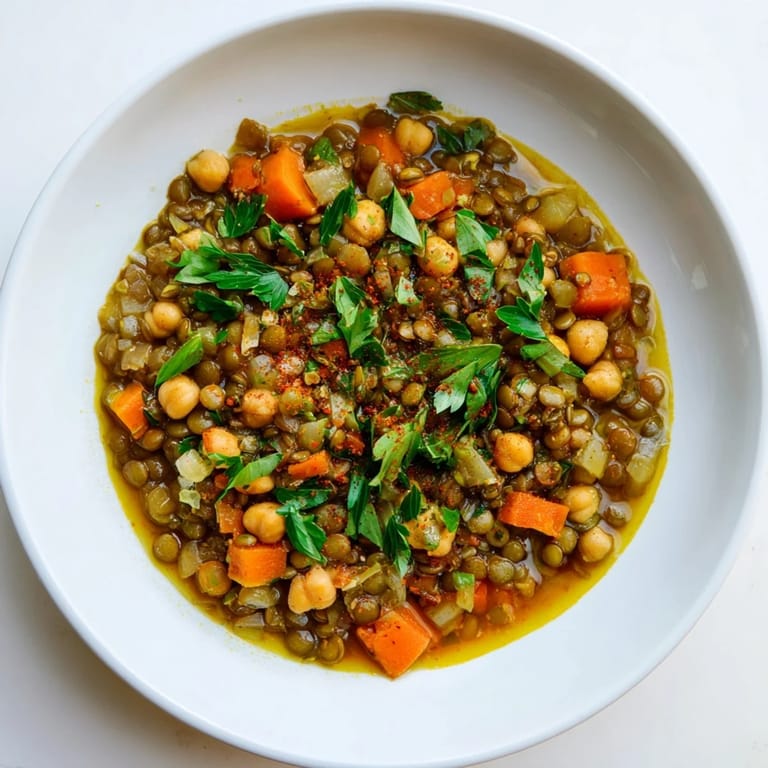
Save I was standing in my kitchen on a gray Tuesday afternoon, staring at a half-empty pantry and a can of chickpeas I'd bought months ago. My friend had just texted me about a stew her grandmother used to make with sumac and lemon, and I realized I had everything I needed. The smell that filled the house an hour later—earthy, bright, and faintly smoky—made me forget I'd ever doubted myself. That first spoonful was warm and tangy, with a depth I hadn't expected from such simple ingredients.
I made this for a small dinner party last spring, and my neighbor—who usually picks at vegetables—went back for seconds without saying a word. She just looked up, smiled, and asked if I could write it down for her. I realized then that this wasn't just a recipe I stumbled into; it had become something I wanted to share. The kitchen felt fuller that night, even though there were only four of us at the table.
Ingredients
- Dried brown or green lentils: I always rinse them well—once I skipped it and ended up with a cloudy broth that didn't taste as clean.
- Canned chickpeas: Draining and rinsing them keeps the stew from getting too starchy, and they hold their shape beautifully.
- Olive oil: Use something you'd actually want to taste, because it carries all those spices into every corner of the pot.
- Yellow onion: Chopping it finely means it melts into the background and sweetens the whole base.
- Garlic cloves: Minced fresh makes all the difference—the jarred stuff just doesn't have that same bite.
- Carrots and celery: They add a subtle sweetness and texture that keeps each spoonful interesting.
- Ground sumac: This is the secret—it brings a lemony tang without any acidity harshness, and I've never found a substitute that works quite as well.
- Cumin, coriander, smoked paprika: Together they build a warm, layered flavor that feels both familiar and a little exotic.
- Vegetable broth and water: I use low-sodium broth so I can control the salt, and the water keeps it from getting too rich.
- Lemon juice: Fresh-squeezed at the end brightens everything and ties the whole dish together.
- Fresh parsley: It's not just a garnish—it adds a grassy freshness that balances the earthiness of the lentils.
Tired of Takeout? 🥡
Get 10 meals you can make faster than delivery arrives. Seriously.
One email. No spam. Unsubscribe anytime.
Instructions
- Start with the aromatics:
- Heat the olive oil over medium heat until it shimmers, then add the onion and let it soften for 4 to 5 minutes, stirring occasionally. You'll know it's ready when the kitchen smells sweet and the onion turns translucent.
- Build the vegetable base:
- Toss in the garlic, carrots, and celery, and cook for another 3 to 4 minutes until everything starts to soften. The garlic should be fragrant but not browned—that's when it turns bitter.
- Bloom the spices:
- Stir in the sumac, cumin, coriander, smoked paprika, salt, black pepper, and cayenne if you like a little heat. Let them cook for about a minute, stirring constantly so they don't scorch.
- Add the legumes and liquid:
- Pour in the lentils, chickpeas, vegetable broth, and water, then bring everything to a boil. Once it's bubbling, lower the heat, cover the pot, and let it simmer gently for 25 to 30 minutes until the lentils are tender.
- Finish with brightness:
- Stir in the lemon juice and half the parsley, then let it cook uncovered for 2 to 3 more minutes. Taste it now—this is your moment to adjust the salt or add more lemon if you want.
- Serve it warm:
- Ladle the stew into bowls and top with the remaining parsley and a lemon wedge on the side. I like to drizzle a little extra olive oil over mine right before I dig in.
 Save
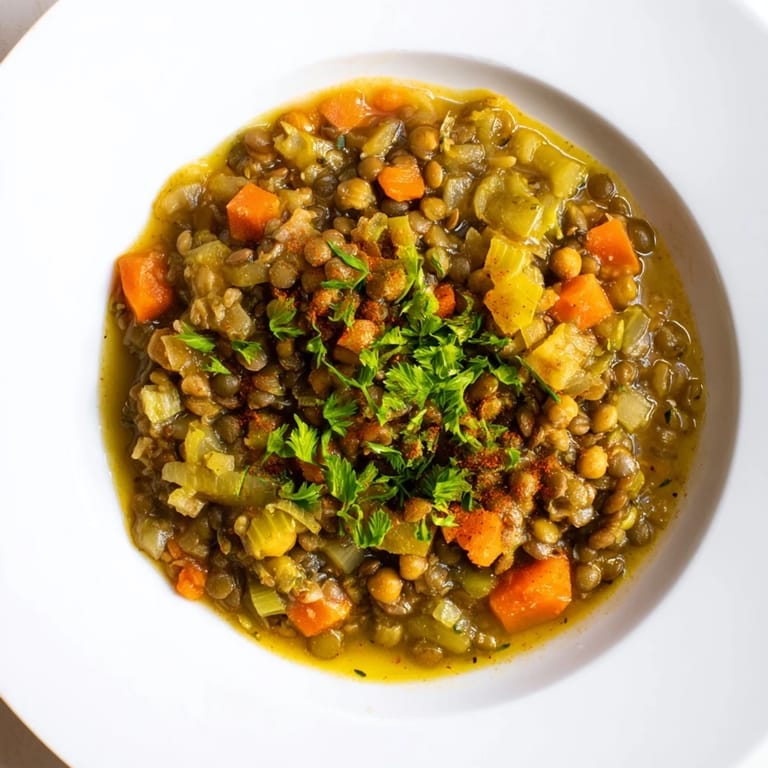
Save One cold evening, I brought a thermos of this stew to a friend who'd just moved into a new apartment with no furniture yet. We sat on the floor with mismatched bowls and torn pieces of flatbread, and she said it was the first meal that made the place feel like home. I think that's when I realized food doesn't just feed people—it anchors moments you didn't know you'd want to remember.
What to Serve It With
I love tearing off pieces of warm flatbread and using them to scoop up the stew, but it's just as good over a bowl of fluffy rice or even quinoa if you want extra protein. Sometimes I'll serve it with a simple cucumber and tomato salad dressed in olive oil and lemon—it keeps the meal light but satisfying. If you're feeding a crowd, set out a few small bowls of yogurt, pickled turnips, and olives so everyone can customize their bowl.
How to Store and Reheat
This stew keeps in the fridge for up to five days in an airtight container, and honestly, it tastes even better on day two when the spices have had time to meld. I reheat it gently on the stovetop with a splash of water or broth to loosen it up, stirring occasionally so nothing sticks. You can also freeze it for up to three months—just let it cool completely first, and when you're ready, thaw it overnight in the fridge before reheating.
Ways to Make It Your Own
I've added handfuls of chopped spinach or kale in the last few minutes of cooking, and it turns the stew into something even heartier without changing the flavor. If you like things spicy, a pinch more cayenne or a drizzle of harissa at the end will give it a nice kick. Sometimes I'll stir in a spoonful of tahini right before serving—it makes the broth richer and adds a nutty undertone that feels almost luxurious.
- Try swapping the lentils for red lentils if you want a creamier, faster-cooking version.
- A handful of golden raisins or chopped dried apricots adds a subtle sweetness that plays beautifully with the sumac.
- If you can't find sumac, use a little lemon zest and a pinch of citric acid for a similar tang.
 Save
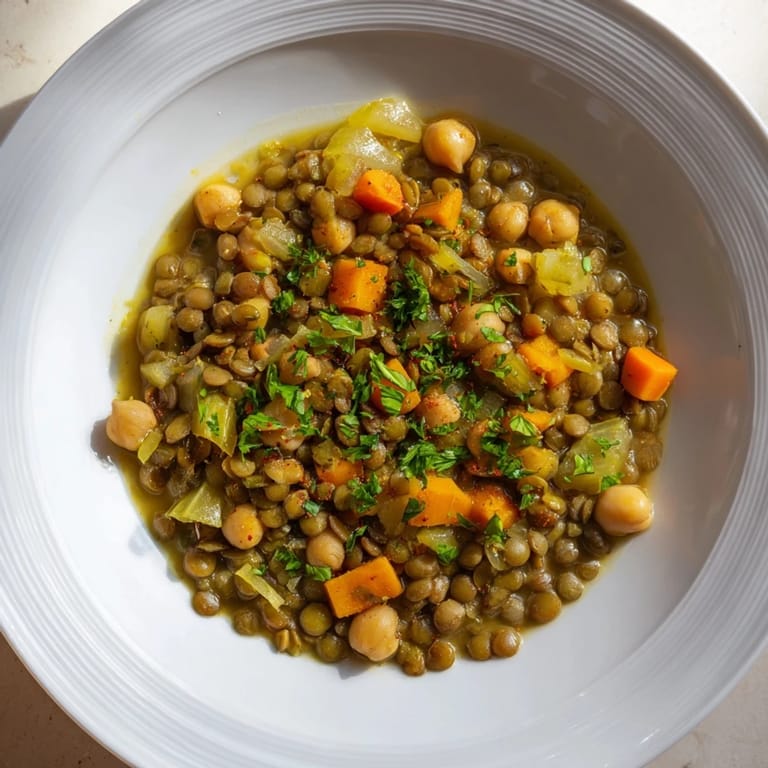
Save This stew has become my go-to when I want something that feels like a hug but doesn't require much effort. I hope it finds a spot in your kitchen the way it has in mine.
Questions & Answers
- → What type of lentils are best for this dish?
Brown or green lentils work well as they hold their shape and cook evenly, complementing the chickpeas nicely.
- → Can I adjust the heat level of the stew?
Yes, the cayenne pepper is optional and can be omitted or increased to suit your preferred spice level.
- → What can I use if sumac is unavailable?
Extra lemon zest or a touch of vinegar can mimic sumac’s tangy flavor when it’s not on hand.
- → How do I add more greens to the stew?
Chopped spinach or kale added during the last 5 minutes of cooking brightens the dish with added nutrients.
- → Is this dish suitable for special diets?
It is naturally vegan and gluten-free, making it suitable for many dietary preferences.
- → What thickness should the stew have?
Simmering until lentils are tender creates a thick, hearty texture that’s perfect for a comforting meal.