 Save
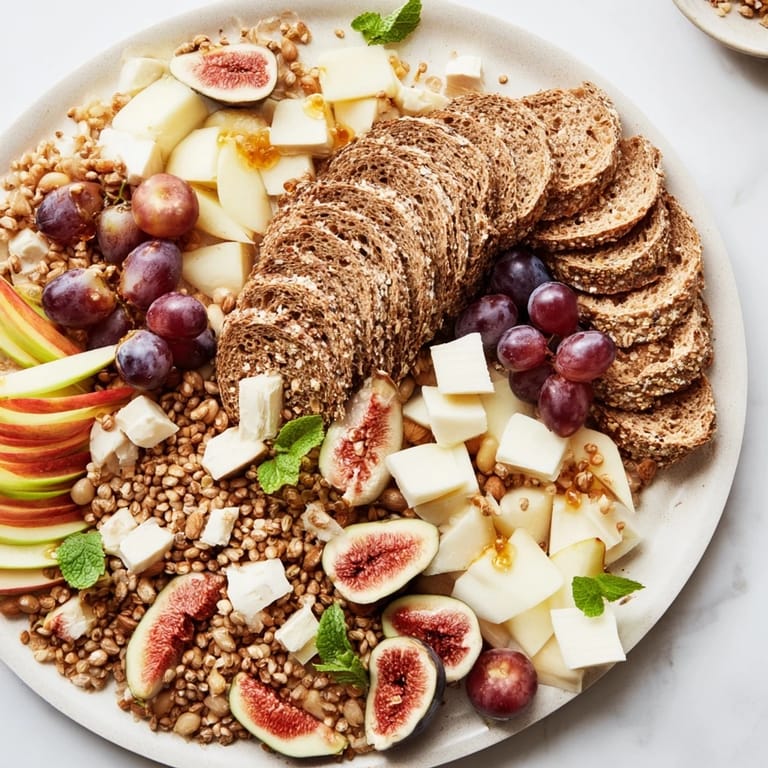
Save The first time I built one of these platters, I wasn't thinking about bread or fruit at all—I was thinking about my grandmother's garden, the way she'd sweep through it with purpose every harvest season. Years later, standing in my kitchen with a wooden board and an armful of beautiful ingredients, I realized I could capture that same feeling on a platter. The Harvest Scythe isn't just an arrangement; it's an edible memory of golden fields and the quiet satisfaction of gathering something real and whole. It became my favorite way to feed people without making them feel fed at a dinner table.
I made this for a surprise picnic on a September afternoon when my partner came home early, and we decided to head to the meadow behind our house with nothing but this board and a blanket. The bread was still slightly warm, the grapes had that perfect snap, and somehow the whole thing felt like we'd outsmarted the ordinary day. We sat there longer than we should have, picking through the arrangement until nothing remained but crumbs and the fading light, and I understood then why sharing food in the shape of something beautiful makes it taste different.
Ingredients
- Sliced baguette: Choose a crusty European-style loaf if you can; the exterior keeps the slices structurally sound while the soft interior soaks up any honey or jam you dip it into.
- Multi-grain crackers: These add unexpected texture and stay crisp longer than bread, so arrange them where they'll catch the eye first.
- Seeded rye bread: The earthiness of rye grounds the whole platter and its dark color makes everything else shine.
- Cooked farro or barley: Cool it completely before arranging so it doesn't wilt the softer components; this grain layer becomes the visual anchor of your scythe design.
- Seedless red grapes: They roll slightly when you arrange them, which sounds annoying but actually helps fill gaps and create movement across the board.
- Sliced pears: Toss them gently in a tiny bit of lemon juice to prevent browning, and slice them just before serving for the crispest bite.
- Sliced apples: Same trick as the pears—acidulate them lightly to preserve their bright color and fresh snap.
- Dried apricots: Their concentrated sweetness and chewiness balance the fresh fruits and provide a counterpoint to any savory elements.
- Fresh or dried figs: If using fresh, halve them gently to expose their jewel-like interior; the visual payoff is worth the care.
- Brie and aged cheddar: The soft creaminess of brie pairs beautifully with crisp bread, while the cheddar's sharpness cuts through the sweetness of fruits and honey.
- Honey or fig jam: Keep this in small bowls rather than drizzling it directly so people can control how much sweetness they want.
- Fresh mint and roasted nuts: Mint adds brightness and aroma at the last second, while nuts provide the textural surprise that makes people reach back for another bite.
Tired of Takeout? 🥡
Get 10 meals you can make faster than delivery arrives. Seriously.
One email. No spam. Unsubscribe anytime.
Instructions
- Set your stage with the breads:
- Lay out your wooden board and begin with the sliced baguette and seeded rye, arranging them in a gentle, sweeping curve that will serve as the blade of your scythe. You're not being rigid here—let the curve feel natural, almost like you're drawing with your hands.
- Build the grain field:
- Spread the cooled farro or barley along the inner edge of that bread curve, creating a fuller, textured line that suggests a field ready for harvest. Keep it loose and layered rather than perfectly even.
- Dance in the fruits:
- Fan your fresh apple and pear slices alongside the breads, then scatter the grapes and apricots throughout, letting colors and textures overlap and complement each other. Don't overthink placement; trust that the variety of shapes and hues will find their harmony.
- Anchor with cheese clusters:
- Tuck small groupings of brie slices and cheddar cubes into the negative spaces, positioning them near the breads so they're naturally accessible for pairing. Think of them as quiet anchors that hold the eye in different directions.
- Welcome the spreads:
- Nestle small bowls of honey and jam around the outer edges of your board, where they can catch light and invite people to dip and drizzle as they like. This is where the platter becomes interactive.
- Crown with color and crunch:
- Scatter fresh mint leaves across the entire arrangement, then sprinkle roasted nuts wherever you see an opening or where you want to add visual punctuation. The aroma of the nuts will reach people before the flavor does.
- Serve with intention:
- Bring this to the table while everything is at its freshest—the bread still has structure, the fruits haven't started to weep, and the nuts haven't absorbed any moisture from the air. The moment you set it down is part of its magic.
 Save
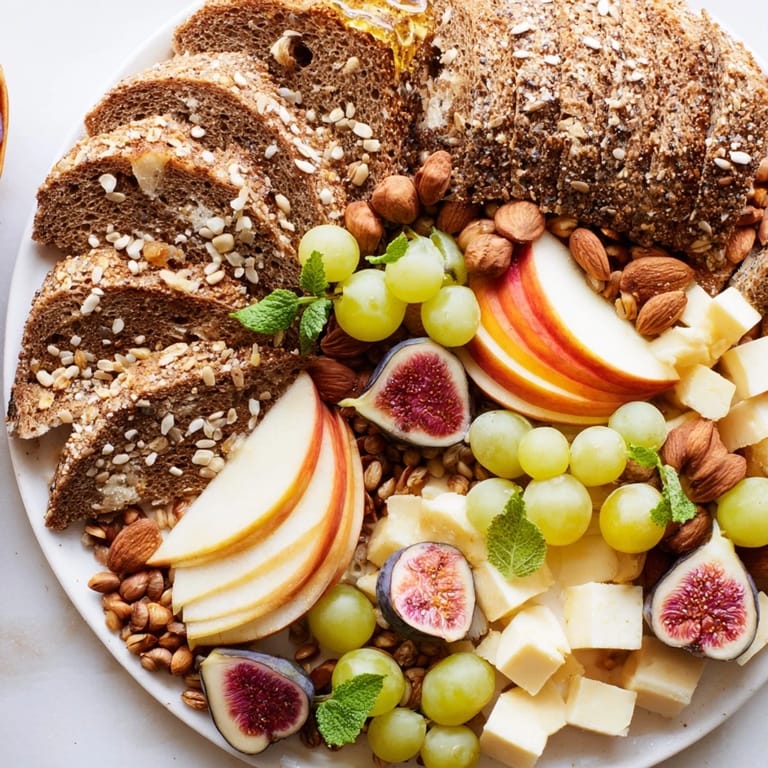
Save There's a moment when you finish arranging a platter like this, when you step back and see the whole thing come together, and you realize you've made something that's both completely unpretentious and genuinely beautiful. That feeling—that's when you know you've got it right.
The Art of the Arrangement
Platters succeed or fail based on rhythm, not perfection. Your eye wants to travel from one element to another, so think of your board as a journey rather than a checklist. Group three or four items together, then leave a small open space, then group again. This push and pull of fullness and breathing room is what keeps a platter from feeling cluttered even when it's generously loaded. The scythe shape is just a guide—what matters is that the overall composition feels intentional and inviting.
Seasonal Flexibility
This platter's greatest strength is how it adapts to what's available right now. In summer, swap the dried apricots for fresh berries or stone fruit; in winter, add pomegranate seeds for jeweled color. The bones of bread and grains stay constant, but the fruits are your canvas for whatever season you're in. I've made versions with roasted plums, with fresh blackberries, with sliced persimmons—each one felt completely different, completely right.
Pairing and Serving
A platter like this reaches its full potential when you think beyond just what's on the board. Pair it with a crisp white wine, a sparkling drink, or even a simple herbal tea, depending on the occasion and time of day. The honey and jam become more than condiments—they're the bridge between bread and fruit, between sweet and savory bites.
- If you're serving this to people with dietary restrictions, the beauty is that you've already built in multiple options—remove the cheese and it's vegan, use gluten-free bread and it's celiac-safe.
- Make this platter a few hours ahead if you need to, but keep the fresh fruits in a separate container and add them no more than 30 minutes before serving.
- Trust that when people gather around this, they'll make it their own—someone will find a combination you didn't expect, and that's exactly how it should be.
 Save
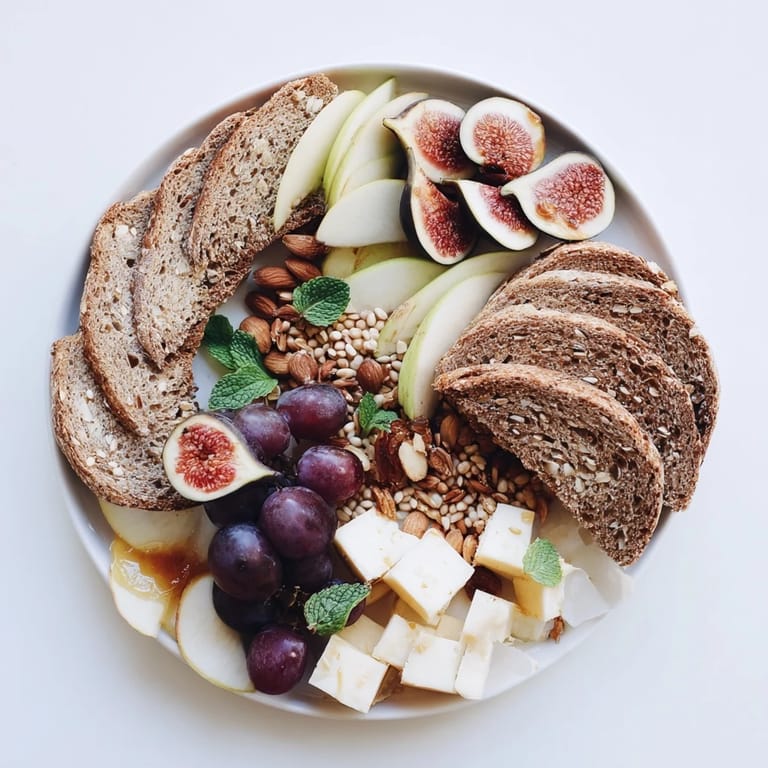
Save The Harvest Scythe is less a recipe and more a conversation starter, a way of saying to the people around you that they're worth feeding beautifully. Make it, trust yourself, and then step back and let the table do what it does best.
Questions & Answers
- → What breads work best for this platter?
Multi-grain, seeded rye, and small baguette slices offer varied textures and flavors that complement the fresh fruits and grains.
- → Can the grains be substituted?
Yes, cooked farro or barley works well, but you can also use other hearty grains like quinoa or bulgur for different textures.
- → What fruits pair nicely on this arrangement?
Fresh seedless grapes, sliced apples, pears, dried apricots, and figs create a balance of sweetness and freshness across the board.
- → Are there options for dietary restrictions?
Gluten-free breads and crackers, as well as vegan cheese substitutes, can be used to accommodate allergies and preferences.
- → How should garnishes be chosen?
Fresh mint leaves add aromatic brightness, while roasted nuts provide a satisfying crunch; choose nuts based on allergy considerations.
- → What beverages complement this platter?
A crisp white wine or light sparkling drink pairs wonderfully, enhancing the fresh and earthy flavors present.