 Save
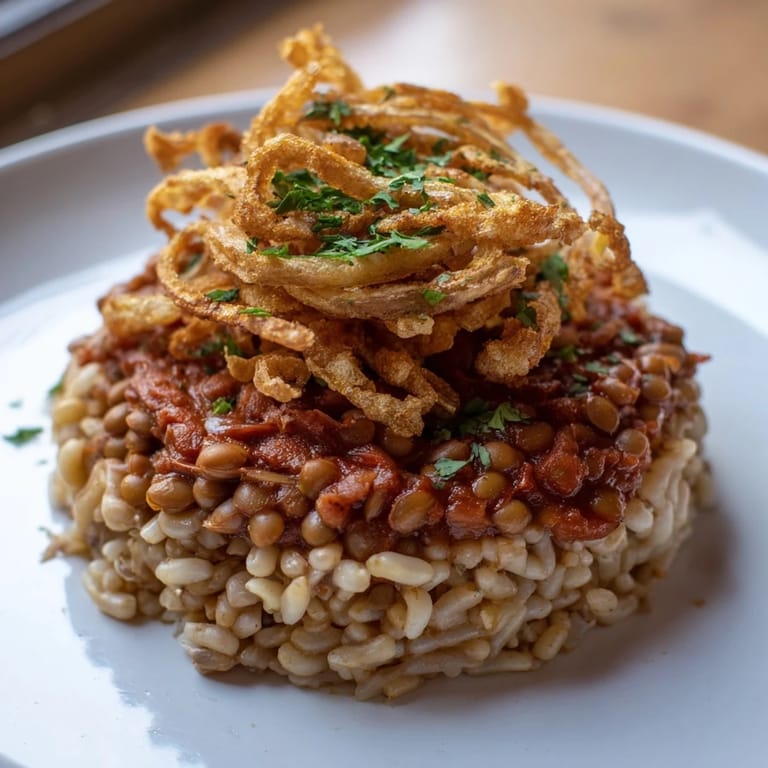
Save The first time I tasted koshari, I was standing at a cramped street vendor's cart in Cairo, watching the man layer rice and lentils with the practiced speed of someone who'd done it ten thousand times. The steam rose up, carrying this incredible smell of cumin and tomatoes, and I realized right then that this humble dish was pure genius—every component separate until you mixed it all together, creating something greater than the sum of its parts. Now whenever I make it at home, I'm transported back to that moment, but with the bonus of making it exactly how I like it.
I made this for my roommate on a random Tuesday when she'd had the worst day at work, and watching her face light up when she took the first bite reminded me that food really does heal something in you. The crispy onions crackling between her teeth, the warmth of the spiced sauce—it turned her whole mood around. That's when I knew this recipe wasn't just delicious; it was reliable in a way that mattered.
Ingredients
- Medium-grain rice (1 cup): It needs to be fluffy but sturdy enough to hold its own in the layers without turning mushy—arborio is too creamy for this.
- Brown or green lentils (1 cup): They keep their shape better than red lentils and add an earthiness that feels essential here.
- Elbow macaroni or ditalini (1 cup): The small pasta gets tucked into every corner, creating pockets of carbs that balance the earthiness of lentils.
- Olive oil (2 tablespoons): Quality matters because it's building the base of your sauce—this is where flavor begins.
- Crushed tomatoes (15 oz can): The backbone of everything; I've learned that San Marzano cans make the sauce taste noticeably richer.
- Tomato paste (1 tablespoon): This deepens the flavor exponentially, concentrating the tomato essence into something almost savory-sweet.
- Ground cumin and coriander (1 teaspoon and 1/2 teaspoon): These are the spices that make it unmistakably Egyptian; they create warmth without heat.
- Crispy fried onions (from 2 large onions): They're the textural contrast that elevates this from comfort food to something special—never skip this step.
- White vinegar (1/4 cup): The garlic vinegar on the side adds a brightness that cuts through the richness beautifully.
Tired of Takeout? 🥡
Get 10 meals you can make faster than delivery arrives. Seriously.
One email. No spam. Unsubscribe anytime.
Instructions
- Start your lentils first:
- Bring 3 cups of water to a rolling boil, add your rinsed lentils, then lower the heat so they simmer gently. You want them tender but not falling apart—around 20–25 minutes. This is the longest component, so getting it going early keeps everything from overlapping.
- Get your rice going in a separate pot:
- Combine rinsed rice with 2 cups water and a pinch of salt, bring it to a boil, then cover and reduce the heat to low. It'll be done in about 15–18 minutes—you're looking for fluffy, separated grains.
- Cook the pasta while everything else simmers:
- In a large pot of salted boiling water, cook your macaroni to al dente so it has a slight bite. Drain it well and set aside; you don't want starchy water diluting your final dish.
- Build your tomato sauce with intention:
- Heat olive oil over medium heat, add your finely chopped onion, and let it soften for about 5 minutes until it's turning translucent and golden. Add minced garlic, stir for just a minute—you want it fragrant, not brown—then add your crushed tomatoes, tomato paste, cumin, coriander, and a touch of sugar. Simmer uncovered for 15–20 minutes, stirring occasionally, until the sauce darkens and thickens. This is where patience pays off.
- Make your onions crispy and golden:
- Toss thinly sliced onions with flour and salt until coated, then fry them in batches in hot vegetable oil until they're deep golden brown and crackling—about 5–7 minutes per batch. Drain them on paper towels immediately so they stay crispy.
- Mix up a quick garlic vinegar if you want::
- Combine white vinegar, minced garlic, and optional chili flakes in a small bowl and let it sit for 10 minutes—the flavors meld and mellow slightly.
- Layer it like you mean it:
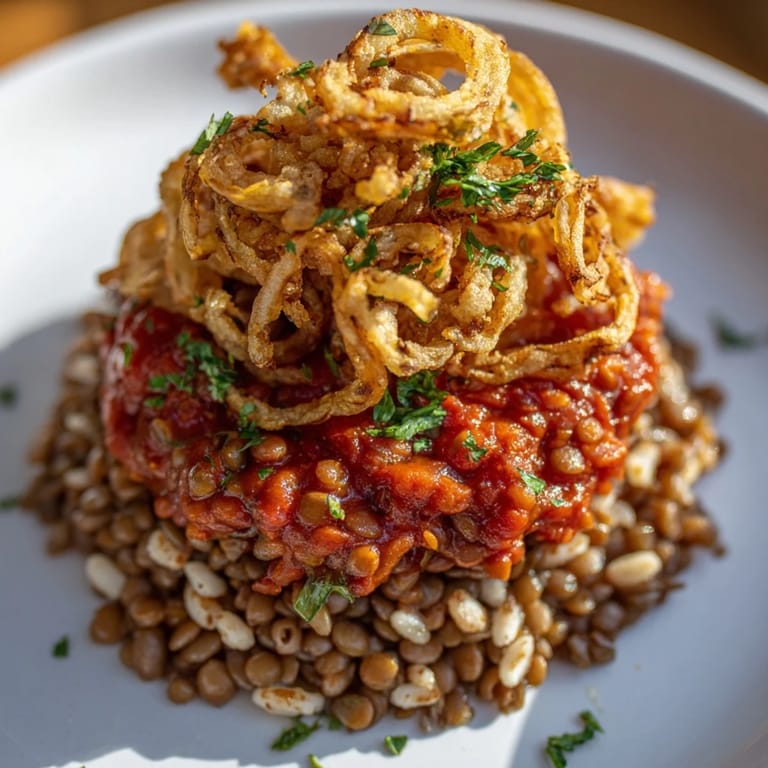
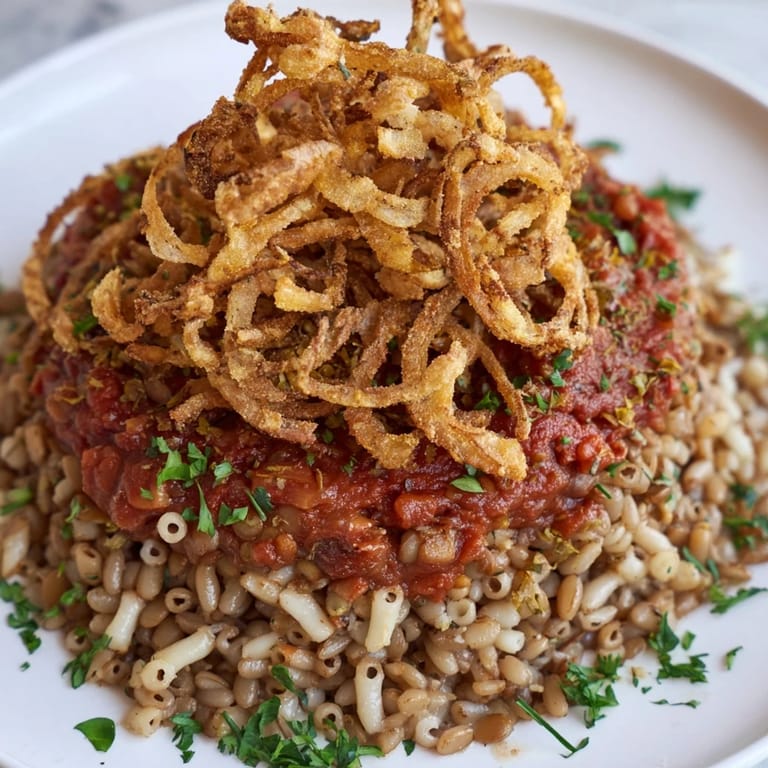
- In a bowl or on a platter, start with rice as your base, then add a layer of lentils, then pasta. Spoon that beautiful tomato sauce generously over everything, scatter your crispy onions on top, add a drizzle of garlic vinegar, and finish with fresh parsley if you have it. The warmth of everything underneath will release all the aromas right into your face.
 Save
Save There's something almost meditative about assembling koshari, layering each component and watching the sauce seep into the cracks between rice and pasta. It transforms from three separate dishes into something unified, the way families do when they come together for a meal.
Why Koshari Became My Go-To Dish
I started making this when I realized I could feed four people for under ten dollars without anyone feeling like they'd been given leftovers. The beauty is that it feels abundant—piles of texture and flavor—even though it's built from simple, humble ingredients. It's the kind of dish that makes you look like you spent way more effort than you actually did.
The Spice Level Is Up to You
The chili flakes are optional throughout this recipe, which means you can adjust the heat without affecting the flavor profile at all. I've served this to people who hate spicy food and people who live for it, and everyone's happy because you just customize your bowl at the end. The garlic vinegar is where you can slip in heat too if you want—it lets people add it to taste rather than having it baked in.
Make It Ahead and Variations
You can cook all the components hours in advance and just reheat them gently when you're ready to serve—the lentils and rice actually taste better the next day. I've swapped the macaroni for orzo when I wanted smaller, more delicate pasta pieces, and I've used vegetable broth instead of water for a deeper flavor. Some nights I add a fried egg on top, and other times I pile on extra fresh herbs like cilantro or mint.
- Leftover koshari reheats beautifully in a pan with a splash of water—it comes back to life like it was just made.
- Double the sauce recipe if you love it saucier, or add it on the side so everyone can portion their own.
- The crispy onions are the one thing you really should make fresh right before eating, but the vinegar and sauce will keep in the fridge for several days.
 Save
Save Koshari is the kind of recipe that brings people together without any fuss, filling bellies and warming hearts in equal measure. Make it once and it'll become a reliable friend in your kitchen, ready whenever you need something that tastes like care.
Questions & Answers
- → What grains are used in Egyptian Koshari?
Medium-grain rice and small elbow macaroni or ditalini pasta combine with lentils for a hearty base.
- → How is the tomato sauce flavored?
The sauce is seasoned with cumin, coriander, garlic, and optional chili flakes, simmered slowly to develop rich flavors.
- → What makes the fried onions crispy?
Onions are thinly sliced, tossed in flour and salt, then fried in hot vegetable oil until golden and crisp.
- → Can the dish be made vegan?
Yes, all ingredients including grains, lentils, and vegetables ensure it is naturally vegan.
- → Are there any variations for the pasta used?
Orzo or vermicelli can substitute the elbow macaroni to vary texture and appearance.
- → Is there a special garnish to enhance the dish?
A drizzle of garlic-infused vinegar and chopped fresh parsley adds brightness and tangy contrast.