 Save
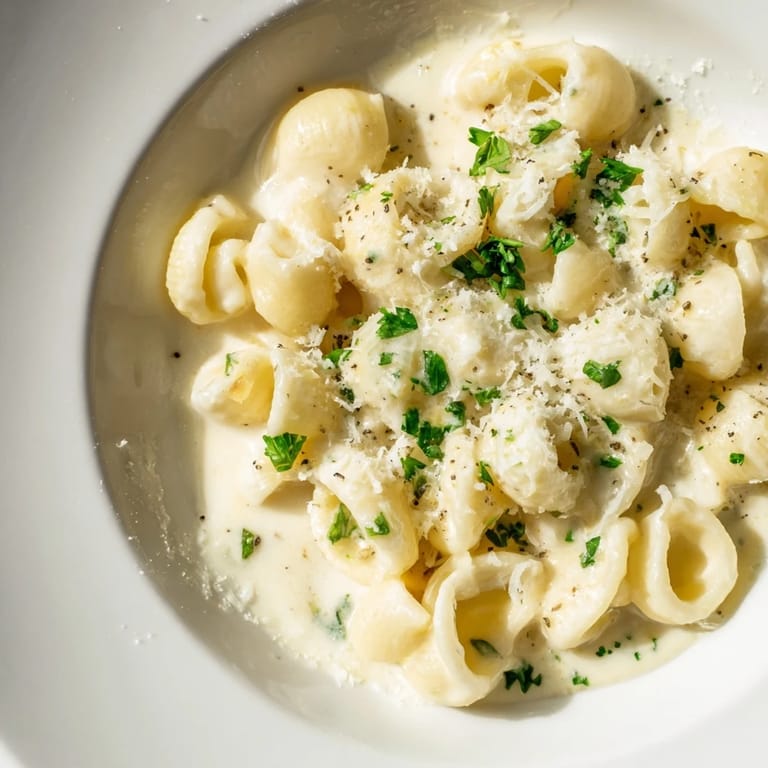
Save There's something magical about a bowl of creamy pasta on a Tuesday night when you're tired but need something that feels like a hug. I discovered this ditalini dish during one of those moments—standing in my kitchen with half-and-half in hand instead of heavy cream, thinking it might just work. The garlic hits first, bold and honest, while the cream wraps around each tiny tube of pasta like it was meant to be there all along. It's become the recipe I reach for when I want comfort without the heaviness that usually comes with it.
I made this for my neighbor one cold evening after she'd had a rough day at work, and watching her face when she took that first bite reminded me why simple food matters. She asked for the recipe before she'd even finished the bowl, and now it shows up on her table regularly. There's something about ditalini—those little tubes that catch sauce in every crevice—that makes people feel like you fussed over them, even though you barely spent any time at all.
Ingredients
- Ditalini pasta (300g): Choose a good quality bronze-cut pasta if you can—it grabs onto the cream sauce better than the smooth kind, and the texture difference is real.
- Olive oil (1 tablespoon): This is your starting point; don't skip it or rush it, as it's what carries the garlic flavor into the dish.
- Garlic (4 cloves, minced): Mince it fine and watch it carefully—the moment it smells incredible is when you add the flour, before it can turn bitter.
- All-purpose flour (2 tablespoons): This creates the roux that thickens your sauce; don't be tempted to skip it or use cornstarch unless you want a different texture entirely.
- Half-and-half (480ml): The secret to this being lighter than traditional cream pasta—it's rich enough to feel luxurious but won't sit in your stomach for hours.
- Vegetable broth (60ml): Low-sodium is essential here so you can control the salt level and the broth doesn't overpower the delicate garlic flavor.
- Parmesan cheese (40g, grated): Freshly grated always tastes better than pre-grated, and it melts more smoothly into the warm sauce.
- Salt and black pepper: Season to your taste at the end; you can always add more but you can't take it back.
- Red pepper flakes (pinch, optional): A whisper of heat that makes people wonder what the secret is without being able to quite name it.
- Fresh parsley and extra Parmesan for garnish: These aren't just decorative—they brighten up what could otherwise feel heavy and remind you that this is still a fresh, intentional dish.
Tired of Takeout? 🥡
Get 10 meals you can make faster than delivery arrives. Seriously.
One email. No spam. Unsubscribe anytime.
Instructions
- Boil the pasta:
- Bring a large pot of generously salted water to a rolling boil, then add your ditalini and cook according to package directions until it's tender but still has a slight bite to it. Before you drain it, fish out about half a cup of that starchy pasta water and set it aside—this is your secret weapon for adjusting the sauce consistency later.
- Build your base:
- While the pasta's going, heat olive oil in a large skillet over medium heat and add your minced garlic, letting it sizzle gently for about a minute until the kitchen smells incredible but before any color creeps in. Sprinkle the flour over top and stir constantly for about a minute to cook out the raw flour taste and create a pale, smooth paste.
- Create the cream sauce:
- Slowly pour in your half-and-half while whisking steadily, then add the vegetable broth, keeping everything moving so no lumps form. Keep whisking for another 3 to 4 minutes until you feel the sauce thicken and notice it coating the back of your spoon.
- Season and finish:
- Stir in the grated Parmesan along with salt, black pepper, and a pinch of red pepper flakes if you want that subtle warmth. Let it bubble very gently for 2 more minutes so the cheese fully incorporates.
- Bring it together:
- Toss in your drained pasta and coat every piece in that silky sauce, then taste it and decide if you want to loosen it up with a splash of that reserved pasta water. You want something that clings to the pasta but isn't stodgy.
- Plate and serve:
- Divide among bowls and finish with a shower of fresh parsley and more Parmesan if that's your style, then eat it while it's still warm and the steam is rising off the top.
 Save
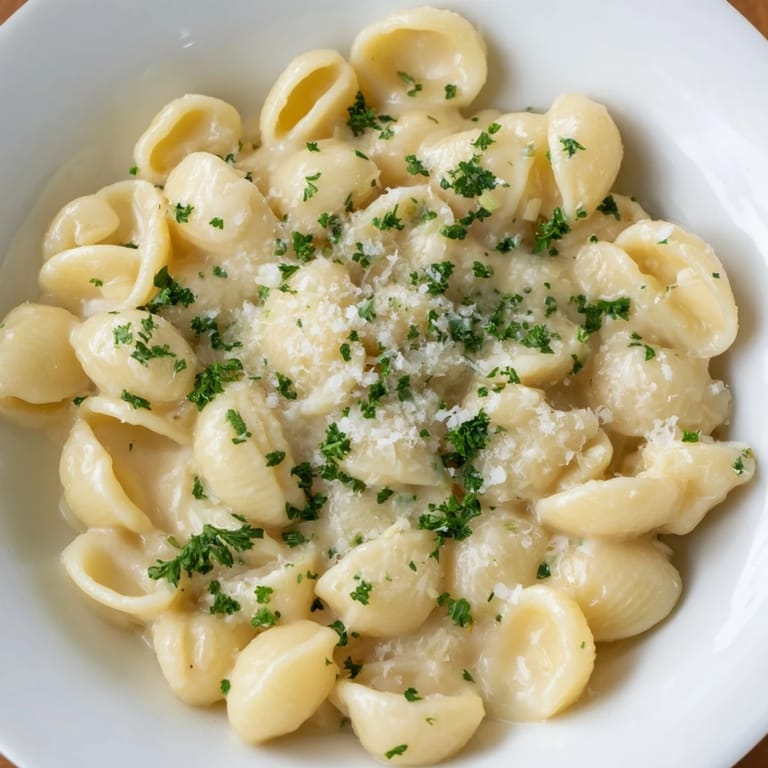
Save There was an evening when my daughter, who usually picks at everything, asked for seconds of this pasta and then thirds, and in that moment I realized this recipe wasn't just about feeding people—it was about creating a memory where food felt uncomplicated and honest. Now whenever she comes home from college, this is what she asks me to make, and I know exactly how to make her feel welcome again.
The Secret to Creamy Without Guilt
Using half-and-half instead of heavy cream is a shift I made years ago after one too many heavy cream pasta dinners left me feeling sluggish. The magic is that half-and-half still creates that silky, luxurious mouthfeel, but with less fat and fewer calories, so you can eat a full, satisfying bowl without feeling like you need to lie down afterward. The roux—that flour and oil base—does most of the heavy lifting to create thickness, so the cream doesn't have to work as hard. It's one of those cooking discoveries that makes you wonder why you didn't think of it sooner.
Why Ditalini Matters
Small pasta shapes like ditalini aren't just for show; they're specifically designed to trap sauce inside and around each piece, so every forkful tastes like you built it with intention. Regular long pasta can be elegant, but ditalini feels honest and homey—it's the kind of pasta that makes sense for a creamy sauce because the surface area to weight ratio is perfect. I've tried this dish with penne and fettuccine, and while they work, ditalini feels like home in a way those other shapes don't quite achieve.
Making It Your Own
This recipe is a beautiful foundation, and I've learned that it welcomes additions without losing its soul. Some nights I'll toss in sautéed mushrooms for earthiness, other times I'll add shredded cooked chicken if I need more protein, and once I even stirred in a handful of spinach right at the end and it was unexpected but perfect. The garlic and cream frame is strong enough that it carries whatever you want to fold in, making this less of a rigid recipe and more of a blueprint for a meal that can shift depending on what's in your kitchen and what you're craving.
- Mushrooms should be sautéed separately until golden before adding to the finished dish so they don't water it down.
- Spinach or other greens can be stirred in during the last 30 seconds of cooking so they soften but don't turn to mush.
- A pinch of nutmeg added to the sauce is subtle but creates a depth that makes people pause and wonder what that flavor is.
 Save
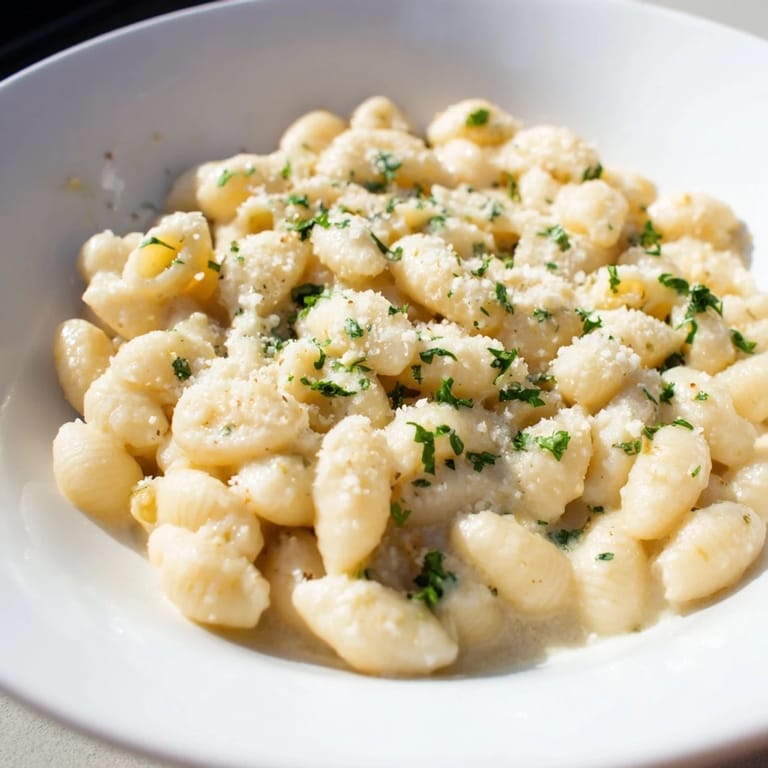
Save This dish has quietly become one of those recipes that shows up when someone needs comfort or when you want to cook something that feels special without spending hours in the kitchen. It's proof that the best meals don't need to be complicated—they just need to be made with attention and a little bit of care.
Questions & Answers
- → How do I achieve a creamy sauce without heavy cream?
Using half-and-half combined with a roux made from flour and olive oil creates a smooth and creamy sauce while keeping it lighter than traditional heavy cream.
- → What is the best way to cook ditalini pasta for this dish?
Cook ditalini pasta in salted boiling water until al dente, then drain, reserving some pasta water to adjust sauce consistency if needed.
- → Can I add protein to this dish?
Yes, sautéed chicken or mushrooms can be added to enhance protein content and complement the creamy garlic sauce.
- → How should I season the sauce for balanced flavor?
Use minced garlic sautéed gently, combined with Parmesan cheese, salt, black pepper, and optional red pepper flakes for warmth and depth.
- → What garnishes work well with this pasta?
Fresh chopped parsley adds color and brightness, while extra grated Parmesan enhances the savory notes.