 Save
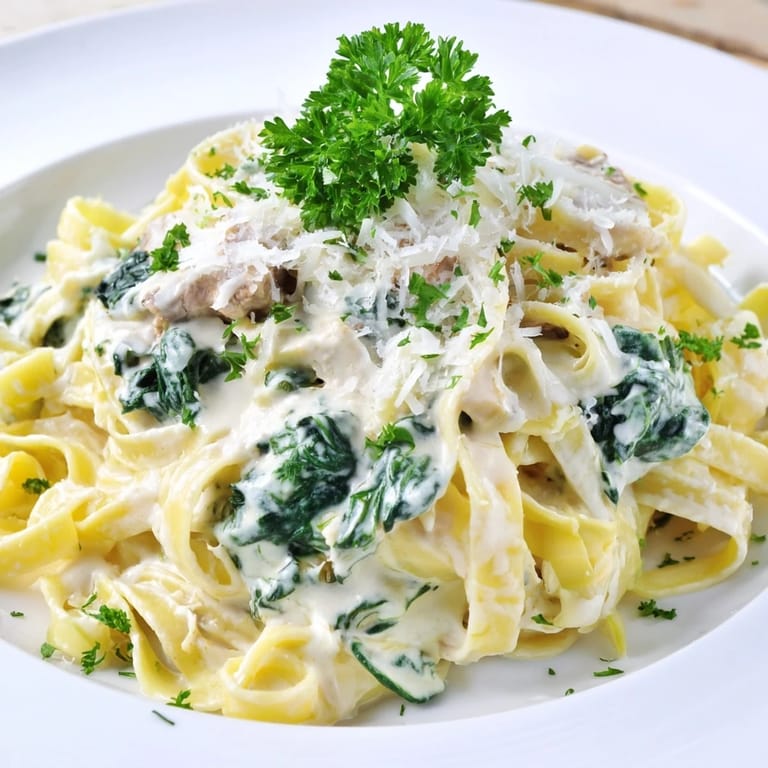
Save There's a Tuesday evening I keep returning to—not because it was special, but because it was ordinary. I'd made Alfredo sauce maybe five times before that night, always following the steps with a kind of mechanical precision. But my roommate walked in just as the cream was heating, caught the buttery smell, and something shifted. She stood there watching the spinach melt into that pale sauce, and suddenly I realized I'd been cooking it wrong all along—not technically, but joylessly. This version, with the fresh spinach wilting right into the sauce and that nutmeg I'd always skipped, became the one I actually wanted to make.
I made this for someone who'd had a rough day, and watching them taste it—really taste it, not just eat it—was when I understood why this dish keeps winning people over. The way the sauce clings to each strand of fettuccine, how the spinach disappears into something greater than itself, how a pinch of nutmeg makes everyone pause and wonder what that subtle warmth is—that's when food becomes a small act of care.
Ingredients
- Fettuccine, 400 g: Use fresh if you can find it, but dried works beautifully too—just make sure you have a window between al dente and overdone, or the pasta will disappear into mush once you toss it in the sauce.
- Unsalted butter, 60 g: This is your foundation, so use good butter, the kind that smells almost sweet when it melts.
- Garlic, 3 cloves: Mince it fine and watch it like a hawk—once it starts to brown, the whole sauce tastes burnt, trust me on this.
- Heavy cream, 250 ml: Don't use light cream or half-and-half; you need the fat content or the sauce will break and separate.
- Parmesan cheese, 120 g: Grate it fresh if possible, or use the finest grate you can find—pre-grated cheese has anti-caking agents that make the sauce grainy.
- Cream cheese, 60 g: This is the secret ingredient that keeps the sauce smooth and prevents it from breaking, even if you reheat it later.
- Black pepper, freshly ground, 1/2 tsp: Fresh pepper makes a noticeable difference here; it's not just seasoning, it's a flavor layer.
- Nutmeg, a pinch: This optional touch is what separates homemade Alfredo from the forgettable kind—it adds a whisper of warmth that makes people ask what's in the sauce.
- Fresh baby spinach, 150 g: Pre-washed saves time, but make sure it's completely dry or excess water will thin your sauce.
Tired of Takeout? 🥡
Get 10 meals you can make faster than delivery arrives. Seriously.
One email. No spam. Unsubscribe anytime.
Instructions
- Get the water boiling and pasta going:
- Fill a pot with water, salt it generously—it should taste like the sea—and bring it to a rolling boil before the pasta goes in. This is where the seasoning begins, so don't skip the salt. Start the fettuccine according to the package directions, but begin checking it a minute or two before the suggested time so you catch it while it still has a tiny bit of resistance in the center.
- Start the sauce while pasta cooks:
- Melt butter in your skillet over medium heat, watching it foam gently. Once it's foaming, add the minced garlic and listen for the gentle sizzle—that's your cue to stir constantly for about a minute until the smell turns sweet and fragrant, not sharp.
- Build the creamy base:
- Lower the heat to medium-low and pour in the heavy cream slowly, stirring as you go. Tear the cream cheese into small cubes and whisk them in piece by piece; this prevents lumps and creates a silky base for the Parmesan to melt into.
- Melt in the cheese:
- Add the grated Parmesan in handfuls, stirring constantly and letting each handful almost disappear before adding the next. This patience pays off—rushed cheese becomes grainy and separated. Finish with the black pepper and nutmeg, taste it, and adjust salt carefully.
- Wilt the spinach:
- Dump in the baby spinach all at once and stir gently for 2 to 3 minutes until it melts into the sauce. The sauce will darken slightly, but don't panic—that's just the spinach giving its color and nutrients to the cream.
- Bring it all together:
- Make sure you've reserved that pasta water before you drain the fettuccine. Add the hot pasta to the sauce and toss gently with tongs, splashing in pasta water a little at a time until the sauce coats every strand without pooling at the bottom of the pan.
- Finish and serve:
- Plate immediately while everything is hot, shower each serving with extra Parmesan and a whisper of fresh parsley, and eat right away before the sauce has a chance to stiffen as it cools.
 Save
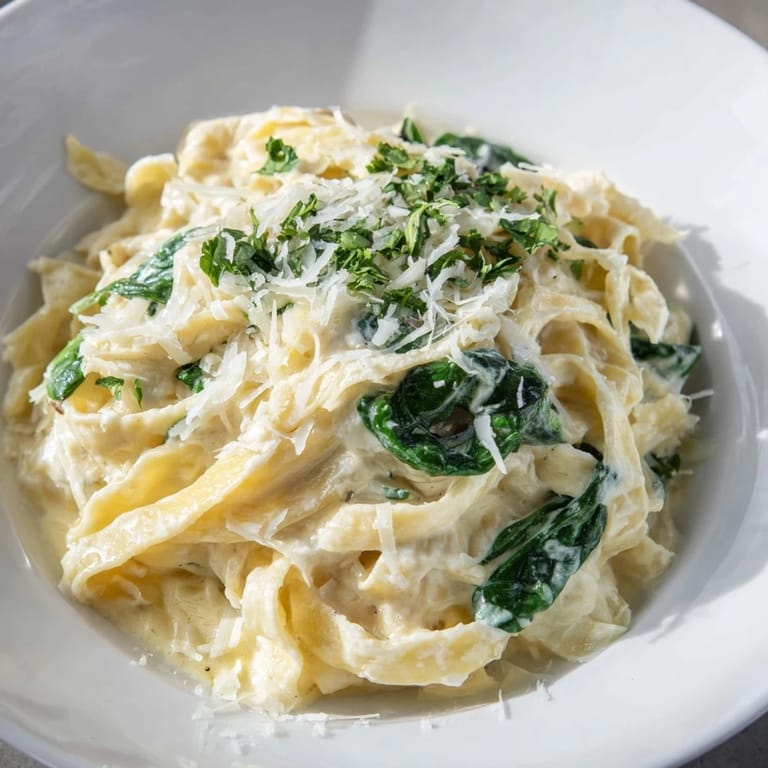
Save There's a specific comfort in feeding someone something this simple and this refined at the same time. When someone tastes Alfredo that's been made with care—with the nutmeg, with patience, with attention to the spinach—they slow down and notice it. That moment is worth every moment of standing at the stove, whisking and tasting and adjusting.
The Spinach Question
I used to make Alfredo without spinach for years, thinking of it as a separate thing to add on the side. Then I realized that wilting it directly into the sauce changes everything—the cream takes on a subtle vegetal depth, the sauce darkens to something that looks more grown-up, and you're not pretending to have vegetables on the plate, you're actually eating them woven into every bite. If you want to experiment, try adding it early and letting it simmer longer for a more integrated flavor, or add it at the very end for a slightly fresher taste.
Why This Sauce Doesn't Break
The cream cheese is the insurance policy here—it stabilizes the sauce in a way that pure Parmesan and cream can't do alone. It also makes the sauce forgiving if you need to reheat it or if you're not eating immediately. I've been known to make this sauce in the morning, store it in the fridge, and gently reheat it with a splash of milk while the pasta cooks, and it comes back to life without any separation or grittiness. That resilience makes this recipe actually livable in real life, not just theory.
Variations and Additions
This is a foundational Alfredo, but it's also a canvas if you want it to be. Sautéed mushrooms add an earthy richness that makes this feel more substantial, while grilled chicken breast transforms it into something you wouldn't feel guilty serving to people who need actual protein at dinner. I've also stirred in fresh thyme or a whisper of lemon zest at the end, and both change the mood without overwhelming the delicate sauce. The beauty is that the base stays stable no matter what you add, as long as you add it gently and don't crowd the pan.
- Try toasted breadcrumbs mixed with parsley and Parmesan for a crispy garnish that adds texture.
- Fresh lemon juice stirred in at the very end brightens the whole dish without making it sour.
- A handful of fresh basil torn in just before serving brings this into a different season entirely.
 Save
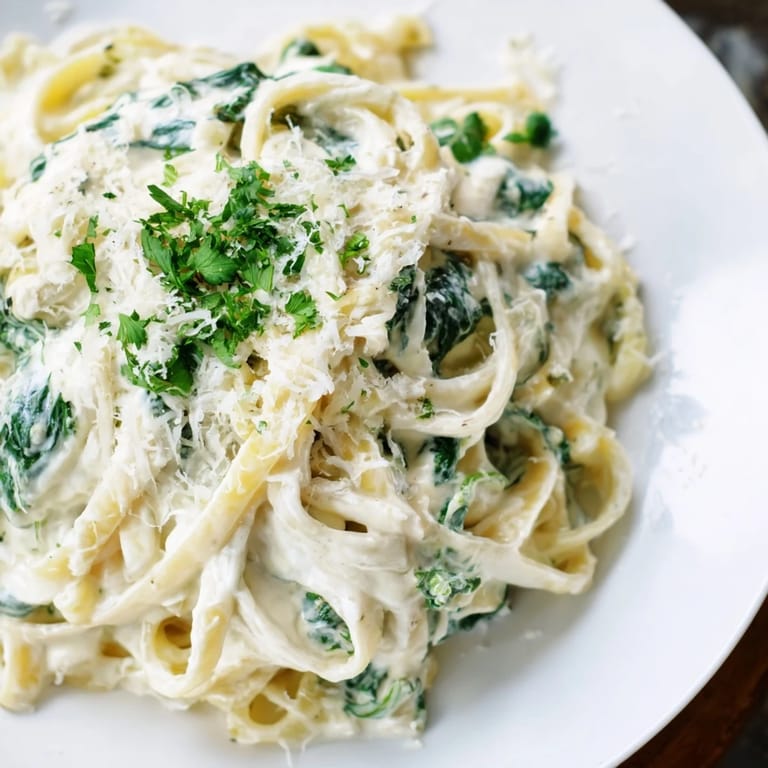
Save This recipe lives in that sweet spot where it feels like a small luxury but demands nothing from you except attention and patience. Make it on a Tuesday if you want, for no reason at all.
Questions & Answers
- → How can I keep the sauce creamy without it splitting?
Cook the sauce on low heat after adding cream and cheese, stirring continuously to maintain a smooth texture and prevent separation.
- → What’s the best way to wilt spinach in the sauce?
Add fresh spinach to the hot sauce and cook for 2–3 minutes, stirring gently until just wilted to preserve its vibrant color and nutrients.
- → Can I substitute the fettuccine with other pasta types?
Yes, ribbon-shaped pastas like linguine or tagliatelle work well to hold the creamy sauce.
- → How do I adjust the sauce thickness if it’s too thick?
Stir in reserved pasta water little by little until desired consistency is reached, ensuring the sauce coats the pasta evenly.
- → What variations enhance the flavor profile of this dish?
Adding sautéed mushrooms, cooked chicken, or a pinch of freshly grated nutmeg adds depth and complements the creamy sauce beautifully.