 Save
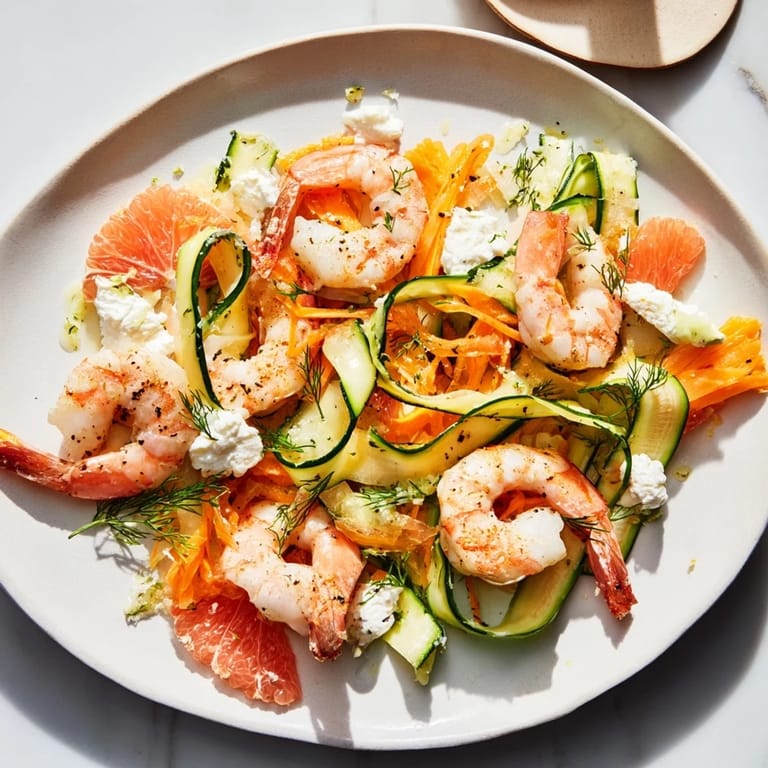
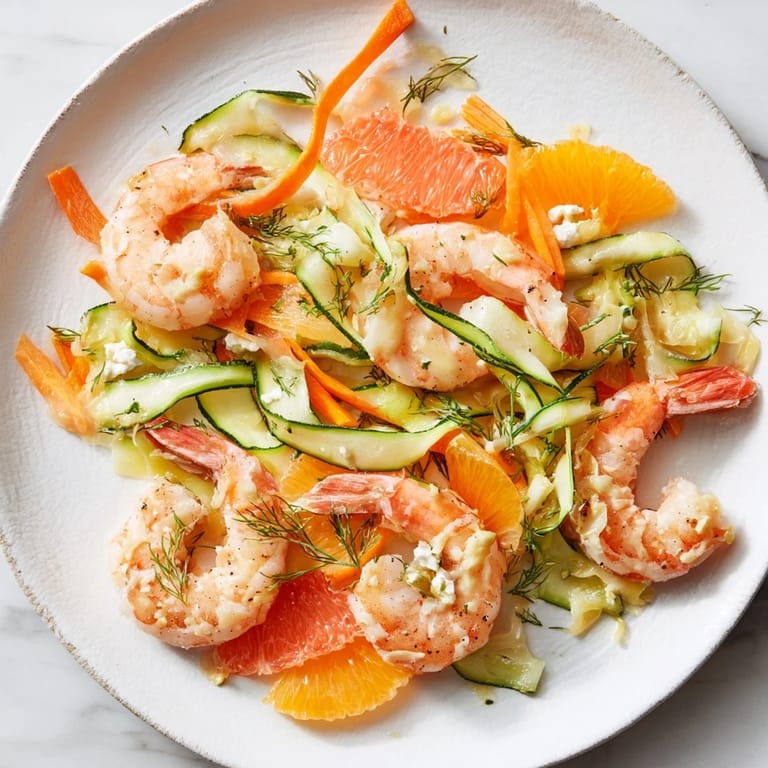
Save The first time I arranged this dish on a platter, I wasn't thinking about recipes or technique—I was thinking about my nephew's aquarium, how the light caught those pink and orange fish darting between coral branches. That memory sparked something: what if dinner itself could look like that underwater world? What started as a silly visual idea became this luminous plate of briny shrimp, citrus so bright it practically glows, and melted Gruyère that bubbles like the sea itself. Now whenever I make it, I'm transported to that moment of wondering if food could tell a story just by how it sits on the plate.
I made this for my sister's birthday dinner last spring, and she walked in just as I pulled the platter from under the broiler—the Gruyère was still bubbling, steam rising off the vegetables, and she actually stopped mid-sentence. That's the kind of dish that does something unexpected; it makes people pause before they eat. The combination of warm cheese and cold citrus segments was a surprise to her palate, a little jolt of pleasure. It became the dish she requests every year now, which might be the highest compliment a cook can get.
Ingredients
- Large pink shrimp (500 g): Buy them already peeled if you can—it saves time and frustration, and the pink color is half the visual magic of this dish.
- Oranges and pink grapefruit: The segmentation takes a minute or two, but that citrus juice clinging to each piece is what keeps the shrimp from tasting heavy.
- Lemon juice: Fresh only; bottled tastes tinny here and you'll notice it immediately.
- Gruyère cheese (120 g): This is the star of the broiler step—it melts into pockets and edges rather than one flat blanket, which is exactly what you want.
- Ricotta cheese (50 g): A dollop of this scattered around creates visual variation and a creamier texture contrast.
- Zucchini and carrot: The thin ribbons and julienne are your coral structure; take a moment with the knife and they'll look intentional and beautiful.
- Fresh chives and dill: Don't skip the fresh herbs—they're the final pop of color and the brightness that ties everything together.
- Olive oil: Quality matters here since you're using it both for cooking and finishing; a good oil makes a difference.
Tired of Takeout? 🥡
Get 10 meals you can make faster than delivery arrives. Seriously.
One email. No spam. Unsubscribe anytime.
Instructions
- Get your mise en place ready:
- Have everything prepped and within arm's reach before heat touches the pan—shrimp cleaned, citrus segmented, vegetables sliced, herbs measured. This dish moves quickly once you start cooking.
- Season and sauté the shrimp:
- Toss them in olive oil, lemon juice, salt, and pepper, then onto high heat for exactly 2 minutes per side—any longer and they toughen into little pink hockey pucks. The pan should sizzle the moment they hit it.
- Prepare your citrus base:
- While the shrimp cooks, toss your orange and grapefruit segments with that zest and a whisper of salt; this helps the juices mingle and prepares them to brighten everything else.
- Steam the vegetables:
- A minute or two is all you need—you want them tender enough to arrange easily but still with a slight bite. Overcooked vegetables will look limp on the plate.
- Build your coral reef:
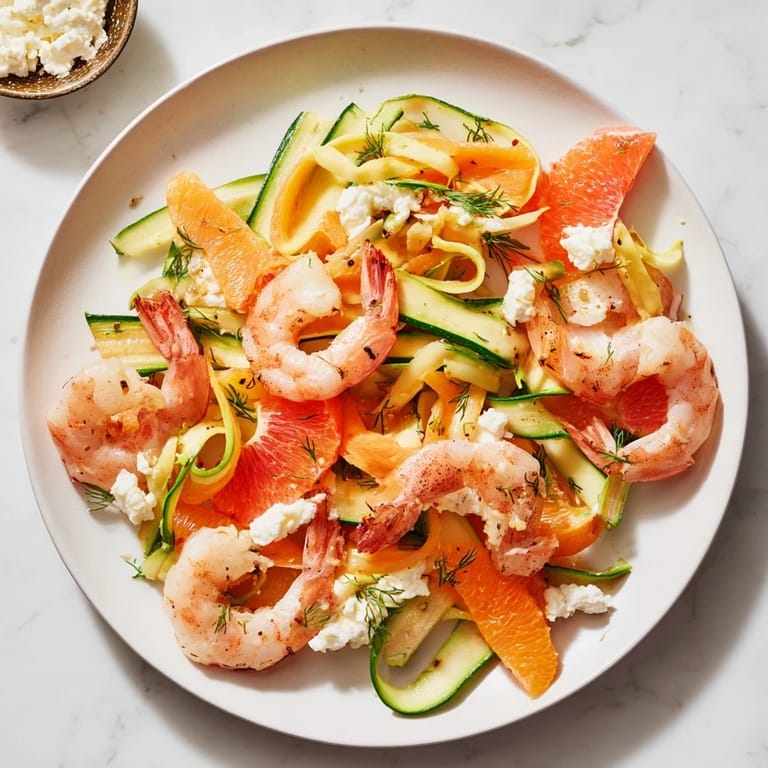
- On your oven-safe platter, arrange the steamed vegetables in a loose, organic pattern as your base; this is where you can be creative and intuitive rather than rigid. Layer the shrimp and citrus segments among them, aiming for pockets of color and height variation.
- Cheese and broiler magic:
- Scatter the grated Gruyère across the whole arrangement, then dot with small spoonfuls of ricotta. Slide it under the broiler for 2 to 3 minutes, watching carefully—the moment the cheese bubbles and the edges just begin to brown is when you pull it out.
- Finish and serve:
- Fresh chives, torn dill, a final drizzle of good olive oil, and serve immediately while the cheese is still warm and creamy against the cool citrus.
 Save
Save There's a moment right before serving when everything on that platter catches the light—the glossy cheese, the translucent citrus, the ribboned vegetables—and it stops being about technique or ingredients and becomes pure beauty. That's when cooking feels less like a task and more like creating something that feeds people's eyes first, then their stomachs. It's a reminder that the best meals are the ones where every element, from color to flavor, works in harmony.
Why the Broiler Step Matters
The broiler isn't just there to melt cheese—it's there to create contrast. The heat caramelizes the top layer of Gruyère into something almost crispy while the ricotta underneath stays creamy, and that textural play is what makes the dish sing. The vegetables warm just enough to release their own sweetness without losing their crunch, and the shrimp comes back to a gentle warmth that keeps it tender. It's a carefully balanced moment of heat that brings everything together without overwhelming the citrus brightness underneath.
Building Your Platter Like You Mean It
This dish is about arrangement as much as flavor—the colors matter because they make you want to eat it, and the arrangement matters because it keeps flavors in balance across every bite. Think of it less as following a blueprint and more as creating a landscape where each element has its own space but they're still in conversation. The zucchini ribbons curve naturally; use that curve. The carrot julienne catches light; position it where it will shine. This isn't fussy perfectionism; it's just noticing that food that looks alive also tastes livelier.
Pairing and Serving Suggestions
A crisp Sauvignon Blanc or dry rosé isn't just a nice pairing—it echoes the citrus notes in the dish itself, so the wine and the food feel like they belong together. This is a warm-weather meal, the kind you make when you want something that feels light but still substantial, elegant but not fussy. Serve it right away, while the cheese is still warm and everything else is at its peak.
- If you want extra color and texture, thin slices of watermelon radish or pomegranate seeds scattered across work beautifully.
- Emmental or a bubbly mozzarella can stand in for Gruyère if that's what you have, and the dish adapts with grace.
- This makes four generous servings, but it's equally happy as an appetizer for six if you're looking to stretch it.
 Save
Save Making this dish is a small act of joy, turning simple ingredients into something that looks like it swam up from an ocean dream. Serve it to the people you want to impress, or make it for yourself on a quiet evening and let the colors remind you that dinner can be beautiful.
Questions & Answers
- → How do I ensure the shrimp remain tender?
Sauté shrimp quickly over medium-high heat, about 2 minutes per side, to keep them juicy and tender without overcooking.
- → What citrus fruits work best for this dish?
Oranges, pink grapefruit, and a splash of fresh lemon juice provide a bright, balanced citrus flavor complementing the shrimp.
- → Can I substitute Gruyère cheese?
Yes, Emmental or a bubbly mozzarella can be used as alternatives to maintain the cheesy, melting texture.
- → How should the zucchini and carrots be prepared?
Slice zucchini into thin ribbons and julienne carrots, then steam them briefly until just tender for a fresh, crisp base.
- → What herbs enhance the dish’s flavor?
Fresh chives and dill add herbal brightness and complement the seafood and citrus elements well.