 Save
Save My kitchen smelled like a spice market the afternoon I first threw together this curry—not because I had some grand plan, but because I was trying to use up vegetables before they wilted and I happened to have coconut milk in the pantry. The garlic and ginger hit the hot oil with that distinctive sizzle that made me pause and just breathe it in. Within minutes, the whole dish came together in a way that felt both intentional and completely improvised, and I realized I'd stumbled onto something I'd want to make again and again.
I made this for a friend who'd just moved to my neighborhood, and watching her face when she tasted it—that moment when spice, coconut, and bright lime hit all at once—made me feel like I'd actually accomplished something in the kitchen. She asked for the recipe immediately, and I loved that it was simple enough to share but special enough to matter.
Ingredients
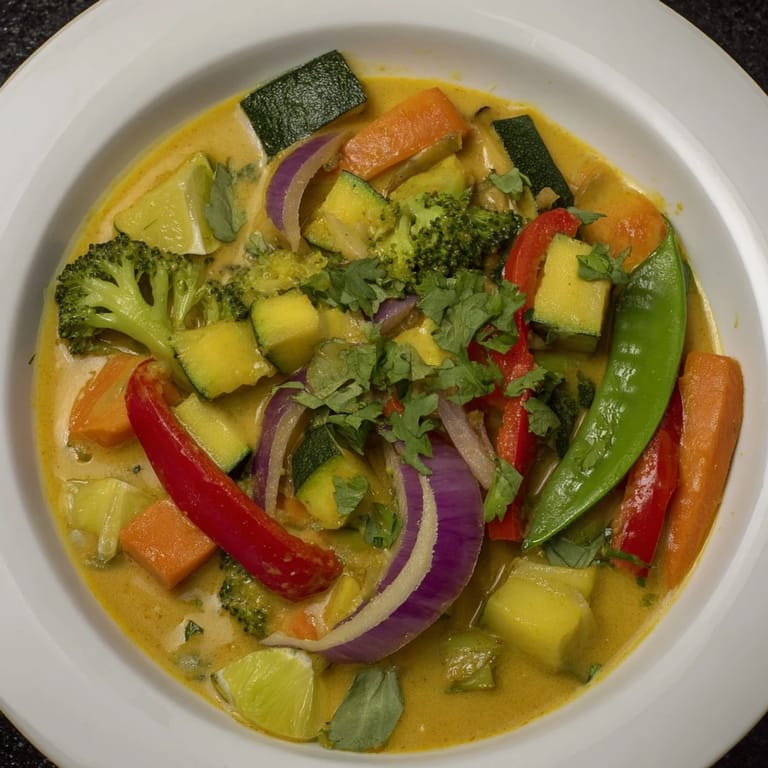
- Red bell pepper: Adds natural sweetness and those gorgeous color streaks; slice it thick enough that it stays firm but not so thick it stays raw in the middle.
- Carrot: Takes time to soften, which is exactly why it goes in early—slicing it thin helps it keep pace with everything else.
- Zucchini: Stays tender and absorbs the sauce beautifully; dice it into roughly the same size as the other vegetables so everything cooks evenly.
- Broccoli florets: They should be bite-sized enough to feel delicate but sturdy enough not to fall apart during cooking.
- Snap peas: These stay crisp and sweet when added near the end, giving you texture contrast in every spoonful.
- Red onion: Slice it thin so it softens completely and becomes almost translucent—that's when you know the base is ready for the spices.
- Coconut oil: Use full-fat and unsweetened; it won't overpower the curry spices and has the highest smoke point you need here.
- Garlic and ginger: Fresh is non-negotiable—minced small and grated fine so they distribute evenly through the oil and become fragrant instead of chunky.
- Red curry paste: This is the soul of the dish; it's concentrated, complex, and worth finding a good brand that lists recognizable ingredients.
- Turmeric, cumin, coriander: These three create depth without heat—let them bloom in the oil for a full minute so they give up their best flavors.
- Coconut milk: Always full-fat; the cream rises to the top and creates richness that canned light coconut milk simply cannot match.
- Vegetable broth: Balances the richness of the coconut and gives the vegetables room to cook without the sauce becoming too thick.
- Soy sauce or tamari: One tablespoon adds savory depth; if you need soy-free, coconut aminos work beautifully.
- Fresh lime juice: Never use bottled—squeeze it fresh right before serving so it cuts through the richness with real brightness.
- Fresh cilantro: Scatter it over the top at the last second; it adds a fresh, almost peppery note that makes the whole dish feel lighter.
Tired of Takeout? 🥡
Get 10 meals you can make faster than delivery arrives. Seriously.
One email. No spam. Unsubscribe anytime.
Instructions
- Build your aromatics base:
- Heat the coconut oil until it shimmers, then add the red onion and let it soften and turn slightly translucent—this takes about two to three minutes and is the patient first step that makes everything better. When you add the garlic and ginger, you'll know they're ready when the smell reaches you from across the room.
- Bloom your spices:
- Stir the curry paste, turmeric, cumin, and coriander into the oil and aromatics, stirring constantly for a full minute. This releases all the complexity stored in those spices and prevents them from staying grainy or raw in your finished dish.
- Sauté the sturdy vegetables:
- Add the bell pepper, carrot, zucchini, and broccoli, stirring often for three to four minutes until they start to soften slightly but still hold their shape. This partial cooking matters—they'll finish cooking in the coconut milk while staying vibrant.
- Simmer with the sauce:
- Pour in the coconut milk and vegetable broth, bring everything to a gentle simmer, then add the snap peas and soy sauce. The gentle simmer is important here—a hard boil breaks down the vegetables too fast and clouds the sauce.
- Finish with brightness:
- After the vegetables are tender but still have some firmness, remove from heat and squeeze fresh lime juice directly into the pot. Taste and adjust salt and pepper—the lime should make everything feel lighter and more alive.
 Save
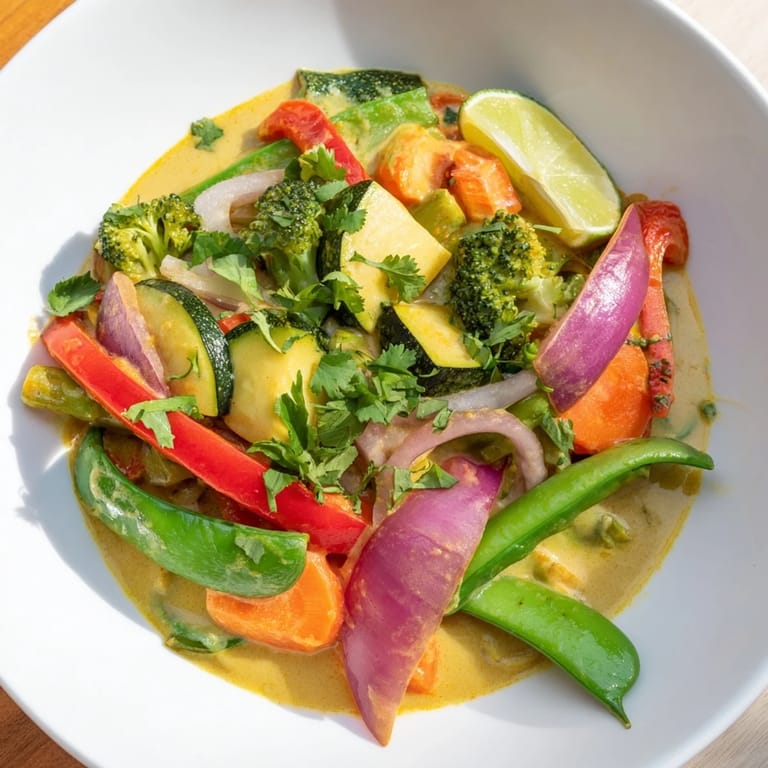
Save This curry became the dish I made when my sister was going through a tough time and couldn't eat much—something about how gentle the coconut sauce felt, how the vegetables were soft but not mushy, made it feel healing without being boring or medicinal. That's when I knew it wasn't just a recipe, it was something I could hand to someone I cared about.
Why This Curry Works
The magic isn't in any single ingredient but in how they move together—the coconut milk becomes almost silky as it simmers with the spices, and the fresh vegetables stay vibrant because they're not drowning in liquid. The ratio of vegetables to sauce is generous enough that you feel like you're eating real food, not just sauce with vegetables floating in it. Every spoon should have at least two or three different vegetables, creating little flavor combinations that keep the dish from ever feeling one-note.
Timing and Texture
The entire dish cooks in under thirty minutes, which means you need to be present and actually pay attention—but that presence is part of what makes it feel special. The vegetables should be tender enough to cut with the side of a spoon but firm enough that they hold their shape when you plate them. If you're adding extras like chickpeas or tofu, they go in at the same time as the snap peas so they warm through without getting overly soft.
Serving and Pairing
Serve this over steamed jasmine rice or fluffy quinoa, or alongside warm naan if you want something you can actually scoop with. The coconut sauce clings beautifully to rice grains, and the spices feel even more balanced when you have that neutral base to cool things down slightly between bites. Leftovers reheat gently on the stove with a splash of broth, and the flavors somehow deepen overnight.
- If you don't have red curry paste, use green curry paste but start with half the amount since it's usually spicier.
- Frozen vegetables work fine here—no thawing needed, just add them straight to the pan.
- Make extra and freeze it in portions; the coconut sauce keeps the vegetables from getting mushy even after freezing and thawing.
 Save
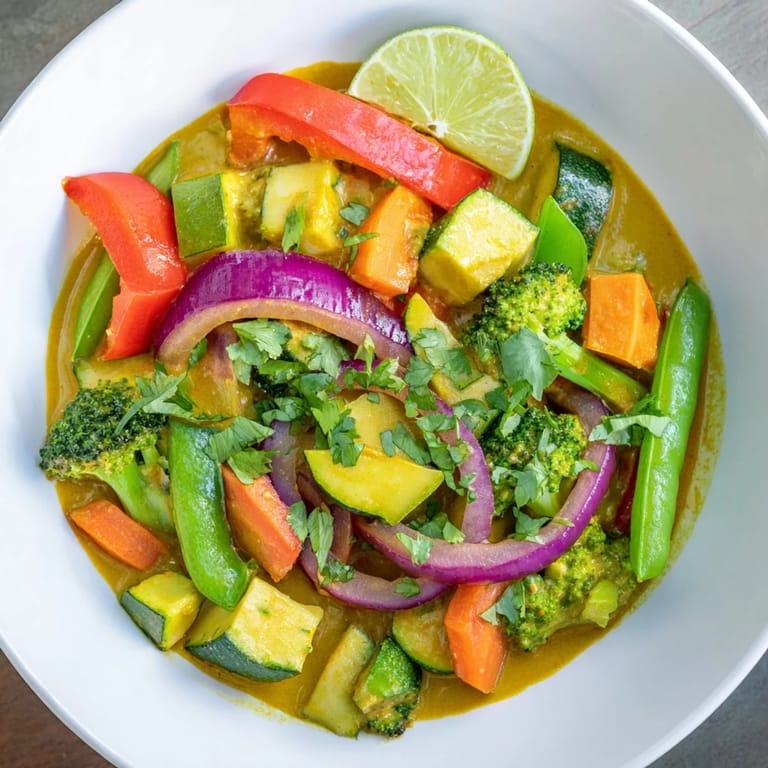
Save This curry has become my answer to almost every cooking question—when someone asks what to make when you don't have much time or much plan, when you want something that tastes vibrant and nourishing, when you want to feel like you actually cooked something real. It's simple enough to make on a random Tuesday and special enough to serve when people you care about are coming over.
Questions & Answers
- → Which vegetables pair well with the coconut curry?
Bell peppers, carrots, zucchini, broccoli, snap peas, and red onion create a colorful, nutritious medley that balances texture and flavor.
- → How can I adjust the spice level?
Modify the amount of red curry paste used; reduce for a milder taste or add extra for more heat.
- → Can I substitute the soy sauce?
Yes, use coconut aminos for a soy-free alternative without compromising umami depth.
- → What cooking tools are needed?
A large skillet or Dutch oven is ideal for sautéing and simmering the ingredients evenly.
- → How do I maintain vegetable texture during cooking?
Simmer vegetables until tender but still vibrant by adjusting cooking time and stirring gently.
- → What can I serve alongside this dish?
Steamed jasmine rice, quinoa, or naan bread complement the dish’s creamy, spiced flavors perfectly.