 Save
Save There's something calming about the sound of a knife gliding through cucumber on a quiet morning. I discovered this dish during a phase of deliberate simplicity—not minimalism as a trend, but as a way to slow down and notice flavors again. The Bamboo Zen emerged from that moment: just vegetables, arranged with intention, asking nothing but your full attention. It's the kind of appetizer that whispers instead of shouts, perfect for when you want the table to feel intentional and peaceful.
I served this at a dinner where everyone seemed tired from conversation. Someone lined up the sticks on their plate like tiny poles and said the whole thing felt meditative. That's when I realized this wasn't just an appetizer—it was permission to exhale before the meal really began.
Ingredients
- Cucumbers (2 large): Choose firm ones that feel heavy for their size; a watery cucumber will be disappointing at the end.
- Celery stalks (4 large): The outer stalks hold their crunch better than the pale hearts, though you can use whatever you have.
- Toasted sesame seeds (1 tablespoon, optional): Toast them yourself if you can; the aroma changes everything about the plate.
- Soy sauce or tamari (1 tablespoon): Tamari is milder and gluten-free; soy sauce is saltier and more assertive.
- Rice vinegar (1 teaspoon): Adds a whisper of brightness that keeps the dipping sauce from feeling one-note.
- Fresh mint or basil (for garnish): Mint leans cooling and quiet; basil adds a peppery note.
Tired of Takeout? 🥡
Get 10 meals you can make faster than delivery arrives. Seriously.
One email. No spam. Unsubscribe anytime.
Instructions
- Wash with purpose:
- Run the cucumbers and celery under cold water, maybe using a soft brush if you have one, paying attention to the ridges where dirt hides. This small moment of care sets the tone for the whole dish.
- Trim the rough parts:
- Cut away the bumpy bottom of the cucumber and the leafy top of the celery with a few clean strokes. You're not being precious; just practical.
- Cut into long sticks:
- Aim for pieces about 4 to 5 inches long, cutting them as evenly as you can manage. The uniformity matters here because it's part of the visual intention.
- Build your landscape:
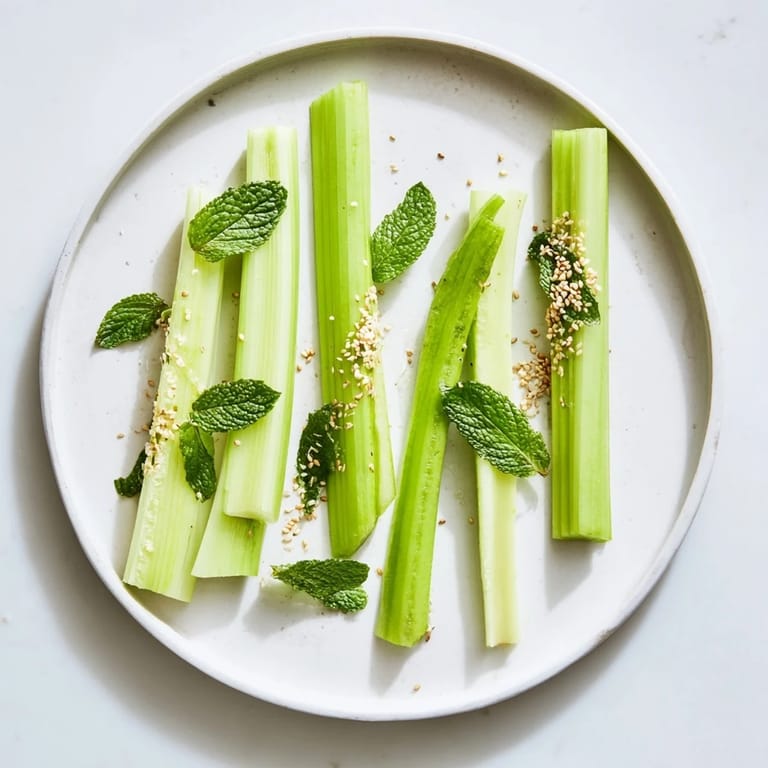
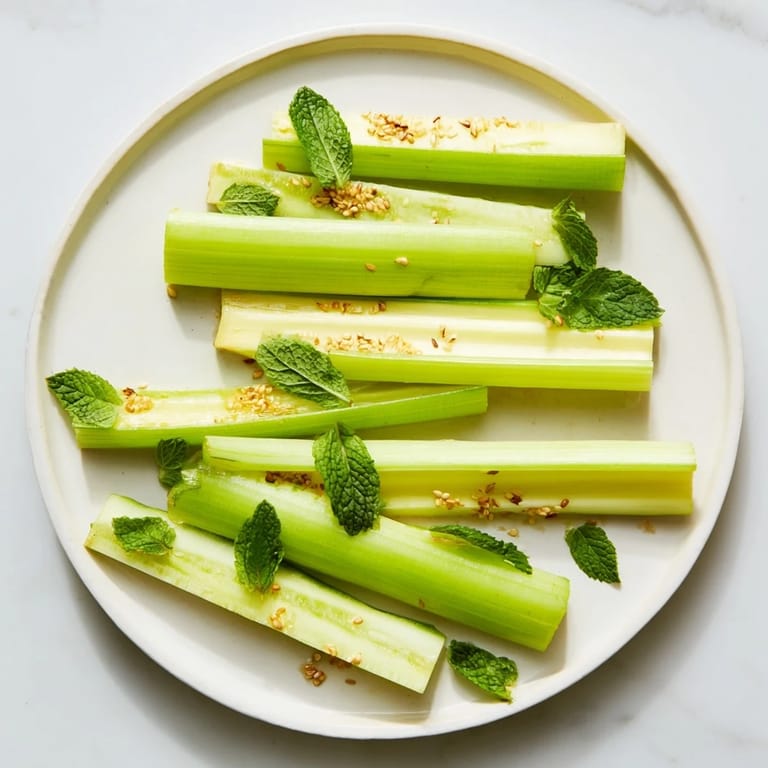
- Arrange the sticks on the platter standing upright in some spots and leaning in others, as if they're growing there. Step back and look at it; you're making something, not just placing vegetables.
- Finish with care:
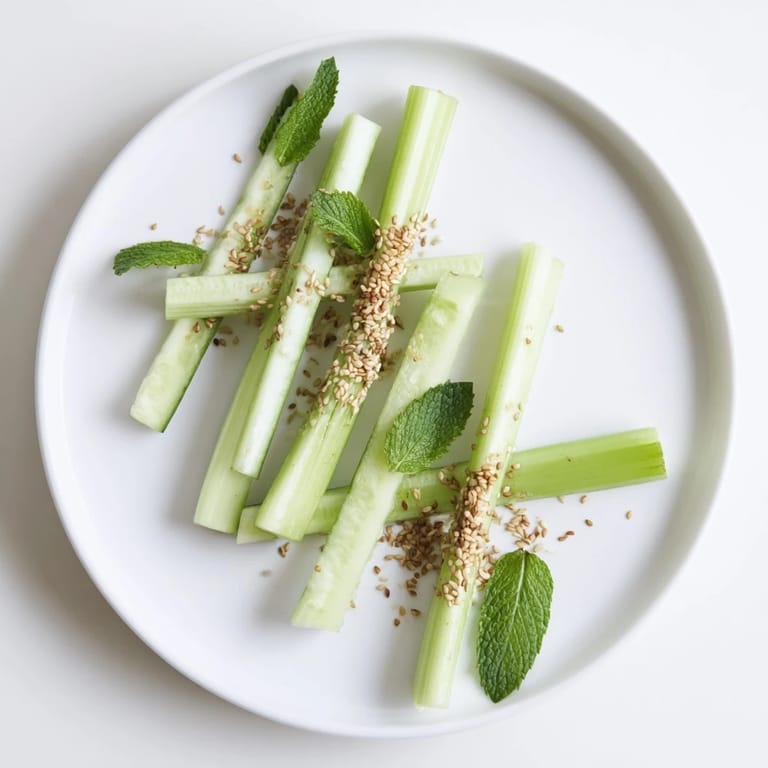
- Sprinkle sesame seeds and tuck herb leaves into the arrangement if you're using them. Mix the soy sauce and rice vinegar in a small bowl.
- Chill and serve:
- Pour the sticks and dip into ice water for ten minutes if you want maximum crunch, then bring everything to the table cold.
 Save
Save A friend who usually doesn't eat vegetables until they're cooked asked for another piece, then another. It wasn't that the celery had magically become delicious—it was that the presentation and the ritual of dipping made her curious instead of skeptical. That's when I understood: this dish is less about flavor and more about permission.
The Power of Arrangement
The way you place these vegetables on the plate matters more than you'd think. It's not about fussiness; it's about respect for the ingredient and for the person eating it. When something looks intentional and beautiful, people slow down before they bite. That pause, that moment of appreciation, changes how the whole meal feels.
Variations That Keep It Fresh
Add daikon radish for crispness and a peppery edge, or carrots for sweetness and color. You could slice fennel very thin and toss it in for an anise note that plays beautifully with the soy dip. Even a handful of radish slices tucked into the arrangement adds visual interest without overthinking it. The beauty of this dish is that it welcomes small changes without losing its spirit.
- Daikon radish brings earthiness and holds its snap longer than cucumber.
- Carrots add natural sweetness that complements the salty dip perfectly.
- A pinch of white sesame seeds looks softer and less assertive than the toasted ones.
When to Serve It
This appetizer works best when you're serving lighter dishes afterward, or when the meal itself is about mindfulness rather than abundance. Pair it with chilled sake or a crisp white wine if people are drinking. It's also the perfect thing to put out while people are still arriving, because it won't wilt or deteriorate; it just gets colder and crunchier, which is all it wanted anyway.
Dipping Sauce Wisdom
The dip is simple, but its ratio matters. Too much vinegar and it becomes puckering; too much salt and it drowns out the vegetable's natural flavor. Taste as you mix and adjust to what feels right to your palate. Some people like to add a tiny drop of sesame oil for richness, or a whisper of fresh ginger for heat.
- Mix the dip just before serving so the flavors stay bright and the ratio stays true.
- A shallow bowl looks prettier than a deep one and makes the sticks easier to dip.
- Keep extra dip nearby; people will ask for more.
 Save
Save This dish reminds you that not every appetizer needs to be heavy or complicated. Sometimes the most elegant thing you can do at the table is invite people to taste something in its purest form.
Questions & Answers
- → How should the celery and cucumber be prepared?
Wash thoroughly and trim the ends. Cut into long sticks about 4-5 inches for an even, appealing presentation.
- → Can any additional vegetables be included?
Yes, adding carrot or daikon sticks can introduce color and variety while maintaining the crunchy texture.
- → What garnishes complement this dish?
Toasted sesame seeds, fresh mint or basil leaves enhance aroma and visual appeal without overpowering the fresh flavors.
- → Is there a recommended dipping sauce?
A small bowl of soy sauce combined with rice vinegar adds a tangy, umami-rich dip perfect for these vegetables.
- → How can the texture be improved before serving?
Soaking the celery and cucumber sticks in ice water for about 10 minutes boosts crunchiness and refreshes the veggies.